19 02, 2026

Modular Construction Trends to Watch in 2026

2026-02-19T21:19:35+00:00February 19th, 2026|

Modular construction trends in 2026 are showing faster adoption as developers look for quicker and greener alternatives to traditional building methods. Leaders in commercial development, government infrastructure, healthcare, education, and industrial sectors continue to deal with supply chain disruptions and labor shortages.

People are asking about the top changes expected this year. Innovation is picking up speed as demand for efficiency and sustainability increases. Money is flowing into off-site fabrication, supported by steady growth in the modular sector. The Modular Building Institute points out that permanent modular segments are outpacing overall industry expansion.

Recent evolution traces back to 2020, when modular held up well against widespread construction delays. Today, it stands out as a key turning point. Interest rates are stabilizing, federal incentives are helping, and confidence is rising. Developers recognize modular’s potential to complete projects more rapidly while controlling costs.

Trend 1: Digital Design and Manufacturing Integration

Software advancements have changed how modular projects get built. Building Information Modeling (BIM), a digital 3D modeling process, integrates seamlessly with digital twins, virtual replicas that mirror real buildings in real time. That means real-time simulations happen before fabrication begins. Manufacturers minimize rework through precise virtual planning, which cuts down errors significantly.

Developers are driving the innovations here and pushing for transparency across supply chains. McKinsey reports highlight value-chain integration as vital to unlocking efficiencies, where standardized systems dramatically reduce change orders. At Aries Building Systems, we use these tools in custom modular spaces so clients get streamlined workflows from concept to completion.

Transparency grows essential as stakeholders track progress remotely, and there are fewer errors when digital models predict clashes early. Change orders become rare under this approach. Partners like Aries are at the forefront of advancements because modular construction trends 2026 put strong emphasis on such integrations.

Trend 2: ESG and Sustainable Construction Commitments

Recognition is building for modular as a sustainability-forward option, with lower waste generation and reduced emissions marking clear advantages over site-built construction. Certification pathways make it simpler to achieve net-zero goals, appealing to eco-conscious and green-minded development companies.

Governments are pushing carbon-neutral initiatives and requiring greener practices on public projects. Factory-controlled processes deliver better lifecycle efficiencies. The Modular Building Institute’s Modular Advantage magazine explains the gains in embodied carbon reduction and resource optimization.

Aries is committed to ensuring businesses meet their environmental, social, and governance (ESG) priorities through reliable, high-quality modular building. See why Aries is the right partner for these modern standards.

Developers find modular a smart way to satisfy regulatory requirements without sacrificing timelines. Paths to certification get easier as modular units undergo rigorous factory testing. Emissions fall during transportation and assembly phases. Net-zero projects proliferate, driven by incentives.

We help clients navigate these commitments effectively. Modular construction trends in 2026 prioritize sustainability, and our company provides responsible solutions that work.

Trend 3: Data Center and Healthcare Demand Explosion

Demand is exploding in data centers and healthcare, sectors where modular shines for its speed and repeatability. Hyperscale facilities need rapid scaling, and Aries’ recent U.S. West project delivered 9,688 square feet of workspace right on schedule. Clinics and diagnostic centers benefit similarly, addressing urgent capacity needs.

Recent case studies demonstrate why these sectors choose modular. Our hyperscale project, for example, supported mission-critical operations with fast deployment. Explore the full hyperscale data center case study for details and insights. That kind of rapid success is why Dodge reports spending increases in data centers, increases fueled by the need for scalability.

Scalability is crucial in mission-critical environments. Trends point to strong growth in these areas, with prefabrication cutting schedules by a lot. Aries tailors modular solutions for hyperscale data centers and healthcare facilities to ease expansion pressures.

Repeatability ensures consistent quality across multiple sites, while speed meets immediate demands in healthcare surges. Together, they deliver performance in high-stakes environments. This is reflected in modular construction trends 2026 within major sectors.

Trend 4: GSA and Government Investment Uptick

Ties are strengthening between modular construction and government contracts, especially under General Services Administration (GSA) frameworks. State and federal mandates favor quick, compliant builds for infrastructure expansions. Aries brings extensive experience with GSA and public-sector projects that makes integrations smooth and straightforward.

This shows up clearly in speed and regulatory adherence, which stand out as important advantages. Government sectors turn to modular for better cost control and timeline certainties. Learn how we provide government solutions that satisfy these exact requirements.

Investments are rising as policies make efficient procurement a priority. Compliance edges out traditional methods and reduces bureaucratic hurdles. We handle GSA approvals expertly at Aries, positioning clients for success.

Mandates are driving more uptake in public works projects. Speed keeps everything on track within funding cycles. This is another growing area in which our company serves as a capable and dependable partner.

Modular construction trends 2026 forecast continued government focus. Aries stands ready to support with proven expertise.

Trend 5: Creative, Hybrid Modular Use Cases

Co-working campuses are transforming through modular innovations and breaking old stereotypes. Student housing is following suit, redefining flexible spaces. Hybrid approaches blend steel, concrete, and specialty finishes for diverse applications.

These design advancements emphasize versatility. At Aries, we pioneer them with custom hybrids that improve looks and function.

Prefab perceptions are changing fast as creative uses expand. Campuses get layouts that adapt easily, while housing meets tight urban demands more efficiently. The Aries team explores these in various sectors.

One key part of this shift is finishes, which take modular far beyond basic setups. Steel adds strength for industrial projects; concrete hybrids handle seismic zones well; specialty options make branding and custom looks easy.

Aries opens up new possibilities and helps clients adopt hybrid models.

Creative applications are celebrated in modular construction trends 2026, broadening modular’s appeal.

Frequently Asked Questions (FAQs)

Is modular construction still growing in 2026?

Yes, industry forecasts show steady expansion. Demand is rising across multiple sectors, and permanent modular is outpacing traditional construction growth.

Which sectors use modular the most?

Data centers, healthcare, education, and government lead the way. These areas need fast timelines, scalability, and reliable performance, which modular delivers consistently.

How is digital technology changing modular construction?

BIM and digital twins make planning much more accurate. Teams simulate everything before building starts, so errors drop and rework is minimized.

How does sustainability fit into modular?

Modular reduces waste and emissions right from the factory. It also simplifies certification for net-zero and carbon-neutral goals, helping developers meet ESG requirements more easily.

What benefits does modular offer government projects?

Speed and strong compliance stand out. Modular lets public projects meet deadlines, control costs, and navigate regulations without the usual delays and red tape.

Is Your Business Ready for 2026?

Modular construction is positioned to lead across industries in 2026. Digital tools, sustainability advantages, and creative hybrid designs directly address the pressures of speed, cost, compliance, and environmental goals that project leaders face today.

Aries is built for this moment. We bring experience, custom solutions, and a full-service approach to help you turn these trends into real results for faster delivery, lower risk, and stronger outcomes.

Don’t wait for the market to catch up. Request a quote today and let’s discuss how modular can work for your next project.

The future of construction is already here. Aries is ready when you are.

Request a Quote Today!

1
2

16 02, 2026

Modular Building Lease vs Purchase: Which Path is Right?

2026-02-16T19:28:48+00:00February 16th, 2026|

Is it better to lease or buy a modular building?

The short answer: it depends.

You need to consider your timeline, budget structure, and long-term plans.

In this modular building lease vs purchase guide, we break down the advantages, limits, and real-world use cases of either option so you can make a sound decision.

Why Asking the Question Matters

The modular building lease vs purchase decision is not simply a matter of space but more about strategy.

In the education, healthcare, and government sectors, space needs can change quickly. Enrollment climbs, patient volumes spike, programs expand, and funding cycles vary. A modular building can solve space problems efficiently, but the procurement path shapes how that solution fits into your budget and planning process.

School districts often face bond timelines and annual operating budgets. Healthcare systems may respond to seasonal surges or service line growth. Government agencies work within strict capital planning rules. In each case, leasing and purchasing affect approvals, accounting treatment, and long-term flexibility.

Choosing the right alternative can reduce delays, protect capital funds, and help you avoid overbuilding.

Leasing a Modular Building

Leasing is often the fastest way to add space. In the modular building lease vs purchase debate, leasing usually wins when speed and flexibility matter most. The benefits of leasing include:

  • Lower upfront cost: Leasing spreads payments, so it helps when capital funds are limited or already committed.
  • Ideal for short-term projects: If the space is needed for two to five years, leasing can be adjusted to align with that window.
  • Easier approval in some public sectors: Operating expenses may move faster through approval channels than capital purchases.
  • Flexibility to scale: You can add or remove units as your needs change.

In the following cases, the modular building lease vs purchase decision leans toward leasing because it reduces risk tied to demand uncertainty.

  • School districts managing enrollment shifts often lease classrooms. If growth levels off, they won’t be locked into a long-term asset.
  • Government agencies responding to temporary facility needs, such as disaster recovery or pilot programs, may prefer lease terms that match their project duration.
  • Healthcare sites facing temporary capacity surges, renovation disruptions, or seasonal demand can deploy leased space without committing to permanent infrastructure.

Purchasing a Modular Building

Purchasing is about long-term ownership. In the modular building lease vs purchase comparison, buying often supports stable growth plans. Below are the benefits of purchasing:

  • Long-term asset ownership: The building becomes part of your capital portfolio.
  • More customization options: Purchased buildings can be designed to suit site and program needs, from clinical layouts to security features.
  • Greater return over time: For long-use periods, ownership can cost less than extended lease payments.
  • May qualify for capital improvement funding: Bonds or capital budgets often cover permanent expansions.

Purchasing a modular building is considered the smarter move in the following scenarios:

  • Permanent campus expansions, specifically when a district knows enrollment will remain high, so buying supports long-term planning.
  • Government agencies with stable growth projections may prefer ownership, as it aligns with multi-year capital improvement plans.
  • Healthcare facilities with predictable long-term space needs, such as outpatient clinics or specialty units, may benefit from investing in a permanent modular solution.

The modular building lease vs purchase decision often favors ownership in the above cases because the space will serve for many years.

At-a-Glance Comparison Table

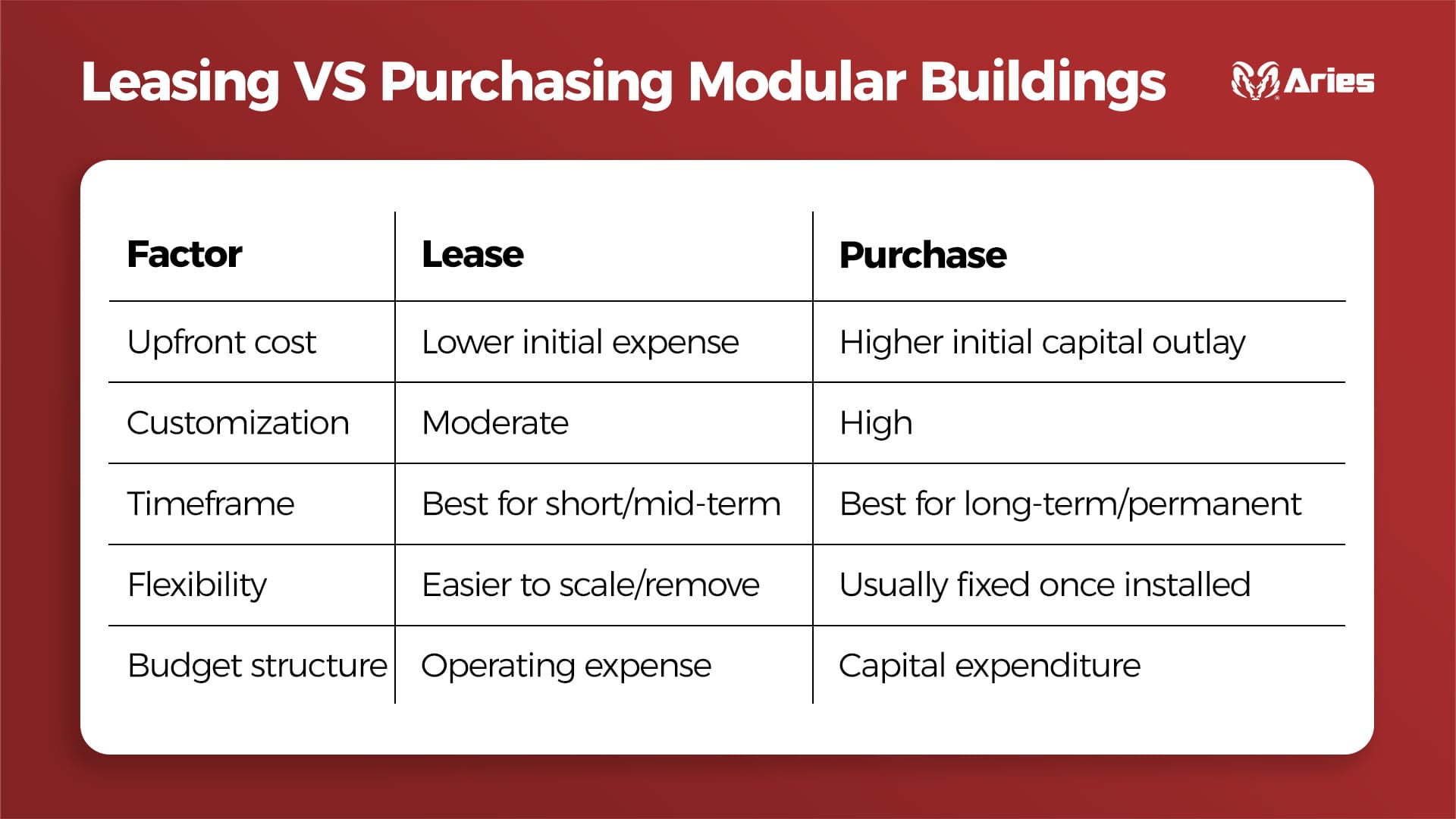
Below is a comparison table that helps frame the modular building lease vs purchase comparison in practical terms.

Modular Building Lease vs Purchase comparison chart showing cost, flexibility, and timeframe factors.

Mini Decision Checklist

When choosing between a modular building lease vs purchase, these questions are worth pondering:

  • What is your intended timeline for using the space?
  • Will your needs likely grow or change?
  • Do you have funding in place for a capital purchase?
  • Do you need rapid deployment?

If your timeline is short or uncertain, leasing often fits better. If the need is permanent and funded, purchasing may provide better long-term value.

But if you are still unsure, Aries can help you weigh your options and financing, and recommend the best path forward. Contact us today!

Request a Quote Today!

1
2

10 02, 2026

Government & GSA-Ready Modular Solutions Explained

2026-02-10T17:14:50+00:00February 10th, 2026|

Public sector agencies are often under pressure to deliver facilities quickly, even as they must navigate funding constraints, strict procurement rules, and compliance requirements. So, whether they need to respond to an emergency, support a temporary program, or expand operational capacity, they have to remember that traditional construction methods can represent delays and administrative complexity.

In this scenario, government and GSA-ready modular solutions could become a practical alternative. They represent compliant and deployable buildings that meet urgent operational needs, and you can still align them with public sector procurement frameworks. Modular construction can help agencies focus on their urgent day-to-day business, rather than spending their time on lengthy sourcing processes. And in that respect, these solutions represent a combination of speed, predictability, and procurement simplicity.

What GSA-Ready Really Means

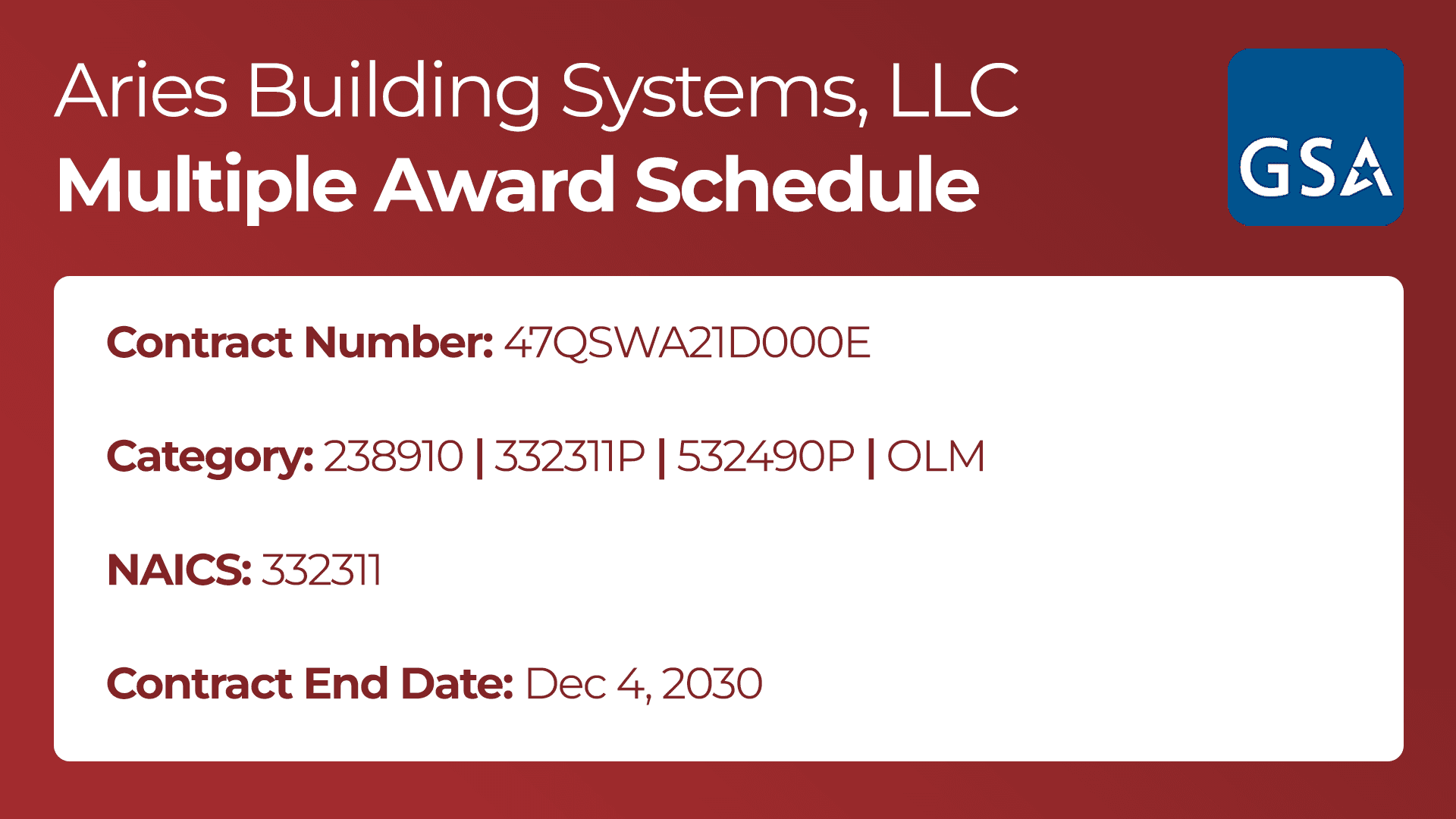
Modular buildings are GSA-ready when they’re available through a General Services Administration (GSA) schedule. This is a federal contract vehicle that oversees contract terms, pricing, and the pre-approval of suppliers, and a structure that helps government buyers procure services and goods efficiently while remaining fully compliant.

Understanding GSA Compliance for Modular Construction

All GSA modular buildings must meet federal building codes, safety standards, accessibility requirements, and inspection protocols. In some cases, they also must comply with Davis-Bacon Act wage requirements that cover labor standards in relation to federally funded work.

Crucially, any GSA-approved vendors must be vetted in advance, so the regulator knows they’re going to be financially stable, contractually reliable, and capable based on past performance.

Key Procurement Benefits for Public Agencies

When buyers use GSA-approved vendors, they can benefit in several ways. For example, they may:

  • Not need to go through a full competitive RFP process in many cases
  • Take advantage of pre-negotiated pricing
  • Often enjoy shorter procurement cycles, in weeks rather than months
  • Rely on clear audit trails that align with federal procurement standards

So for any team responsible for government building procurement, a smoother path lies ahead, with fewer procedural bottlenecks and faster mobilization.

Why Modular Buildings Are a Smart Choice for Government Projects

Looking beyond procurement efficiency, government and GSA-ready modular solutions already align well with the financial and operational realities found in the public sector.

  1. Modern modular construction shrinks timelines by allowing these units to be fabricated off-site and in parallel with site preparation. As such, there’s less exposure to delays linked to labor shortages, weather, or permitting complexity.
  2. There’s less disruption on-site with fewer activities to help cut down on safety risks. Other agencies can maintain nearby operations with less interruption as a consequence.
  3. Modular buildings are very flexible from a long-term perspective. You can relocate, repurpose, or expand these units and even change their entire purpose while still protecting any capital investment.
Graphic showing Aries Building Systems’ GSA Multiple Award Schedule contract details.

Common Government Applications for Modular Solutions

Many different public sector environments can take advantage of modular buildings for government, especially if speed, flexibility, and temporary use are important.

Offices, Field Stations, and Command Centers

Federal modular construction is frequently used for inspection stations, field offices, and command centers or in situations where secure operational space is needed at short notice.

For example, a federal agency may need a secure field operations office as part of a six-month inspection initiative. If it opted for traditional construction timelines, that would almost certainly exceed program duration. So instead, the agency can procure a GSA-ready modular office. This would allow it to have a compliant workspace in place within weeks and potentially relocate the unit later, if needed, for further use. Such a facility can have secure access, IT infrastructure, and a durable interior to make it suitable for high-traffic operational use.

Training, Education, and Support Facilities

Government departments may need some additional training capacity for academies and instructional centers, temporary or overflow classrooms, or program-specific support work. In these cases, those departments would rather not commit to permanent buildings, so modular solutions are ideal.

For example, a state agency might want to expand workforce training ahead of a regulatory rollout. In this case, it would procure a modular training facility through a GSA schedule and thereby avoid a lengthy tender process. It could get classes in place efficiently to begin work in the same fiscal quarter. And because modular buildings for government can be expanded or reconfigured, those agencies can have plenty of choices as their programs evolve.

Emergency Housing and Medical Response Units

Some of the most time-sensitive government functions involve disaster response and emergency preparedness. So federal modular construction can play a huge role here if there is a need for:

  • Medical clinics or triage units
  • Emergency operations and coordination centers
  • Temporary housing for displaced people

In one example, a public health agency might need to rapidly deploy temporary medical facilities following a landfalling hurricane. An agency can deliver and install modular units within weeks to enable uninterrupted care, and without the need for new permanent facilities.

Why Work with Aries for GSA-Ready Modular Solutions?

We can help you choose and introduce your GSA-ready modular solutions.

Experienced Certifications and Nationwide Reach

Aries works extensively across the public sector, so we fully understand the practical realities of government building procurement. We stand ready to help agencies take advantage of existing procurement pathways efficiently and without adding any new complexity. Aries works exclusively with GSA-approved vendors to take care of any pricing compliance and vetting. And with nationwide reach, we can work on deployments across a variety of urban, rural, and remote locations.

Flexible Lease and Purchase Options Available

Aries offers both purchase and lease options for GSA modular buildings, so agencies can choose the best approach based on program length, capital plans, and budget cycles. And throughout the full project life cycle, Aries supports clarification and specification, delivery and installation, project management, end-of-use relocation, and removal planning.

Frequently Asked Questions (FAQs)

What makes a modular building GSA-ready?

If you get your GSA-ready modular building through GSA-approved vendors, you can be sure that it meets federal compliance, pricing, and performance standards.

Can I lease a modular unit through a GSA vendor?

Yes, it’s possible to procure GSA modular buildings under lease agreements, so you can use them for temporary or program-based use.

How long do delivery and installation typically take?

Much will depend on configuration and site readiness. But generally, many modular buildings for government can be delivered and installed within a week.

Are these buildings secure and durable?

Yes, federal modular construction always meets strict safety, durability, and security standards with controlled access and reinforced structures.

What types of government projects qualify for modular use?

Some common public sector applications for modular use include training facilities, emergency response units, offices, health care clinics, and housing.

Let’s Build Smarter for the Public Sector

Public sector demands are on the rise, and decision-makers frequently operate under pressure. So, with this in mind, government and GSA-ready modular solutions represent a compliant and efficient path forward.

Aries can help agencies to move faster without compromising standards by combining our real-world deployment experience with clear procurement pathways. To explore GSA-compliant modular solutions for your specific operating requirementsget in touch with Aries today

Request a Quote Today!

1
2

27 01, 2026

Why Modular Buildings Are the Smartest Start to Your 2026 Capital Projects

2026-01-27T21:09:35+00:00January 27th, 2026|

As 2026 capital budgets open, project leaders face the same pressure every year. Aside from being bound to tighter timelines, they also need to keep a tight rein on costs and ensure building flexibility. This is where modular buildings come in.

Modular buildings for capital projects are no longer a stopgap option. They’ve become a practical construction solution for education, healthcare, government, and corporate facilities. For organizations that want to move early and reduce risk, modular construction is a clear differentiator.

Start Your Project Faster and Smarter

Capital project delays often begin before construction even starts. Lengthy design phases, permitting bottlenecks, and site readiness issues can push schedules back by months. Construction with modular buildings for capital projects can change this.

Factory-built modules are produced while site preparation is underway. Foundations, utilities, and access work happen in parallel, not in a long chain of dependencies. This overlap compresses schedules and allows projects to move forward in weeks instead of quarters.

For decision makers working against fiscal year deadlines, speed matters. Earlier delivery means earlier use, earlier service capacity, and less pressure to rush decisions late in the year. It also reduces exposure to labor shortages and weather disruptions that disrupt traditional builds.

Flexible Solutions for Every Sector

Modular buildings for capital projects work because they adapt well to different operational needs. The same core approach can support very different use cases.

  • Education: Modular classrooms help districts respond to enrollment growth without committing to permanent construction too early. STEM labs, faculty offices, and student services spaces can be added where they are needed most. Buildings can be relocated or repurposed as needed.
  • Healthcare: Modular clinics and triage units allow systems to expand patient capacity without disrupting existing facilities. Imaging suites, testing centers, and specialty care spaces can be deployed quickly and configured to meet regulatory standards.
  • Government and Public Safety: Modular buildings support police substations, fire stations, and municipal offices that need to be operational fast. These structures meet public procurement requirements while being flexible for relocation or expansion.

Budget Confidence Without Compromise

Cost overruns are among the biggest risks in capital projects. Modular construction reduces that risk by shifting much of the work into a controlled factory environment. This approach limits weather delays, material waste, and last-minute design changes.

Modular buildings for capital projects also come with financial options that traditional construction does not. Lease and lease-to-own structures allow organizations to preserve capital while still delivering functional space. Another advantage is asset reuse. Modular buildings can be relocated, reconfigured, or sold when needs change.

Traditional Construction vs Modular Buildings

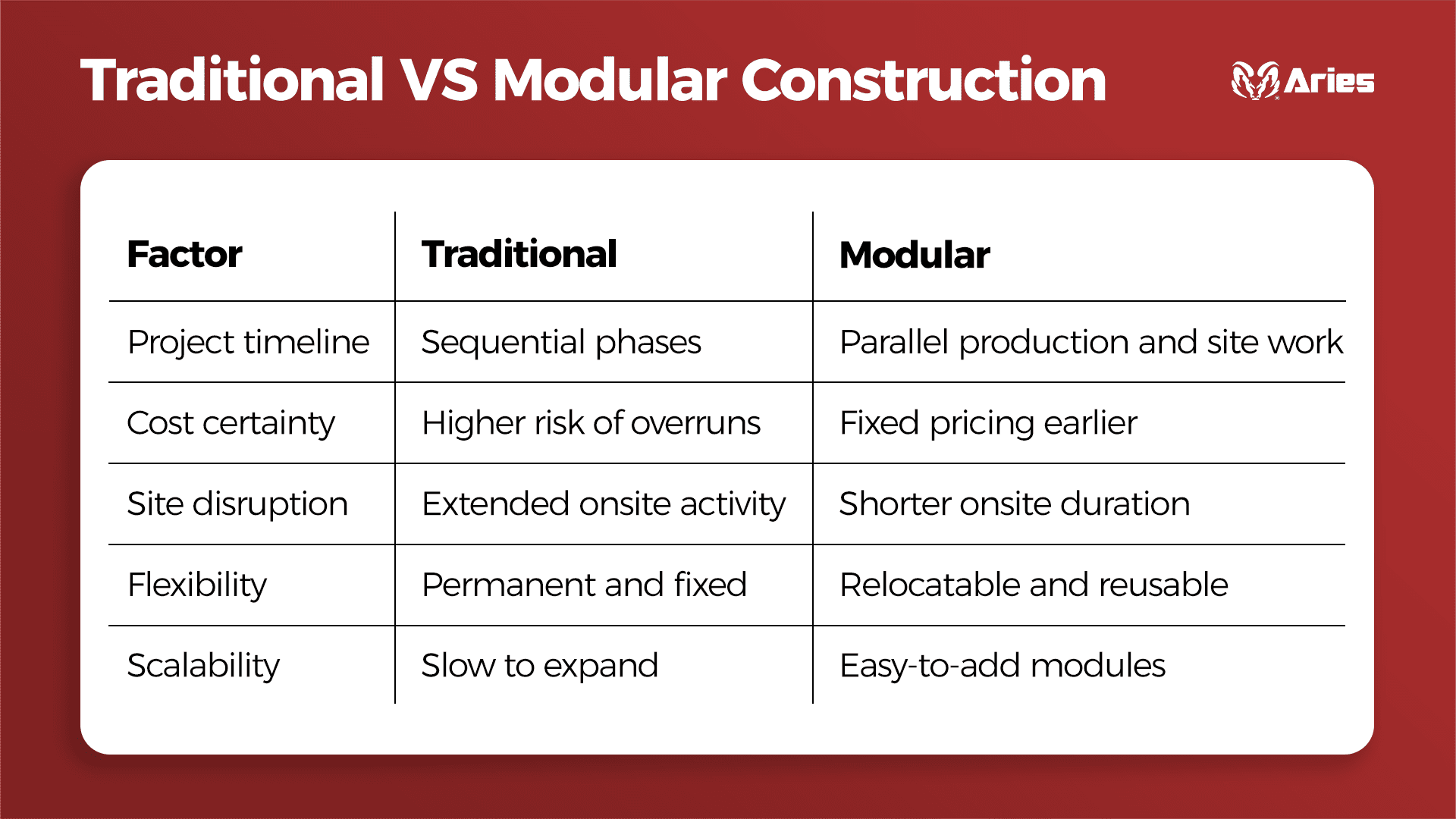
Choosing the right delivery method sets the tone for the entire project. The differences between traditional and modular approaches are practical and measurable.

Comparison chart of traditional vs modular construction factors

Traditional construction often locks teams into long schedules and rigid outcomes. Modular buildings allow projects to scale, adapt, and respond to real-world changes without the need to start over.

Why Choose Aries When It Comes to Modular Buildings for Capital Projects

Aries specializes in modular buildings for different sectors. Projects are designed with compliance in mind, including GSA readiness and public building project standards.

Aries has delivered complex capital deployments on tight schedules, supported by a national footprint and proven logistics. The company works with clients early in the planning process. This helps teams align scope, budget, and delivery timelines before problems arise.

Aries matches rapid project delivery with consistent quality. For decision makers, this means fewer surprises and clearer accountability.

Plan Early, Build Smarter

Early planning sets the direction for the rest of the budget cycle. Modular buildings give organizations a way to act quickly without sacrificing control or quality. They support faster starts, steadier costs, and facilities that change as needs change.

Aries offers fast, flexible modular buildings for capital projects of every size. Learn more about our modular solutions, or request a quote to see how we can help fast-track your next project.

Request a Quote Today!

1
2

16 01, 2026

Big New Year Impact of Portable Classrooms

2026-01-15T22:42:43+00:00January 16th, 2026|

“Big New Year Impact of Portable Classrooms” is not just a catchy phrase but a wake-up call for school administrators facing mid-year enrollment spikes, ongoing renovations, or the launch of new educational programs. By embracing flexible learning environments, schools can quickly adapt to shifting needs without the burden of long-term budget constraints.

Explore why temporary school buildings and modular administrative buildings are more than just backup plans. Here’s a breakdown of how schools are using them to stay agile, what to watch for when planning, and provide a helpful checklist to keep schools organized. You’ll learn how solutions like portable schools solve tough questions like “How much does a modular classroom cost?” and “Where can I find a portable classroom rental near me?”

The Evolving Role of Portable Classrooms

Portable classrooms have come a long way from the basic trailers many remember. Today, they’re dynamic, purpose-built spaces that support everything from STEM programs to administrative operations. Schools nationwide are turning to these modular units not just for overflow but as intentional learning environments: modern, adaptable, and fully equipped to meet today’s educational needs.

Here’s why they matter now more than ever:

  • Enrollment spikes continue to hit mid-year. Districts nationwide are reporting sudden influxes as families move for economic reasons or re-enroll from alternative schooling.
  • Renovations are more complex. Construction timelines are long, and labor shortages are real. Portable classrooms keep students learning on-site while permanent structures are updated.
  • School Expansion solutions. STEM programs and functional needs services need their own dedicated space, often on short notice.

Plus, many districts are shifting toward modular administrative buildings to keep non-teaching staff out of crowded classroom wings. In areas like Texas, California, and Florida, where weather and zoning are factors, this level of flexibility has real benefits.

Conversely, student populations, grade-to-grade, year-to-year, can surge then rapidly decline. Portable classrooms have the flexibility to be repurposed to fit other growing needs within the school and community.

Modular buildings also align with sustainability goals. Organizations like Modular.org report up to 90% less construction waste and significantly lower emissions compared to traditional construction methods.

New Year Checklist for Planning Modular Classroom Additions

If you’re gearing up for expansion or just want to be ready for whatever 2026 throws your way, here’s a concise checklist to guide your planning process:

  1. Assess with Honesty

Before jumping to solutions, quantify your student growth, special programming needs, and renovation timelines. Don’t overlook admin staff or hybrid learning spaces.

  1. Determine Timeline and Seasonality

Mid-year installations often occur quickly, typically during winter break or summer months. Align your procurement and approval timeline with when you need the unit ready.

  1. Define Budget and Funding Options

Use financing tools or consult with modular building providers to explore lease vs. purchase options. Many districts qualify for short-term funding programs that make modular options more accessible than expected.

  1. Get Site-Ready

Know your zoning, utilities, and accessibility requirements. This is often the bottleneck that slows projects down. A good provider will help you assess this upfront.

  1. Choose a Reputable Builder

Don’t just Google “portable classroom rental near me.” Look for vendors with school-specific experience and options that match your architectural guidelines.

  1. Plan for Tech and Safety

Integration with school Wi-Fi, security systems, and HVAC upgrades is essential.

  1. Think Beyond the Classroom

Need a nurse’s station? A guidance office? A modular administrative building can help separate functions and reduce hallway crowding.

  1. Understand Federal Support Opportunities

Monitor federal initiatives and grants that can help offset infrastructure costs. The U.S. Department of Education regularly updates programs related to school improvement, safety, and innovation. Whether you’re applying for ESSER funds or tapping into future capital improvement programs, staying informed helps you make the most of what’s available, especially when planning for modular classrooms that meet evolving educational standards.

Each of these checklist items directly supports a flexible learning environment, something traditional buildings struggle to accommodate under sudden demand.

Exterior of Aries’ portable classrooms on campus.
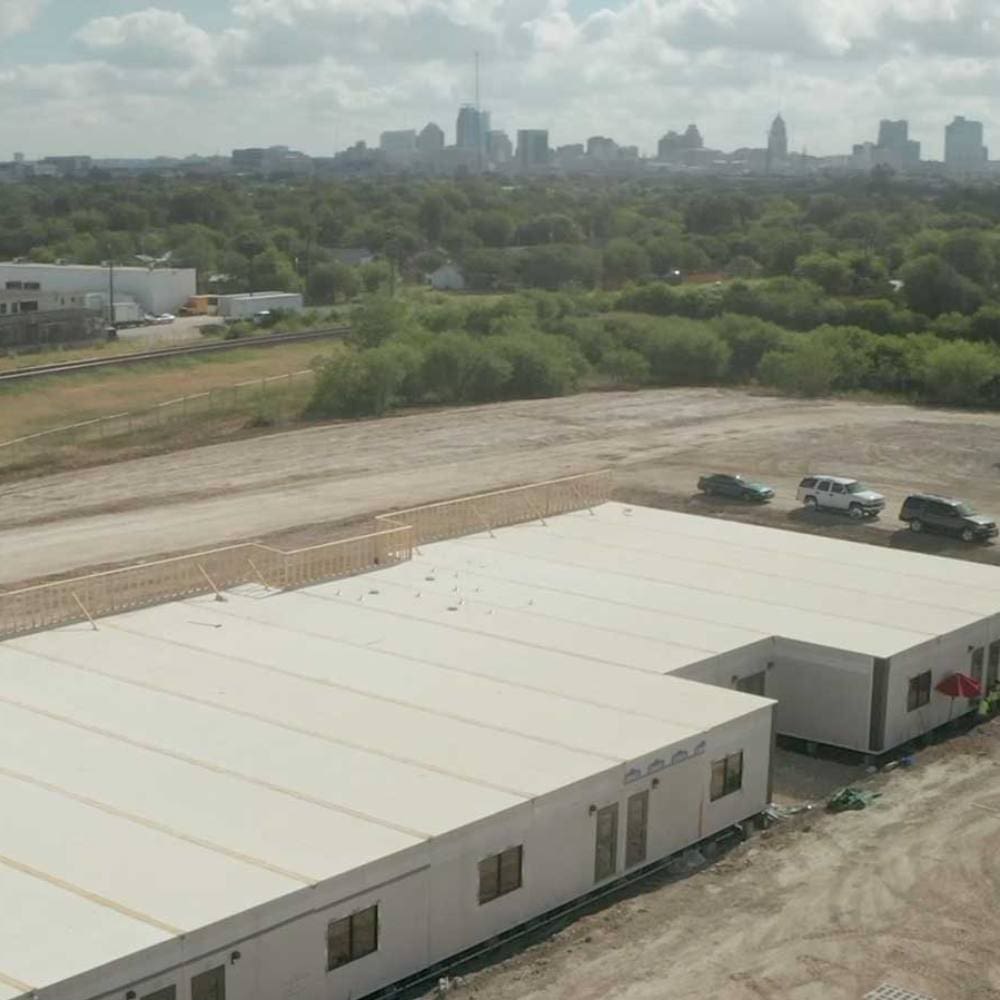
Overview of Aries’ modular construction with city in the distance.

Why Portable Classrooms Are More than Just Temporary

Let’s bust a myth: portable doesn’t mean short-term. Many schools deploy modular buildings for 5 to 15 years, even integrating them into long-term facility plans. Their flexibility doesn’t just solve emergency problems; it also creates room for innovation.

A notable example of this can be found at El Sol Academy in Santa Ana, California. As reported by Wired, the school constructed a 19,000-square-foot modular facility, aiming for completion within 90 days. The modular design not only expedited construction but also enabled the school to integrate modern, tech-ready spaces without the lengthy delays and costs associated with traditional buildings.

This kind of rapid deployment makes modular buildings especially valuable for schools that want to stay current with educational trends or quickly expand their STEM programs. The ability to roll out purpose-built classrooms in just a few months enables districts to experiment, grow, and respond to student needs without being constrained by outdated infrastructure or slow capital projects.

If you’re still asking, “How much does a modular classroom cost?” the honest answer is a lot less than the disruption, parent complaints, and students falling behind due to space issues. Modular solutions give you control over your learning environment on your schedule.

School Expansion Solutions

By now, it’s clear, portable classrooms aren’t just band-aid fixes but smart, scalable, and sustainable solutions for schools facing complex challenges. Whether it’s handling unexpected growth, managing renovations, or creating space for new programs, the impact of portable classrooms can’t be overstated.

Aries works with schools across the U.S. to deliver modular classroom and administrative solutions tailored to real-world constraints. Coast-to-coast, they’ve helped districts install entire temporary campuses and respond to emergencies without skipping a beat.

Need help running the numbers? Aries offers free consultation and financing guidance. They’ll walk you through renting vs. buying decisions, timeline planning, and compliance issues so you don’t get caught off guard.

When the bell rings and your enrollment jumps, be ready, not scrambling. Aries is here to help you plan smarter, build faster, and serve better.

Let us help you build the space you need, when you need it. Fill out the form to get a complimentary quote from our local modular experts.

We’d Love to Hear from You!

    23 12, 2025

    VisionARIES: Bailey Beck

    2025-12-19T19:42:40+00:00December 23rd, 2025|

    Meet VisionAries Spotlight, Bailey Beck, a Sales Associate at Aries Buildings who joined the team in March 2024. In her role, Bailey partners with clients to identify tailored modular solutions, from mobile offices and storage containers to ground-level buildings, serving a wide range of industries.

    With a strong focus on understanding customer needs and delivering cost-effective recommendations, Bailey brings a thoughtful, consultative approach to every project. Early in her time at Aries, she contributed to a targeted marketing campaign focused on the education sector, helping showcase how modular solutions support schools and learning environments. That experience continues to shape her work today, allowing her to build strong client relationships and provide solutions aligned with each customer’s unique goals.

    My time at Aries has been a great learning experience! I’ve picked up a lot about the modular industry and how to really listen to clients to find the best solutions. It’s been a lot of hands-on problem-solving and building relationships, and I’ve learned the importance of staying flexible and working closely with the team to get things done right. – Bailey Beck

    Where did you work prior to Aries; was it in the same industry or something totally different?

    Before joining Aries, I was a Kindergarten Teacher in my hometown. It was such a rewarding experience, getting to help shape young minds and watch them grow. It taught me patience, communication, and how to adapt to different needs—all skills that I’ve found super helpful in my current role at Aries!

    When you’re not at work, what would we find you doing?

    When I’m not working, I’m always on the go! I love traveling and exploring new places with friends.

    A photo of VisionAries Spotlight, Bailey Beck, smiling with friends at Universal in Nashville.
    A photo of VisionAries Spotlight, Bailey Beck, smiling with friends at Disney World wearing Mickey Mouse ears.
    A photo of VisionAries Spotlight, Bailey Beck, smiling with friends at a distillery.

    Tell us about your hometown?

    I grew up in Angleton, TX, and it’s the perfect mix of small town and city. The community takes a lot of pride in itself, and every school in the district shares the same mascot, Wildcats. Angleton’s motto is “Once a Wildcat, Always a Wildcat,” which really speaks to the strong connection and pride we have in our community.

    Tell us about your family, and children, if any?

    I don’t have a family of my own yet, but I’m lucky to have a brother and sister who I’m close with. We have a lot of fun together, and I’m always grateful for the support and laughter they bring into my life!

    What would “your perfect day” consist of?

    My perfect day would be a balance of chill vibes, fun, and making memories with my favorite people!

    What’s your favorite part about working for Aries so far?

    My favorite part about working at Aries so far has been the opportunity to connect with clients and really understand their needs. It’s rewarding to find the right solutions for their projects and see our products make a difference. Plus, the team here is fantastic; there’s always a sense of collaboration and support that makes work feel less like a job and more like a shared mission!

    What sets Aries apart from other companies that deliver the same exact things?

    What sets Aries apart from other companies is our strong emphasis on customer service and the personalized, small business feel we bring to every project. We focus on building genuine relationships with our clients, ensuring their needs are met with care and attention to detail. Unlike other companies, we offer a hands-on approach, making sure each client feels valued and supported throughout the entire process. It’s this level of service and connection that truly sets us apart.

    What do you hope to bring to Aries in terms of leadership and company culture?

    I’m all about creating an environment where open communication flows easily. We celebrate each other’s successes along the way. I want to build a positive, can-do culture, where the team feels like a family working together to achieve great things for both Aries and our clients.

    If you weren’t working for Aries, what job would you probably have?

    If I weren’t working for Aries, I’d probably work for an ed tech company. I’ve always been passionate about education and technology, so that kind of role would allow me to combine both interests and make a difference in how people learn.

    What do you think the future holds for Aries?

    I think the future holds exciting growth and continued success for Aries. Our commitment to flexibility and innovation keeps us ahead of the curve, and with a dedicated team, we’ll continue to deliver great results for our clients while maintaining the close-knit company culture we value.

    What’s one thing you’re particularly proud of about the way Aries Buildings operates in Cleburne, TX?

    I’m particularly proud of the strong sense of teamwork and collaboration at Aries Buildings in Cleburne, TX. The way we work together to support each other and ensure every project is a success is something special. It’s not just about getting the job done, but lifting each other up, sharing ideas, and working as a team to deliver results for our clients. That collaborative spirit makes Aries feel like a family, and it’s something I’m really proud to be part of.

    A selfie of VisionAries Spotlight and Sales Associate, Bailey Beck, soft smiling in a pink turtleneck sweater.

    Want to see yourself as one of our celebrated VisionAries, like Bailey Beck? Join the Aries Team! Explore career opportunities here.

    ABOUT MODULAR BUILDING SUPPLIER ARIES BUILDINGS

    Aries Buildings provides high-quality modular solutions, from mobile offices to temporary classrooms and custom space, designed to keep projects moving and teams productive. With strategic planning and a highly experienced workforce, Aries is a trusted partner for organizations that need speed, reliability, and results. Every build is backed by a commitment to smart solutions, seamless execution, and service that exceeds expectations.

    Let’s bring your project to life. Call 1-888-598-8869 (U.S.) or visit www.ariesbuildings.com to connect with our team today.

    Discover how Aries’ portable classrooms can transform your school’s learning environment.

    Contact us today to customize a solution that fits your educational needs.

    We’d Love to Hear from You!

      18 12, 2025

      Modular Construction in Clayton, NC: The Strategic Choice for the Economy

      2025-12-16T16:55:29+00:00December 18th, 2025|

      Modular construction in Clayton, NC is becoming the strategic choice for a rapidly expanding local economy. As Johnston County’s fastest-growing town, Clayton’s population surged by nearly 277% from 2000 to 2020. It is even projected to double again by 2050 (Town of Clayton). With space increasingly limited, schools are being stretched, healthcare demand is rising, and new business facilities are urgently needed. To meet these challenges, modular construction is being embraced for its speed, flexibility, and scalability. Modular building provides solutions from portable classrooms and modular healthcare centers to retail offices. Positioned near Raleigh and Duke University, Clayton’s growth is heavily supported by modular innovation that quietly powers its next chapter of economic expansion.

      Clayton’s Economic Growth and Strategic Planning

      Clayton is recognized as the fastest-growing city in Johnston County and for good reason. Why? Well, its industrial base has been strengthened by major employers such as Novo Nordisk, Caterpillar, and Grifols. Meanwhile, the town’s Comprehensive Growth Plan 2045 promotes balanced expansion that sustains quality of life and infrastructure. Notably, a $4.1 billion investment by Novo Nordisk was announced for a new facility, which is projected to create over 1,000 jobs and elevate Clayton’s standing in the global biotech sector.

      However, this rapid growth is accompanied by increasing pressure on schools, healthcare providers, and businesses. Enrollment surges have been reported by Johnston County Public Schools, one of the area’s largest employers, reflecting population trends. Consequently, a shortage of available building inventory has led to missed opportunities (WRAL News). This is a significant concern for a community eager to attract and retain employers.

      While many towns strive to generate growth, Clayton’s challenge lies in scaling its infrastructure to keep pace with both people and industry. In this context, modular construction is recognized as a strategic solution within the town’s long-term planning efforts.

      Regional Advantages: Location, Connectivity, and Talent

      Clayton’s location is positioned as a regional magnet. Situated just 15 miles from Raleigh (Google Maps) and within reach of the Research Triangle, the town is advantaged by its proximity to leading research institutions such as Duke University. As a result, access to talent pipelines, innovation hubs, and regional transportation networks, such as the Gateway 42 project according to Spectrum Local News, are in demand to be readily available to local businesses.

      According to the Town of Clayton’s Demographics page, median household incomes have been reported above the state average, and the community is characterized by a younger population. Specifically, families with children drive both school enrollment and healthcare demand. Retail activity continues to expand as Town of Clayton Retail Data indicates population growth exceeding 11% in the trade area. This results in increased daytime traffic and overall retail spending.

      For decision-makers, this combination of factors is creating a growing sense of urgency. As land and building costs continue to rise, modular construction is recognized as a flexible, cost-effective solution to meet space demand, overall reducing the long lead times of traditional construction. Furthermore, modular office spaces and custom retail buildings are being rapidly deployed to support the town’s accelerating growth corridor.

      Meeting Clayton’s Pressing Needs

      What makes modular buildings so relevant to Clayton right now is attributed to three major pressures:

      1. Education: Portable classrooms in Clayton are rapidly deployed to ease overcrowding while long-term construction projects are completed.
      2. Healthcare: With population surges and a healthcare-ready workforce, modular healthcare buildings are used to deliver clinics, labs, and testing facilities quickly, with regulatory compliance built in.
      3. Commercial and Retail: Modular offices in Clayton, NC, mobile offices, and custom modular retail buildings are implemented by both local entrepreneurs and national retailers to capitalize on both traffic and spending growth.

      Even the Town of Clayton’s Industry Presence indicates that demand is being driven across diverse sectors, including pharmaceuticals, biotechnology, manufacturing, and education. When combined with the Johnston County Economic Development team’s efforts to attract new business space, modular buildings are viewed less as an alternative and more as an essential solution.

      Unique insight: Modular construction is shown to align with Clayton’s goals for sustainable, managed growth. With less disruption, faster delivery, and scalable design, the town’s expansion can be achieved without outpacing its infrastructure.

      Why Aries Fits Clayton’s Moment

      Now, the real question is not whether modular buildings will shape Clayton’s future. The real question is rather which provider will meet this need. Aries Buildings has long supported various industries with modular solutions tailored to meet the needs of education, healthcare, retail, and commercial sectors. The Aries team provides structures and helps organizations stay ahead of growth curves.

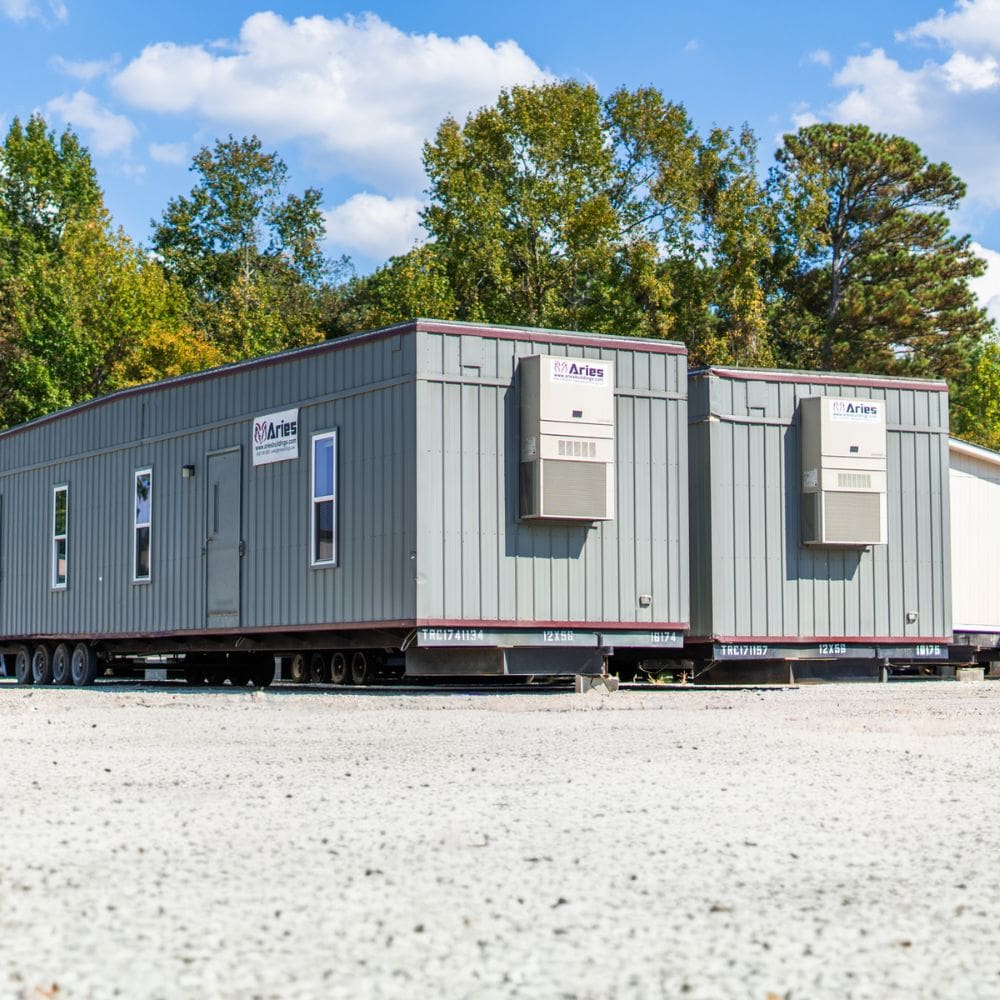
      Exterior shot of a couple ready-to-go mobile offices showcased in Aries’ modular building stock yard in Clayton, NC.
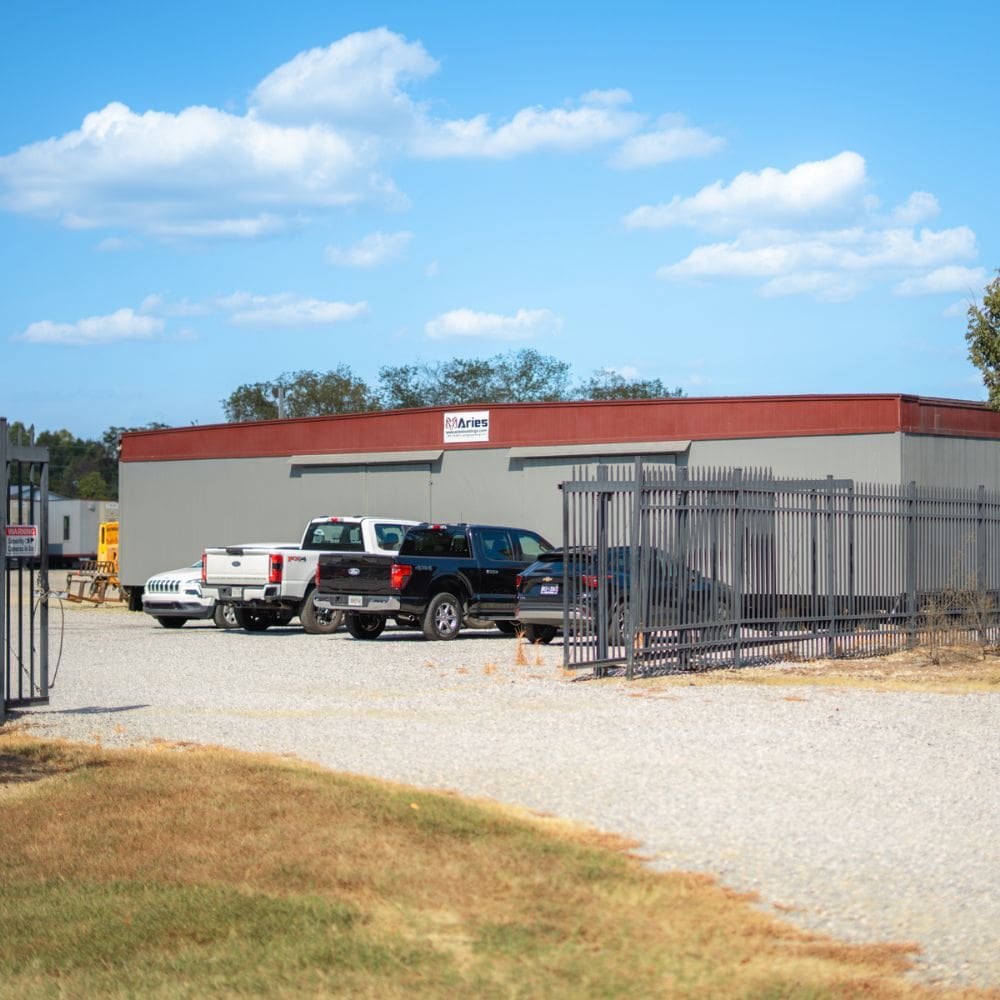
      Exterior shot of Aries Buildings’ modular building stock yard office in Clayton, NC.

      For anyone exploring options, Aries even offers a ready-to-go modular building inventory, allowing you to view available units right away. With a dedicated location for modular buildings in Clayton, NC, Aries has the local insight and national experience to help schools, healthcare systems, and businesses keep pace with Clayton’s remarkable growth.

      If Clayton’s growth story tells us anything, it’s this: space can’t wait. And Aries is ready when you are.

      Ready to expand in Clayton, NC? Let Aries help you build the space you need, when you need it. Fill out the form to get a complimentary quote from our local modular experts.

      We’d Love to Hear from You!

        10 12, 2025

        Beyond the “Temporary” Tag | Why Modern Portable Classrooms Are Long-Term Solutions for Texas Schools

        2025-12-10T16:04:56+00:00December 10th, 2025|

        Portable classrooms have long been seen as a stopgap for overcrowded schools. The stereotypical “temporary” trailers parked behind the main building. But in Texas and beyond, that perception is changing fast. Modern portable classrooms in Texas school districts are increasingly embracing are anything but short-term fixes. They are built to the same standards as permanent structures and can serve for decades, all while offering quick, cost-effective expansion for growing communities. In fact, nearly one-third of U.S. public schools now use at least one portable or modular building on campus (NCES), underscoring how common and essential these classrooms have become.

        Why Modern Modular Classrooms Are Built to Last

        One big misconception is that a portable building means lower quality or longevity. The reality is quite different. In Texas, any portable or modular school building must meet the same code requirements as a permanent school facility (TDLR Texas IHB Program), ensuring safety and durability. Many modern modular classrooms are engineered for long-term or permanent use, with robust materials like steel and concrete and proper foundations. With good maintenance, permanent modular buildings can last 50 years or more. The Modular Building Institute even highlights portable classrooms as a solution for additional long-term classroom space as school populations grow.

        Modern portable classrooms are also far more attractive and comfortable than older portables. Schools can customize exteriors with brick or siding to match existing buildings, and interiors come with quality finishes, good acoustics, and efficient HVAC systems. Natural light, smart classroom technology integration, and thoughtful layouts make these modular spaces on par with or even exceeding conventional classrooms.

        Inside view of a modern portable classroom in Texas with desks and digital display.
        Aerial view of modular classroom installations expanding a Texas school campus.

        Speed and Savings for Texas Schools

        One of the biggest advantages of modular classrooms is speed. Texas school districts facing sudden enrollment spikes or storm damage cannot always wait 18 months or more for a new wing or school to be built. Modular construction offers a rapid solution. Factory-built units can be assembled and installed on campus in a fraction of the time. For example, one Texas school opened 12 new modular classrooms in just 100 days.

        Cost is another critical factor. Modern portable classrooms in Texas schools are highly cost-effective over their lifespan. Because units are built in controlled factory settings, there is less material waste and fewer labor hours on site. This often yields savings of 20 to 30 percent compared to traditional construction. These classrooms are also scalable and relocatable, allowing districts to adapt quickly to shifting student needs and avoid overbuilding permanent structures too soon.

        Case Study: Permanent Solution Delivered Fast (DFW Metroplex)

        A recent Aries Building Systems project in the Dallas-Fort Worth area shows what modern modular construction can do. A local high school needed new facilities for its football field. Specifically, a concession stand and storage building with restrooms and other amenities. And they needed it fast. In under a month, we delivered a four-section, 1,536 square foot modular building that exceeded expectations. The slab-on-grade structure includes a full-service kitchen, a ticket booth, family restrooms, and ample storage. It blends seamlessly with the school’s architecture, and most would not realize it was a modular structure at all.

        Most importantly, the school received a permanent, code-compliant facility built to last for years. This project proves that modular buildings are not limited to temporary use but can serve as lasting infrastructure for key campus operations.

        Close-up of modular concession stand built by Aries Building Systems for a Texas school.
        Exterior view of a modern portable concession building near a school football field in Texas.

        Building the Future

        The days of thinking of portable classrooms as old trailers or short-lived stopgaps are over. Modern portable classrooms in Texas today are long-term solutions that help districts stay agile, efficient, and student focused. Whether responding to growth, budget pressures, or new program needs, modular buildings give schools the flexibility they need without compromise.

        Are you a school superintendent or facilities leader looking for modular solutions for your district? Learn more about our solutions for education or get a quote today.

        Request a Quote Today!

        1
        2

        3 12, 2025

        How Portable Classrooms Support Festive Learning in Schools

        2025-12-05T15:31:48+00:00December 3rd, 2025|

        The school year moves quickly, and the holiday season brings even more energy, often with a sudden need for additional space. For administrators and educators planning memorable school-wide events, portable classrooms can offer a smart, flexible solution. These modular spaces are no longer just temporary structures for overflow. They are modern, student-focused environments that encourage creativity, collaboration, and seasonal celebration.

        Let’s take a closer look at how modular buildings support festive learning and also provide solutions for winter-term student needs. If you have ever felt pressed for space during a holiday concert or struggled to set up a winter break program, mobile classrooms offer a dependable option that keeps everything running smoothly.

        The Magic of Extra Space: Unlocking Festive Possibilities

        As the holiday season approaches, schools often face a familiar challenge. Where will all the events take place? The gym and cafeteria are already booked. Classrooms are full. Portable classrooms provide the additional space needed to keep things moving. These flexible units become creative spaces for winter performances, holiday workshops, or quiet reading areas. Their adaptability allows schools to create large open layouts or set up smaller activity zones for students and guests. With this kind of flexibility, seasonal programming feels more organized and more joyful.

        Using modular classrooms helps avoid squeezing events into spaces that do not support them. According to Children’s Factory, flexible seating and open layouts improve engagement during seasonal activities. With more usable space, schools can welcome more parents and community members to holiday events, which helps build a strong sense of school community. These portable buildings also provide the setup room needed for decorations, stage props, and hands-on activities. You can create a winter-themed reading space or set up a unit for a science and art challenge that feels immersive.

        Portable classrooms are more than just extra space. They create meaningful environments where students can enjoy activities they will remember long after the season ends. Because they are quick to deploy and budget friendly, schools can bring their ideas to life without delaying or downsizing them.

        A row of modular buildings after a snowfall.
        A picture of a modular building sitting on a school campus in Virginia.

        Weathering the Winter Term: Flexible Solutions for Student Influx

        The winter term often introduces new challenges. Student enrollment may rise temporarily, or schools may offer short-term programs that require more space. Portable classrooms allow schools to meet these needs without the delay or cost of permanent construction. These units are insulated, climate controlled, and built for daily instruction. They offer the flexibility to shift learning programs into spaces that are comfortable and fully equipped.

        This challenge is not new. According to the National Center for Education Statistics (NCES), nearly one-third of public schools use portable buildings to manage overcrowding and aging infrastructure.

        During winter break, these modular units become even more valuable. Schools can run enrichment programs such as coding camps, writing workshops, or tutoring sessions without interfering with the main building. This kind of flexibility supports both innovation and efficiency. A high school might launch a Winter Skills Academy using modular classrooms. A middle school might convert them into a short-term science lab. These options allow schools to respond to seasonal needs with speed and confidence.

        Furthermore, The Modular Building Institute (MBI) has shared multiple case studies showing how schools use portable classrooms to meet shifting student populations and temporary program demands. These real-world examples confirm the value of modular solutions in supporting both short-term events and long-term strategies.

        Adaptable Spaces for Year-Round Needs & Festive Highlights

        While examples of schools using portable classrooms just for holiday events may be limited, their value in flexible space planning is well documented. Modular units support everything from event hosting to academic overflow. A portable classroom that serves as a winter showcase space in December can easily become a small-group instruction area in January. Schools across the country continue to rely on these units for their ability to meet both short-term and ongoing needs.

        Meanwhile, Spaces4Learning has reported that modular classrooms help schools respond quickly to changing educational needs while maintaining comfort and quality. A study from the California Air Resources Board (CARB) also highlights the importance of proper design, ventilation, and upkeep in creating healthy portable learning environments.

        As more schools embrace sustainable practices and hybrid learning models, green modular buildings are becoming a preferred choice. Portable classrooms are no longer seen as temporary fixes. They are reliable, scalable solutions that help schools remain adaptable, student-focused, and ready for what comes next.

        Why Aries Buildings Is the Trusted Choice

        Portable classrooms help schools meet seasonal demands, support festive programs, and maintain educational continuity through the winter. The next step is choosing a provider who can deliver on speed, reliability, and performance.

        Aries Building Systems has decades of experience delivering modular education spaces across the U.S. and Canada. We understand how quickly school needs can change, especially during the winter term. Our portable classrooms are customizable, compliant with education standards, and ready to ship. Whether you are supporting a holiday program or preparing for seasonal enrollment, Aries makes the process simple and reliable.

        If your school is planning a winter program or needs extra classroom space, Aries is here to help. Visit our education page or contact our team to explore how our portable classrooms can support your goals this season and beyond.

        Don’t let space shortages dim your festive spirit or hinder student opportunities.

        We’d Love to Hear from You!

          Discover how Aries’ portable classrooms can transform your school’s learning environment.

          We’d Love to Hear from You!

            1 12, 2025

            How to Improve Safety on Your Construction Site with Mobile Offices

            2025-12-01T17:00:36+00:00December 1st, 2025|

            Safety is a top priority on any construction site, and for good reason. The construction industry consistently sees high rates of accidents and fatalities (over 1,000 deaths in 2022 alone in the U.S.). While robust training and protective equipment are critical, the facilities and setup of your jobsite can also significantly impact safety. One often overlooked yet effective measure is the use of mobile office trailers (also known as construction site trailers or portable offices) on-site. In today’s fast-paced commercial construction projects, from school campus renovations to hospital expansions, and especially on massive hyperscale data center builds, mobile offices are proving to be invaluable for keeping workers safe, organized, and productive.

            The Safety Benefits of Mobile Office Trailers

            Shelter, Storage, and Safer Workspaces

            Mobile offices are more than just temporary workspaces; they are strategic assets for jobsite safety. Here are several ways a well-placed mobile office can improve safety on your construction site:

            • Shelter from Weather and On-Site Hazards: Construction is often a rain-or-shine operation, but severe weather can pose safety risks. A mobile office provides a secure, climate-controlled refuge where crews can escape extreme heat, cold, or storms. Workers have a safe, clean space to cool down or warm up and even administer first aid as needed. As a result, this helps prevent heat stress, hypothermia, and other weather-related health issues. In case of an emergency, the mobile office can serve as a first-aid station, keeping the affected worker protected while treatment is given.
            • Secure Storage of Equipment and Documents: It is easier and safer to manage an organized site with a mobile office. Critical documents, tools, and safety equipment can be locked safely inside. These offices come with high-grade steel and locks, protecting your equipment from theft or damage. They also provide room for filing cabinets and digital gear so you can keep safety manuals, permits, and SDS sheets ready for inspection. Because of this, fewer scattered materials mean fewer trip hazards and a cleaner, safer site.

            Meetings, Compliance, and Emergency Preparedness

            • Dedicated Space for Safety Meetings and Planning: A mobile office trailer acts as a professional command center. Project managers and safety officers can use this enclosed space to conduct safety briefings and toolbox talks away from noisy, hazardous areas. This allows workers to focus without distraction. In addition, it is also an ideal spot to hold planning meetings and coordinate schedules. With blueprints and communication tools nearby, teams can resolve issues in real-time from a centralized location. That kind of fast decision-making helps reduce mistakes and accidents.
            • Safe Zone Away from Active Work Areas: Mobile office trailers create a low-risk area of the jobsite. Engineers, managers, and trade workers can take breaks or meet in a clean, quiet space, away from moving equipment and debris. This helps reduce exposure to hazards and boosts morale. Tired or distracted workers are more prone to injury. A mobile office helps counter both.
            • Weatherproof & Code-Compliant Workspaces: Mobile offices from Aries Building Systems meet strict safety standards and codes. Built off-site under controlled conditions, they arrive job-ready and safe. They are designed to withstand harsh weather and protect workers and equipment. With sturdy materials and thoughtful layouts, they offer a strong, compliant workspace that helps prevent fires, electrical issues, and other risks.

            Hyperscale Data Centers: Why Mobile Offices and Housing Matter More

            The safety benefits above apply across industries, but they are especially important on hyperscale data center sites. These projects can involve thousands of workers in remote locations with limited infrastructure. Crews are building larger campuses farther from urban centers, which brings safety and logistics challenges.

            Mobile offices solve part of the problem. In turn, they act as administrative hubs, communication centers, and secure entry points. Some sites use multiple trailers across the campus, so workers can always find shelter or report issues quickly. This setup improves coordination and safety across a wide footprint.

            At Aries, we also offer on-site workforce housing. For remote builds with thousands of workers, having a camp next to the project cuts down on long commutes, reduces fatigue, and keeps everyone in a secure, controlled environment. Our housing includes sleeping quarters, dining halls, recreation, and medical offices if needed. Altogether, it adds up to safer, more stable projects.

            Conclusion: Build Safety into the Site

            Improving jobsite safety means more than wearing hard hats. It means planning the space in a way that protects your team. Aries mobile offices create that structure. They provide shade, shelter, organization, and security. Whether you are renovating a school, expanding a hospital, or building the next hyperscale data center, mobile offices help keep people safe and projects moving.

            Ready to improve safety on your jobsite? Explore Aries Mobile Offices solutions today.

            Ready to get a quote? Fill out the form below:

              Go to Top