27 01, 2026

Why Modular Buildings Are the Smartest Start to Your 2026 Capital Projects

2026-01-27T21:09:35+00:00January 27th, 2026|

As 2026 capital budgets open, project leaders face the same pressure every year. Aside from being bound to tighter timelines, they also need to keep a tight rein on costs and ensure building flexibility. This is where modular buildings come in.

Modular buildings for capital projects are no longer a stopgap option. They’ve become a practical construction solution for education, healthcare, government, and corporate facilities. For organizations that want to move early and reduce risk, modular construction is a clear differentiator.

Start Your Project Faster and Smarter

Capital project delays often begin before construction even starts. Lengthy design phases, permitting bottlenecks, and site readiness issues can push schedules back by months. Construction with modular buildings for capital projects can change this.

Factory-built modules are produced while site preparation is underway. Foundations, utilities, and access work happen in parallel, not in a long chain of dependencies. This overlap compresses schedules and allows projects to move forward in weeks instead of quarters.

For decision makers working against fiscal year deadlines, speed matters. Earlier delivery means earlier use, earlier service capacity, and less pressure to rush decisions late in the year. It also reduces exposure to labor shortages and weather disruptions that disrupt traditional builds.

Flexible Solutions for Every Sector

Modular buildings for capital projects work because they adapt well to different operational needs. The same core approach can support very different use cases.

  • Education: Modular classrooms help districts respond to enrollment growth without committing to permanent construction too early. STEM labs, faculty offices, and student services spaces can be added where they are needed most. Buildings can be relocated or repurposed as needed.
  • Healthcare: Modular clinics and triage units allow systems to expand patient capacity without disrupting existing facilities. Imaging suites, testing centers, and specialty care spaces can be deployed quickly and configured to meet regulatory standards.
  • Government and Public Safety: Modular buildings support police substations, fire stations, and municipal offices that need to be operational fast. These structures meet public procurement requirements while being flexible for relocation or expansion.

Budget Confidence Without Compromise

Cost overruns are among the biggest risks in capital projects. Modular construction reduces that risk by shifting much of the work into a controlled factory environment. This approach limits weather delays, material waste, and last-minute design changes.

Modular buildings for capital projects also come with financial options that traditional construction does not. Lease and lease-to-own structures allow organizations to preserve capital while still delivering functional space. Another advantage is asset reuse. Modular buildings can be relocated, reconfigured, or sold when needs change.

Traditional Construction vs Modular Buildings

Choosing the right delivery method sets the tone for the entire project. The differences between traditional and modular approaches are practical and measurable.
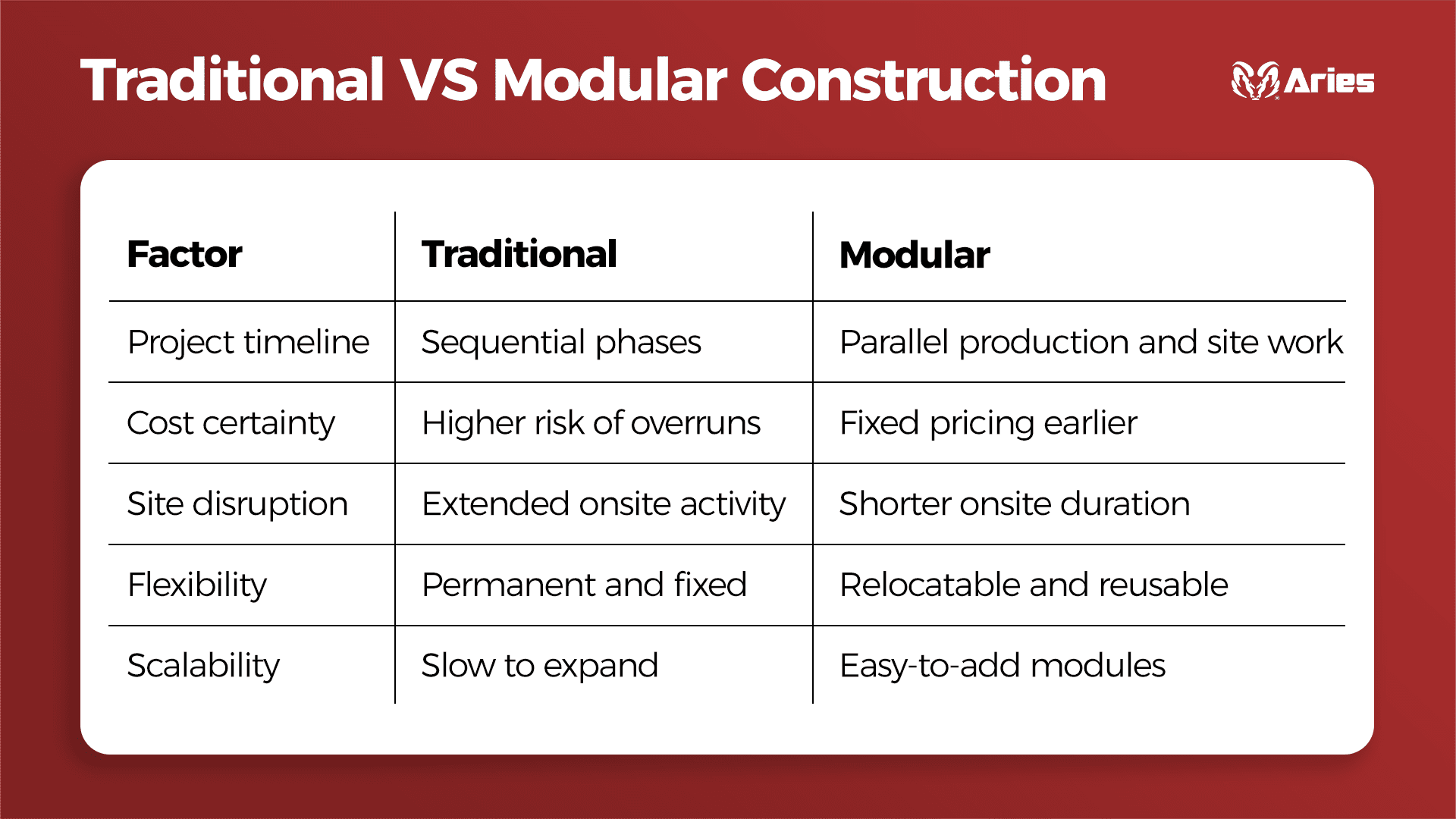
Comparison chart of traditional vs modular construction factors

Traditional construction often locks teams into long schedules and rigid outcomes. Modular buildings allow projects to scale, adapt, and respond to real-world changes without the need to start over.

Why Choose Aries When It Comes to Modular Buildings for Capital Projects

Aries specializes in modular buildings for different sectors. Projects are designed with compliance in mind, including GSA readiness and public building project standards.

Aries has delivered complex capital deployments on tight schedules, supported by a national footprint and proven logistics. The company works with clients early in the planning process. This helps teams align scope, budget, and delivery timelines before problems arise.

Aries matches rapid project delivery with consistent quality. For decision makers, this means fewer surprises and clearer accountability.

Plan Early, Build Smarter

Early planning sets the direction for the rest of the budget cycle. Modular buildings give organizations a way to act quickly without sacrificing control or quality. They support faster starts, steadier costs, and facilities that change as needs change.

Aries offers fast, flexible modular buildings for capital projects of every size. Learn more about our modular solutions, or request a quote to see how we can help fast-track your next project.

Request a Quote Today!

1
2

16 01, 2026

Big New Year Impact of Portable Classrooms

2026-03-23T17:29:45+00:00January 16th, 2026|

“Big New Year Impact of Portable Classrooms” is not just a catchy phrase but a wake-up call for school administrators facing mid-year enrollment spikes, ongoing renovations, or the launch of new educational programs. By embracing flexible learning environments, schools can quickly adapt to shifting needs without the burden of long-term budget constraints.

Explore why temporary school buildings and modular administrative buildings are more than just backup plans. Here’s a breakdown of how schools are using them to stay agile, what to watch for when planning, and provide a helpful checklist to keep schools organized. You’ll learn how solutions like portable schools solve tough questions like “How much does a modular classroom cost?” and “Where can I find a portable classroom rental near me?”

The Evolving Role of Portable Classrooms

Portable classrooms have come a long way from the basic trailers many remember. Today, they’re dynamic, purpose-built spaces that support everything from STEM programs to administrative operations. Schools nationwide are turning to these modular units not just for overflow but as intentional learning environments: modern, adaptable, and fully equipped to meet today’s educational needs.

Here’s why they matter now more than ever:

  • Enrollment spikes continue to hit mid-year. Districts nationwide are reporting sudden influxes as families move for economic reasons or re-enroll from alternative schooling.
  • Renovations are more complex. Construction timelines are long, and labor shortages are real. Portable classrooms keep students learning on-site while permanent structures are updated.
  • School Expansion solutions. STEM programs and functional needs services need their own dedicated space, often on short notice.

Plus, many districts are shifting toward modular administrative buildings to keep non-teaching staff out of crowded classroom wings. In areas like Texas, California, and Florida, where weather and zoning are factors, this level of flexibility has real benefits.

Conversely, student populations, grade-to-grade, year-to-year, can surge then rapidly decline. Portable classrooms have the flexibility to be repurposed to fit other growing needs within the school and community.

Modular buildings also align with sustainability goals. Organizations like Modular.org report up to 90% less construction waste and significantly lower emissions compared to traditional construction methods.

New Year Checklist for Planning Modular Classroom Additions

If you’re gearing up for expansion or just want to be ready for whatever 2026 throws your way, here’s a concise checklist to guide your planning process:

  1. Assess with Honesty

Before jumping to solutions, quantify your student growth, special programming needs, and renovation timelines. Don’t overlook admin staff or hybrid learning spaces.

  1. Determine Timeline and Seasonality

Mid-year installations often occur quickly, typically during winter break or summer months. Align your procurement and approval timeline with when you need the unit ready.

  1. Define Budget and Funding Options

Use financing tools or consult with modular building providers to explore lease vs. purchase options. Many districts qualify for short-term funding programs that make modular options more accessible than expected.

  1. Get Site-Ready

Know your zoning, utilities, and accessibility requirements. This is often the bottleneck that slows projects down. A good provider will help you assess this upfront.

  1. Choose a Reputable Builder

Don’t just Google “portable classroom rental near me.” Look for vendors with school-specific experience and options that match your architectural guidelines.

  1. Plan for Tech and Safety

Integration with school Wi-Fi, security systems, and HVAC upgrades is essential.

  1. Think Beyond the Classroom

Need a nurse’s station? A guidance office? A modular administrative building can help separate functions and reduce hallway crowding.

  1. Understand Federal Support Opportunities

Monitor federal initiatives and grants that can help offset infrastructure costs. The U.S. Department of Education regularly updates programs related to school improvement, safety, and innovation. Whether you’re applying for ESSER funds or tapping into future capital improvement programs, staying informed helps you make the most of what’s available, especially when planning for modular classrooms that meet evolving educational standards.

Each of these checklist items directly supports a flexible learning environment, something traditional buildings struggle to accommodate under sudden demand.

Exterior of Aries’ portable classrooms on campus.
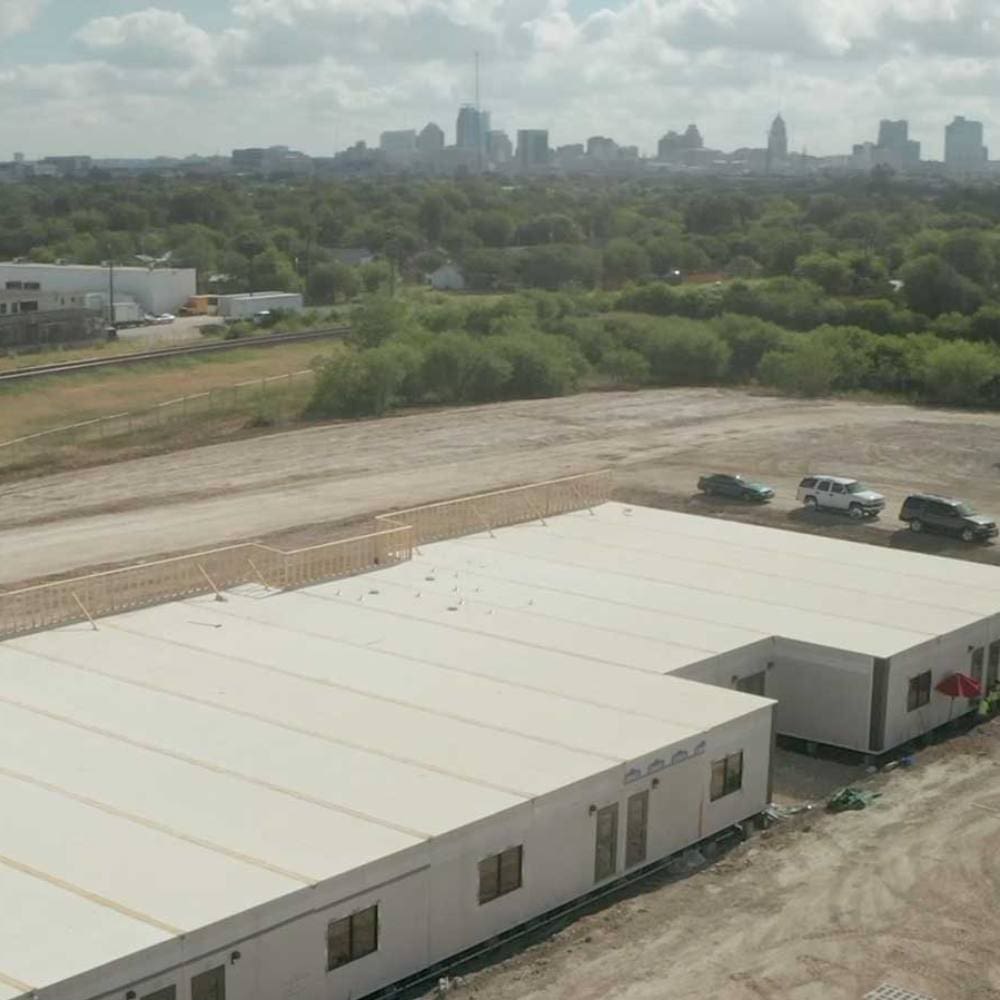
Overview of Aries’ modular construction with city in the distance.

Why Portable Classrooms Are More than Just Temporary

Let’s bust a myth: portable doesn’t mean short-term. Many schools deploy modular buildings for 5 to 15 years, even integrating them into long-term facility plans. Their flexibility doesn’t just solve emergency problems; it also creates room for innovation.

A notable example of this can be found at El Sol Academy in Santa Ana, California. As reported by Wired, the school constructed a 19,000-square-foot modular facility, aiming for completion within 90 days. The modular design not only expedited construction but also enabled the school to integrate modern, tech-ready spaces without the lengthy delays and costs associated with traditional buildings.

This kind of rapid deployment makes modular buildings especially valuable for schools that want to stay current with educational trends or quickly expand their STEM programs. The ability to roll out purpose-built classrooms in just a few months enables districts to experiment, grow, and respond to student needs without being constrained by outdated infrastructure or slow capital projects.

If you’re still asking, “How much does a modular classroom cost?” the honest answer is a lot less than the disruption, parent complaints, and students falling behind due to space issues. Modular solutions give you control over your learning environment on your schedule.

School Expansion Solutions

By now, it’s clear, portable classrooms aren’t just band-aid fixes but smart, scalable, and sustainable solutions for schools facing complex challenges. Whether it’s handling unexpected growth, managing renovations, or creating space for new programs, the impact of portable classrooms can’t be overstated.

Aries works with schools across the U.S. to deliver modular classroom and administrative solutions tailored to real-world constraints. Coast-to-coast, they’ve helped districts install entire temporary campuses and respond to emergencies without skipping a beat.

Need help running the numbers? Aries offers free consultation and financing guidance. They’ll walk you through renting vs. buying decisions, timeline planning, and compliance issues so you don’t get caught off guard.

When the bell rings and your enrollment jumps, be ready, not scrambling. Aries is here to help you plan smarter, build faster, and serve better.

Let us help you build the space you need, when you need it. Fill out the form to get a complimentary quote from our local modular experts.

We’d Love to Hear from You!

    Go to Top