


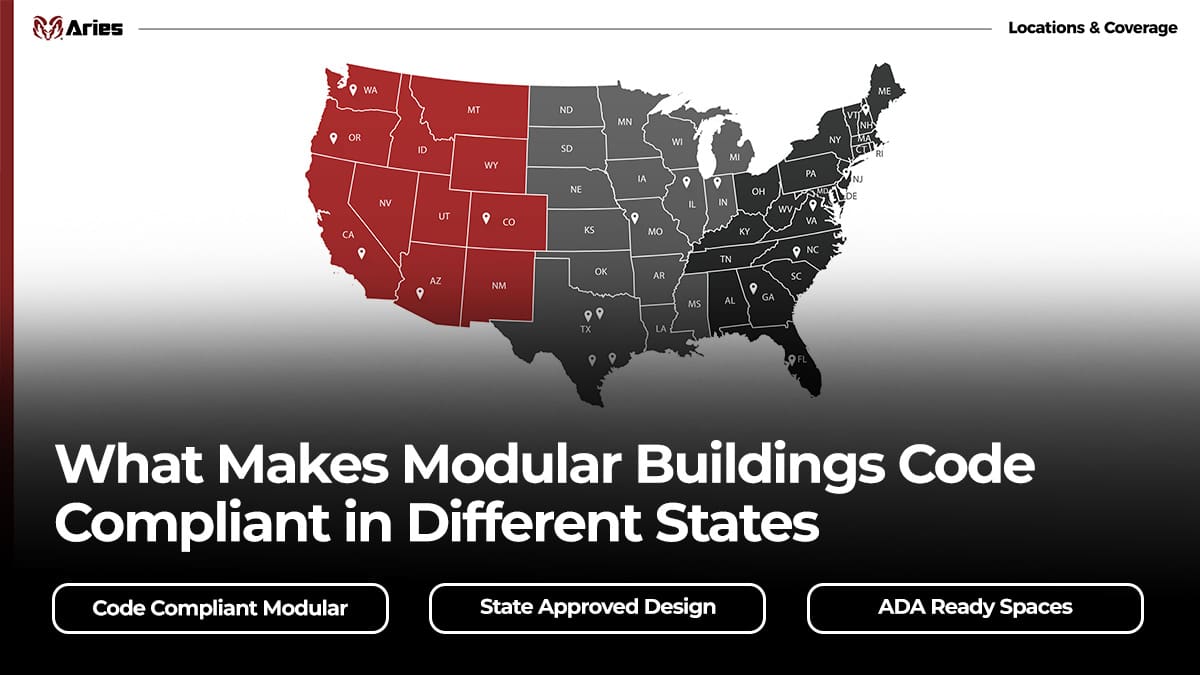
Modular construction is not just about speed and flexibility. It is also about precision, especially when it comes to code compliance. Across the U.S., modular buildings must meet or exceed the same codes and standards as traditional site-built structures. But navigating those requirements across different states can be complex.
Here is how modular projects stay compliant with national, state, and local building codes.
Understanding the Core Codes
All commercial buildings in the U.S., modular or not, are typically subject to:
• International Building Code (IBC): A model code used across most states to set standards for structural safety, fire protection, egress, materials, and more
• ADA Accessibility Guidelines: Ensure that modular buildings are accessible to people with disabilities, with requirements for entries, hallways, ramps, and restrooms
• NFPA Codes: Fire safety and suppression system codes often play a major role in modular compliance
Modular manufacturers engineer buildings to meet these standards from the start, using off-site quality control processes that often exceed traditional methods.
State Level Approvals for Modular Buildings
While the IBC provides the foundation, states often adopt their own building codes or versions of the IBC with modifications. Modular buildings must comply with each state’s unique code enforcement process.
For example:
• Texas: Requires review through the Texas Department of Licensing and Regulation (TDLR) under the Industrialized Housing and Buildings Program
• California: Has its own Department of Housing and Community Development (HCD) for modular building approvals, with strong emphasis on energy efficiency and seismic requirements
• Florida: Demands compliance with hurricane resistance standards, especially in high wind zones, including anchoring systems and wind load engineering
Aries ensures that every modular project is engineered and reviewed for the applicable state standards before delivery, working directly with state agencies and third party inspection teams.
Working with Local Jurisdictions
Even after receiving state level approval, local municipalities may require:
• Site specific zoning approvals
• Utility connection inspections
• Foundation plan reviews
• Fire department access requirements
That is why it is critical for buyers to engage early with local building departments and permitting offices. Aries supports this process by providing engineered drawings, state approvals, and all necessary documentation for permit applications.
The Role of Third Party Inspection and Labeling
To maintain consistency across jurisdictions, most states require that modular buildings be inspected by approved third party agencies. These inspections verify that each module complies with code during fabrication before it ever reaches the site.
After approval, each module is labeled with a permanent insignia or stamp confirming it meets state code. This helps expedite local approvals and inspections.
Accessibility and ADA Compliance
Modular buildings must also follow strict accessibility standards, including:
- Door widths
• Accessible entrances
• Bathroom fixture spacing
• Ramp slopes and landing sizes
These requirements are included in the design phase and verified through state and third party review.
Engineering for Regional Needs
Modular buildings are not one size fits all. A building destined for California might require seismic bracing. One headed to Florida needs reinforced wind load resistance. An educational space in New York may be subject to stricter fire codes than a jobsite trailer in Nevada.
Aries engineers every building with these factors in mind, from snow load to thermal insulation ratings, based on the destination’s code requirements.
Compliance Made Simple
One of the biggest advantages of modular construction is the control it offers. By designing, engineering, and inspecting buildings in a factory controlled setting, manufacturers can ensure each module meets code before it leaves the facility. With state and third party oversight built into the process, buyers can trust that code compliance is never an afterthought.
Need help navigating modular codes in your area?
Talk to an Aries modular specialist to get the right building, fully compliant and fully approved.
Modular construction is not just about speed and flexibility. It is also about precision, especially when it comes to code compliance. Across the U.S., modular buildings must meet or exceed the same codes and standards as traditional site-built structures. But navigating those requirements across different states can be complex.
Here is how modular projects stay compliant with national, state, and local building codes.
Understanding the Core Codes
All commercial buildings in the U.S., modular or not, are typically subject to:
• International Building Code (IBC): A model code used across most states to set standards for structural safety, fire protection, egress, materials, and more
• ADA Accessibility Guidelines: Ensure that modular buildings are accessible to people with disabilities, with requirements for entries, hallways, ramps, and restrooms
• NFPA Codes: Fire safety and suppression system codes often play a major role in modular compliance
Modular manufacturers engineer buildings to meet these standards from the start, using off-site quality control processes that often exceed traditional methods.
State Level Approvals for Modular Buildings
While the IBC provides the foundation, states often adopt their own building codes or versions of the IBC with modifications. Modular buildings must comply with each state’s unique code enforcement process.
For example:
• Texas: Requires review through the Texas Department of Licensing and Regulation (TDLR) under the Industrialized Housing and Buildings Program
• California: Has its own Department of Housing and Community Development (HCD) for modular building approvals, with strong emphasis on energy efficiency and seismic requirements
• Florida: Demands compliance with hurricane resistance standards, especially in high wind zones, including anchoring systems and wind load engineering
Aries ensures that every modular project is engineered and reviewed for the applicable state standards before delivery, working directly with state agencies and third party inspection teams.
Working with Local Jurisdictions
Even after receiving state level approval, local municipalities may require:
• Site specific zoning approvals
• Utility connection inspections
• Foundation plan reviews
• Fire department access requirements
That is why it is critical for buyers to engage early with local building departments and permitting offices. Aries supports this process by providing engineered drawings, state approvals, and all necessary documentation for permit applications.
The Role of Third Party Inspection and Labeling
To maintain consistency across jurisdictions, most states require that modular buildings be inspected by approved third party agencies. These inspections verify that each module complies with code during fabrication before it ever reaches the site.
After approval, each module is labeled with a permanent insignia or stamp confirming it meets state code. This helps expedite local approvals and inspections.
Accessibility and ADA Compliance
Modular buildings must also follow strict accessibility standards, including:
- Door widths
• Accessible entrances
• Bathroom fixture spacing
• Ramp slopes and landing sizes
These requirements are included in the design phase and verified through state and third party review.
Engineering for Regional Needs
Modular buildings are not one size fits all. A building destined for California might require seismic bracing. One headed to Florida needs reinforced wind load resistance. An educational space in New York may be subject to stricter fire codes than a jobsite trailer in Nevada.
Aries engineers every building with these factors in mind, from snow load to thermal insulation ratings, based on the destination’s code requirements.
Compliance Made Simple
One of the biggest advantages of modular construction is the control it offers. By designing, engineering, and inspecting buildings in a factory controlled setting, manufacturers can ensure each module meets code before it leaves the facility. With state and third party oversight built into the process, buyers can trust that code compliance is never an afterthought.
Need help navigating modular codes in your area?
Talk to an Aries modular specialist to get the right building, fully compliant and fully approved.


Follow Us On Social Media!