

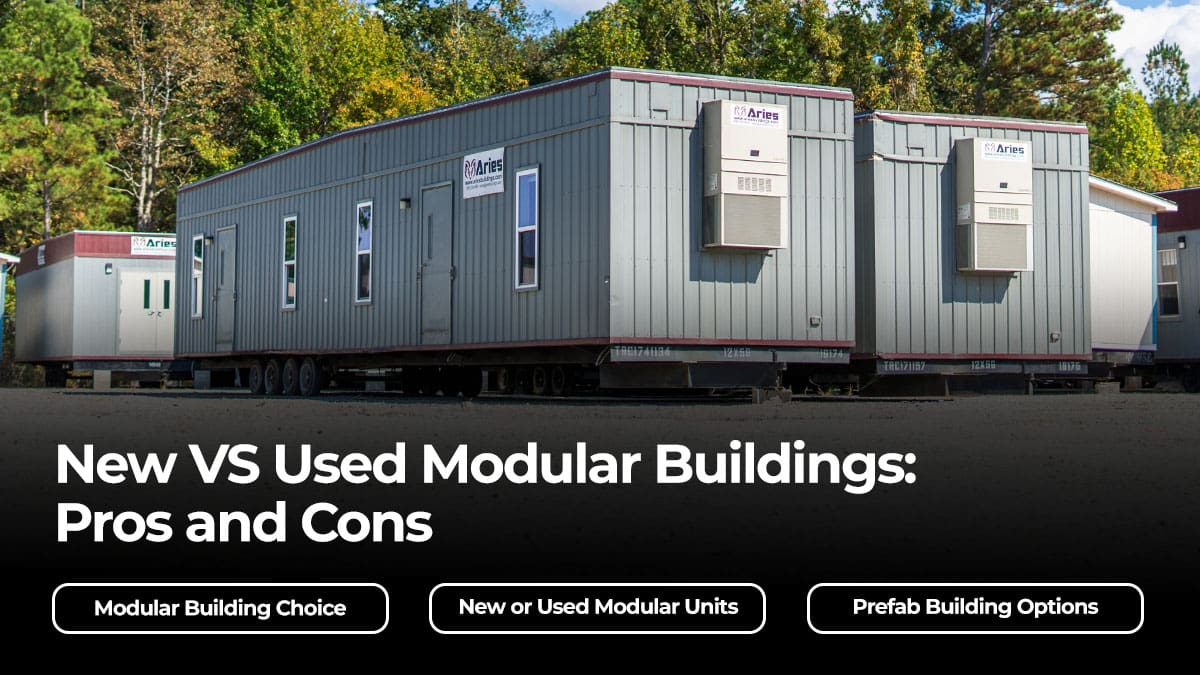
Demand for flexible space continues to rise across education, government, and construction. Projects move faster while budgets face more scrutiny. In many cases, modular buildings provide a practical solution. But one key question often shapes the decision: should you choose new or used?
Comparing new vs used modular buildings helps facility managers and planners avoid delays and control costs. Both options can meet code requirements and deliver reliable performance. Their difference lies in how each option meets your timeline, budget, and long-term goals. This guide breaks down the advantages and disadvantages of each to help you make an informed decision.
Benefits of New Modular Buildings
When evaluating new vs used modular buildings, new construction offers the highest level of control and long-term value. These buildings are designed from the ground up to match your project needs. Their key advantages include:
- Full customization: New modular buildings are tailored to your layout, function, and branding. This is ideal for schools, healthcare spaces, and administrative offices that require specific configurations.
- Built to current codes: While both new and used options meet code requirements, new buildings are designed to the latest standards from day one. This can simplify approvals and reduce the need for upgrades.
- Brand-new condition: All systems, finishes, and materials are unused, which often translates to lower maintenance needs in the early years of operation.
- Warranty coverage: New builds typically include warranties on structure and systems, so you get added confidence for long-term planning.
However, new units can also come with higher upfront costs and longer lead times. Custom design, engineering, and manufacturing take time, which may not suit urgent projects. Budget approvals can take time as well, especially in the public sector.
Benefits of Used Modular Buildings
Used modular buildings offer a different kind of value. In the new vs used modular buildings discussion, they stand out for speed and cost efficiency. Key advantages include:
- Lower upfront cost: Used buildings are often available at a reduced price compared to new construction, enabling organizations to manage with tight budgets.
- Faster delivery: Since the building already exists, it can be delivered and installed much sooner, which is ideal for urgent space needs.
- Refurbished and compliant: Reputable providers inspect and upgrade used units to meet current codes and performance standards before delivery.
- Environmentally responsible: Reusing existing structures reduces material waste and lowers the overall environmental impact of a project.
- Strong fit for short-term use: Projects with a defined timeline, such as swing space during renovations or temporary offices, often benefit from used buildings.
Used units can also have a few disadvantages, such as limited layout, size, or finishes. Since they are pre-built, customization options are more restricted, and the exact configuration you need may not be immediately available. In some cases, refurbishment is required to meet specific project standards or preferences.
Choosing the Best Fit
The choice between new and used depends on a few clear factors. When reviewing new vs used modular buildings, decision-makers should focus on how the building will be used over time.
Start with these main considerations:
- Project timeline: If space is needed quickly, used buildings often provide the fastest route. For projects with longer lead times, new construction allows for better planning.
- Budget constraints: Used buildings reduce upfront costs, while new ones may offer better long-term value depending on the length of use.
- Customization needs: Projects that require specific layouts or specialized features typically benefit from new construction.
- Duration of use: Short-term needs often work with used units, whereas long-term or permanent facilities usually justify investment in new buildings.
Consider a few simple examples. A school district facing a sudden enrollment increase may choose used modular classrooms to meet immediate demand. On the other hand, a healthcare provider planning a long-term clinic expansion may opt for a new modular building designed for that purpose.
Make the Right Decision with Aries Building Systems
Both new and used modular buildings offer reliable, code-compliant solutions. The right choice depends on how well the option fits your timeline, budget, and long-term plans.
Aries Building Systems works closely with clients to identify the best fit. Whether your project needs are immediate or part of a long-term strategy, Aries provides guidance backed by real project experience.
To explore available options or discuss a custom solution, contact an Aries specialist today. For new modular buildings, you can also request a free quote using the form below.
Demand for flexible space continues to rise across education, government, and construction. Projects move faster while budgets face more scrutiny. In many cases, modular buildings provide a practical solution. But one key question often shapes the decision: should you choose new or used?
Comparing new vs used modular buildings helps facility managers and planners avoid delays and control costs. Both options can meet code requirements and deliver reliable performance. Their difference lies in how each option meets your timeline, budget, and long-term goals. This guide breaks down the advantages and disadvantages of each to help you make an informed decision.
Benefits of New Modular Buildings
When evaluating new vs used modular buildings, new construction offers the highest level of control and long-term value. These buildings are designed from the ground up to match your project needs. Their key advantages include:
- Full customization: New modular buildings are tailored to your layout, function, and branding. This is ideal for schools, healthcare spaces, and administrative offices that require specific configurations.
- Built to current codes: While both new and used options meet code requirements, new buildings are designed to the latest standards from day one. This can simplify approvals and reduce the need for upgrades.
- Brand-new condition: All systems, finishes, and materials are unused, which often translates to lower maintenance needs in the early years of operation.
- Warranty coverage: New builds typically include warranties on structure and systems, so you get added confidence for long-term planning.
However, new units can also come with higher upfront costs and longer lead times. Custom design, engineering, and manufacturing take time, which may not suit urgent projects. Budget approvals can take time as well, especially in the public sector.
Benefits of Used Modular Buildings
Used modular buildings offer a different kind of value. In the new vs used modular buildings discussion, they stand out for speed and cost efficiency. Key advantages include:
- Lower upfront cost: Used buildings are often available at a reduced price compared to new construction, enabling organizations to manage with tight budgets.
- Faster delivery: Since the building already exists, it can be delivered and installed much sooner, which is ideal for urgent space needs.
- Refurbished and compliant: Reputable providers inspect and upgrade used units to meet current codes and performance standards before delivery.
- Environmentally responsible: Reusing existing structures reduces material waste and lowers the overall environmental impact of a project.
- Strong fit for short-term use: Projects with a defined timeline, such as swing space during renovations or temporary offices, often benefit from used buildings.
Used units can also have a few disadvantages, such as limited layout, size, or finishes. Since they are pre-built, customization options are more restricted, and the exact configuration you need may not be immediately available. In some cases, refurbishment is required to meet specific project standards or preferences.
Choosing the Best Fit
The choice between new and used depends on a few clear factors. When reviewing new vs used modular buildings, decision-makers should focus on how the building will be used over time.
Start with these main considerations:
- Project timeline: If space is needed quickly, used buildings often provide the fastest route. For projects with longer lead times, new construction allows for better planning.
- Budget constraints: Used buildings reduce upfront costs, while new ones may offer better long-term value depending on the length of use.
- Customization needs: Projects that require specific layouts or specialized features typically benefit from new construction.
- Duration of use: Short-term needs often work with used units, whereas long-term or permanent facilities usually justify investment in new buildings.
Consider a few simple examples. A school district facing a sudden enrollment increase may choose used modular classrooms to meet immediate demand. On the other hand, a healthcare provider planning a long-term clinic expansion may opt for a new modular building designed for that purpose.
Make the Right Decision with Aries Building Systems
Both new and used modular buildings offer reliable, code-compliant solutions. The right choice depends on how well the option fits your timeline, budget, and long-term plans.
Aries Building Systems works closely with clients to identify the best fit. Whether your project needs are immediate or part of a long-term strategy, Aries provides guidance backed by real project experience.
To explore available options or discuss a custom solution, contact an Aries specialist today. For new modular buildings, you can also request a free quote using the form below.
Follow Us On Social Media!