

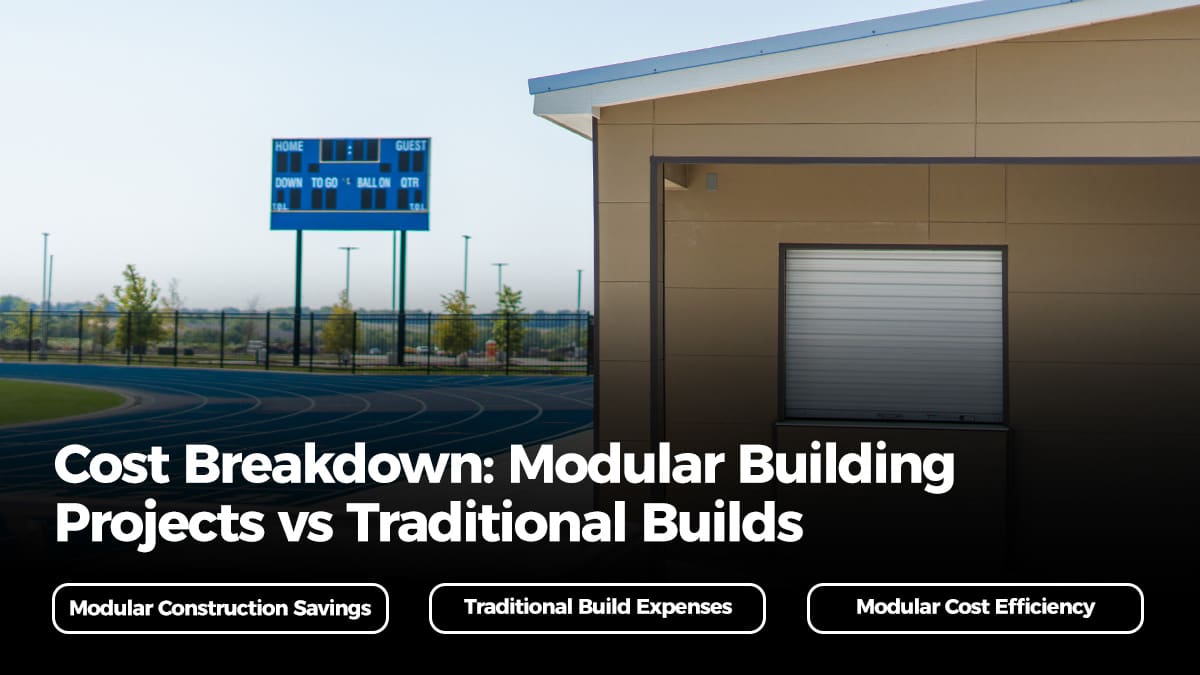
Modular vs Traditional Construction Costs: a Practical Comparison
Construction budgets rarely leave much room for surprises. For project developers, school planners, and government facility managers, cost often determines which building approach moves forward. The conversation may begin with a comparison of modular vs traditional construction costs because the financial impact of projects extends far beyond the initial contract price.
Traditional construction has long been the standard approach. However, rising labor costs, material delays, and weather disruptions have pushed many organizations to look for alternatives. Modular construction is one popular option.
Between the two, factors such as labor hours, project timelines, and operational savings can significantly affect the total investment. This article breaks down those differences and explains why many organizations now view modular construction as a practical and cost-effective solution, especially when compared to traditional builds.
Upfront Costs: What You Pay to Get Started
Every project begins with early expenses involving site preparation, permitting, foundation work, and the procurement of materials. When evaluating modular vs traditional construction costs, these starting expenses often reveal the first difference between the two approaches.
- Traditional construction: Most work occurs on-site. Materials arrive in stages, and multiple subcontractors work sequentially. Weather delays, scheduling conflicts, and material shortages can increase costs before the structure is even complete.
- Modular construction: Building sections are produced in a manufacturing facility while the site is being prepared. This controlled production environment helps stabilize costs. Materials are stored indoors and protected from weather damage. Manufacturing teams follow standardized processes that reduce waste and improve efficiency.
Site preparation and foundations are still required for modular projects. However, fewer on-site construction stages often mean fewer cost overruns tied to weather or delays. For many organizations, this predictability is a major advantage.
Labor and Timeline Efficiencies
Labor represents one of the largest components in construction budgets. Skilled labor shortages have also increased wages across many regions. As a result, modular vs traditional construction costs often change significantly when labor and scheduling are considered.
Traditional projects depend on large on-site teams working across many trades. Each stage must finish before the next begins, so any delays can create a chain reaction that could push completion dates further out.
Modular construction follows a parallel workflow where building modules are produced in a factory while crews prepare the site. Once the modules arrive, installation moves quickly. This approach reduces the total number of labor hours required.
A shorter construction timeline means additional savings. Equipment rentals, temporary fencing, site security, and project management costs are often tied to project duration, so faster completion results in reduced expenses.
Operating and Lifecycle Costs
Construction decisions should not focus only on the initial build price. Long-term performance also affects the total project value. This is another area where a modular vs traditional construction cost comparison deserves close attention.
Modern modular buildings are designed to meet the same building codes as traditional structures. Many include high-performance insulation, efficient heating and cooling systems, and durable materials. These features can reduce energy use and maintenance costs over time.
Flexibility is another benefit, as in the case of custom modular space requirements. Moreover, modular buildings can often be expanded, relocated, or reconfigured as needs change. For school districts or government agencies facing fluctuating enrollment or program growth, this flexibility helps protect long-term investment.
Some organizations also value the financial flexibility modular buildings offer. Leasing or phased purchasing options may align better with public funding cycles than traditional construction contracts.
Real-World Cost Data
Independent research supports the cost advantages seen in many modular projects. The Modular Building Institute reports that modular construction can reduce project timelines by roughly 30 to 50% compared with conventional methods.
A shorter timeline translates into lower labor costs and reduced site overhead. Fewer months on-site means less spending on equipment rentals, temporary utilities, and security.
Many project teams also find that modular construction improves schedule reliability. Factory production limits weather-related disruptions and helps maintain consistent build quality.
Organizations that evaluate modular vs traditional construction costs often discover that these time savings create measurable financial benefits across the entire project schedule.
Cost Efficiency Without Compromise
Cost-conscious planning does not mean sacrificing quality or performance. A careful look at modular vs traditional construction costs shows that modular construction improves productivity by reducing labor hours, shortening project timelines, and enhancing long-term efficiency.
Aries Building Systems helps organizations take advantage of these efficiencies.
Our extensive experience in modular construction ensures we consistently deliver reliable buildings designed for speed, durability, and cost transparency.
Talk to a Modular Specialist about your building and financing requirements today!
Modular vs Traditional Construction Costs: a Practical Comparison
Construction budgets rarely leave much room for surprises. For project developers, school planners, and government facility managers, cost often determines which building approach moves forward. The conversation may begin with a comparison of modular vs traditional construction costs because the financial impact of projects extends far beyond the initial contract price.
Traditional construction has long been the standard approach. However, rising labor costs, material delays, and weather disruptions have pushed many organizations to look for alternatives. Modular construction is one popular option.
Between the two, factors such as labor hours, project timelines, and operational savings can significantly affect the total investment. This article breaks down those differences and explains why many organizations now view modular construction as a practical and cost-effective solution, especially when compared to traditional builds.
Upfront Costs: What You Pay to Get Started
Every project begins with early expenses involving site preparation, permitting, foundation work, and the procurement of materials. When evaluating modular vs traditional construction costs, these starting expenses often reveal the first difference between the two approaches.
- Traditional construction: Most work occurs on-site. Materials arrive in stages, and multiple subcontractors work sequentially. Weather delays, scheduling conflicts, and material shortages can increase costs before the structure is even complete.
- Modular construction: Building sections are produced in a manufacturing facility while the site is being prepared. This controlled production environment helps stabilize costs. Materials are stored indoors and protected from weather damage. Manufacturing teams follow standardized processes that reduce waste and improve efficiency.
Site preparation and foundations are still required for modular projects. However, fewer on-site construction stages often mean fewer cost overruns tied to weather or delays. For many organizations, this predictability is a major advantage.
Labor and Timeline Efficiencies
Labor represents one of the largest components in construction budgets. Skilled labor shortages have also increased wages across many regions. As a result, modular vs traditional construction costs often change significantly when labor and scheduling are considered.
Traditional projects depend on large on-site teams working across many trades. Each stage must finish before the next begins, so any delays can create a chain reaction that could push completion dates further out.
Modular construction follows a parallel workflow where building modules are produced in a factory while crews prepare the site. Once the modules arrive, installation moves quickly. This approach reduces the total number of labor hours required.
A shorter construction timeline means additional savings. Equipment rentals, temporary fencing, site security, and project management costs are often tied to project duration, so faster completion results in reduced expenses.
Operating and Lifecycle Costs
Construction decisions should not focus only on the initial build price. Long-term performance also affects the total project value. This is another area where a modular vs traditional construction cost comparison deserves close attention.
Modern modular buildings are designed to meet the same building codes as traditional structures. Many include high-performance insulation, efficient heating and cooling systems, and durable materials. These features can reduce energy use and maintenance costs over time.
Flexibility is another benefit, as in the case of custom modular space requirements. Moreover, modular buildings can often be expanded, relocated, or reconfigured as needs change. For school districts or government agencies facing fluctuating enrollment or program growth, this flexibility helps protect long-term investment.
Some organizations also value the financial flexibility modular buildings offer. Leasing or phased purchasing options may align better with public funding cycles than traditional construction contracts.
Real-World Cost Data
Independent research supports the cost advantages seen in many modular projects. The Modular Building Institute reports that modular construction can reduce project timelines by roughly 30 to 50% compared with conventional methods.
A shorter timeline translates into lower labor costs and reduced site overhead. Fewer months on-site means less spending on equipment rentals, temporary utilities, and security.
Many project teams also find that modular construction improves schedule reliability. Factory production limits weather-related disruptions and helps maintain consistent build quality.
Organizations that evaluate modular vs traditional construction costs often discover that these time savings create measurable financial benefits across the entire project schedule.
Cost Efficiency Without Compromise
Cost-conscious planning does not mean sacrificing quality or performance. A careful look at modular vs traditional construction costs shows that modular construction improves productivity by reducing labor hours, shortening project timelines, and enhancing long-term efficiency.
Aries Building Systems helps organizations take advantage of these efficiencies.
Our extensive experience in modular construction ensures we consistently deliver reliable buildings designed for speed, durability, and cost transparency.
Talk to a Modular Specialist about your building and financing requirements today!


Follow Us On Social Media!