

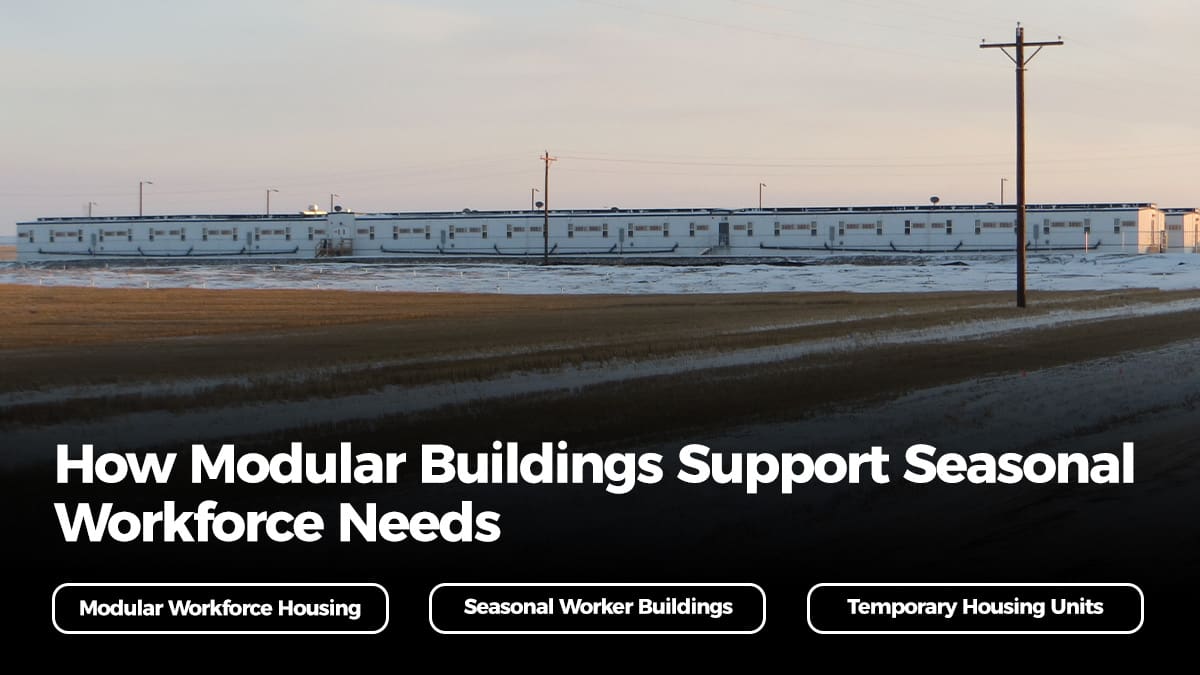
Seasonal labor is essential across certain industries. Construction projects ramp up during warmer months. Farms require large crews for planting and harvesting. Energy and infrastructure projects often mobilize hundreds of workers to work within limited project windows. These surges create a familiar problem, but where do all these temporary workers stay, work, and access basic services?
For many businesses, the answer is modular buildings for seasonal workforce support. Traditional housing and facility development often takes too long or costs too much for temporary operations. At the same time, sending workers to distant lodging can reduce efficiency and increase transport costs.
Modular buildings can be delivered and installed quickly, even in remote locations. They provide housing, workspaces, and essential services in a controlled, code-compliant environment. More importantly, they give project leaders a way to support their workforce without the need to build permanent infrastructure that may sit idle once the busy season ends.
Industries That Depend on Seasonal Workforce Infrastructure
Many industries face predictable labor surges each year. For these sectors, modular buildings for seasonal workforce operations help maintain productivity while keeping workers safe and comfortable.
- Construction: Major projects such as highway upgrades, industrial facilities, and large commercial developments often require hundreds of workers for a limited period. According to the U.S. Bureau of Labor Statistics, the construction sector is cyclical. When projects are located outside urban centers, housing and operational facilities become a logistical challenge.
- Agriculture: AP reports that farms rely on large numbers of temporary or contract workers during planting and harvest cycles. Many agricultural operations are located far from established housing. So without nearby accommodations, farm operators struggle to recruit and retain workers.
- Energy: Oil, gas, mining, and renewable energy projects often operate in remote areas with little to no existing infrastructure. Workers may be deployed for several months to support drilling, pipeline construction, or wind farm installation. As such, providing safe and comfortable accommodations becomes essential to ensure productivity and safety.
- Infrastructure and disaster recovery: When roads, utilities, or public facilities require rapid repair, crews must be mobilized quickly. This means temporary facilities must also be ready as soon as workers arrive.
In all of these cases, modular buildings for seasonal workforce support give project leaders the ability to scale operations without relying on scarce local housing or building permanent structures.
Key Benefits of Modular Buildings for Seasonal Workforce Operations
Seasonal projects operate on tight timelines, so any sort of delay can disrupt harvest schedules, construction milestones, or energy production targets. Modular buildings for seasonal workforce support help organizations to move faster while controlling costs, and offer the following benefits:
- Speed: Modular structures are manufactured off-site while site preparation takes place. Once delivered, installation is often completed within days. This short timeline allows project teams to mobilize workers quickly and keep their project schedules on track.
- Scalability: Seasonal labor needs rarely remain constant from year to year. With modular buildings, operators can add or remove units as workforce numbers change, and organizations can lease additional space during peak seasons and reduce capacity when demand drops.
- Flexible financing: Providers like Aries Building Systems offer leasing, purchasing, or relocation options, and buildings used on one project can often be redeployed to another site. This approach reduces the risk of investing in infrastructure that may remain idle or unused after a project ends.
- Quality and compliance: Modern modular buildings meet the same building codes as traditional construction, including insulation, climate control, fire safety systems, and durable materials that perform well in demanding environments.
Workforce Housing That Supports Productivity and Retention
Housing is often the most pressing challenge during seasonal labor surges. When workers must travel long distances to reach job sites, productivity suffers, fatigue increases, and recruitment becomes more difficult. This is why modular buildings for seasonal workforce housing camps have become a common solution across several industries.
Modular workforce housing can be configured in different layouts depending on project needs. Dormitory-style units may house larger crews, while private or semi-private rooms may be used for longer assignments or specialized teams. Units are typically equipped with heating, cooling, lighting, and secure access.
Shared facilities are often included as well. Dining areas, laundry spaces, and recreational rooms improve daily living conditions. Access to these amenities helps maintain morale during demanding projects.
Safety and health standards are also easier to maintain in organized housing facilities. Well-planned modular camps allow managers to monitor occupancy, sanitation, and emergency access, which is particularly important in remote areas where external services may be limited.
Better living conditions lead to better performance and ensure safety. Workers who sleep well and feel safe tend to stay longer and work more effectively.
Essential Support Facilities Beyond Housing
Housing alone does not completely support seasonal operations. Workers also need access to administrative offices, medical care, sanitation facilities, and food preparation areas. Modular buildings for seasonal workforce operations can house these essential services.
- Mobile office units give supervisors and project managers a central location to coordinate operations. These spaces support scheduling, safety briefings, document storage, and communications with headquarters. With a dedicated office, it becomes easier to maintain regulatory compliance and proper record-keeping.
- Medical units are another valuable component of seasonal workforce infrastructure. Remote projects often operate far from hospitals or clinics. Modular medical facilities allow trained personnel to provide basic treatment, conduct health screenings, and respond quickly to injuries or medical emergencies.
- Restrooms and shower facilities are essential for worker hygiene and regulatory compliance. OSHA provides guidance on sanitation requirements for all types of workers, including temporary ones. Modular sanitation units help employers meet these standards even in remote environments.
- Kitchens and dining facilities are also necessities in workforce camps. Providing reliable on-site meals reduces travel time and ensures workers receive proper nutrition during demanding shifts.
A Proven Strategy for Managing Seasonal Labor Demands
Seasonal workforce planning is a major operational challenge for different industries. Labor surges create pressure on housing, logistics, and support infrastructure. Without proper planning, these issues can delay projects and increase costs.
Modular buildings for seasonal workforce needs are a practical and proven solution, as they provide fast deployment, scalable capacity, and flexible financing options. Companies can support large crews without committing to permanent construction that may sit unused after the season ends.
These structures also support worker well-being through safe housing, climate-controlled facilities, and organized support services, especially during demanding assignments.
For construction managers, agricultural operators, and energy project leaders, modular infrastructure provides a reliable path forward. Aries Building Systems works with organizations across these industries to deliver modular buildings that meet demanding project timelines and workforce needs.
If your operation is preparing for a seasonal workforce surge, consider how modular buildings can simplify logistics and improve site performance.
Ready to support your seasonal workforce with flexible modular solutions? Talk to a modular specialist to explore housing, office, and facility options tailored to your site needs.
Seasonal labor is essential across certain industries. Construction projects ramp up during warmer months. Farms require large crews for planting and harvesting. Energy and infrastructure projects often mobilize hundreds of workers to work within limited project windows. These surges create a familiar problem, but where do all these temporary workers stay, work, and access basic services?
For many businesses, the answer is modular buildings for seasonal workforce support. Traditional housing and facility development often takes too long or costs too much for temporary operations. At the same time, sending workers to distant lodging can reduce efficiency and increase transport costs.
Modular buildings can be delivered and installed quickly, even in remote locations. They provide housing, workspaces, and essential services in a controlled, code-compliant environment. More importantly, they give project leaders a way to support their workforce without the need to build permanent infrastructure that may sit idle once the busy season ends.
Industries That Depend on Seasonal Workforce Infrastructure
Many industries face predictable labor surges each year. For these sectors, modular buildings for seasonal workforce operations help maintain productivity while keeping workers safe and comfortable.
- Construction: Major projects such as highway upgrades, industrial facilities, and large commercial developments often require hundreds of workers for a limited period. According to the U.S. Bureau of Labor Statistics, the construction sector is cyclical. When projects are located outside urban centers, housing and operational facilities become a logistical challenge.
- Agriculture: AP reports that farms rely on large numbers of temporary or contract workers during planting and harvest cycles. Many agricultural operations are located far from established housing. So without nearby accommodations, farm operators struggle to recruit and retain workers.
- Energy: Oil, gas, mining, and renewable energy projects often operate in remote areas with little to no existing infrastructure. Workers may be deployed for several months to support drilling, pipeline construction, or wind farm installation. As such, providing safe and comfortable accommodations becomes essential to ensure productivity and safety.
- Infrastructure and disaster recovery: When roads, utilities, or public facilities require rapid repair, crews must be mobilized quickly. This means temporary facilities must also be ready as soon as workers arrive.
In all of these cases, modular buildings for seasonal workforce support give project leaders the ability to scale operations without relying on scarce local housing or building permanent structures.
Key Benefits of Modular Buildings for Seasonal Workforce Operations
Seasonal projects operate on tight timelines, so any sort of delay can disrupt harvest schedules, construction milestones, or energy production targets. Modular buildings for seasonal workforce support help organizations to move faster while controlling costs, and offer the following benefits:
- Speed: Modular structures are manufactured off-site while site preparation takes place. Once delivered, installation is often completed within days. This short timeline allows project teams to mobilize workers quickly and keep their project schedules on track.
- Scalability: Seasonal labor needs rarely remain constant from year to year. With modular buildings, operators can add or remove units as workforce numbers change, and organizations can lease additional space during peak seasons and reduce capacity when demand drops.
- Flexible financing: Providers like Aries Building Systems offer leasing, purchasing, or relocation options, and buildings used on one project can often be redeployed to another site. This approach reduces the risk of investing in infrastructure that may remain idle or unused after a project ends.
- Quality and compliance: Modern modular buildings meet the same building codes as traditional construction, including insulation, climate control, fire safety systems, and durable materials that perform well in demanding environments.
Workforce Housing That Supports Productivity and Retention
Housing is often the most pressing challenge during seasonal labor surges. When workers must travel long distances to reach job sites, productivity suffers, fatigue increases, and recruitment becomes more difficult. This is why modular buildings for seasonal workforce housing camps have become a common solution across several industries.
Modular workforce housing can be configured in different layouts depending on project needs. Dormitory-style units may house larger crews, while private or semi-private rooms may be used for longer assignments or specialized teams. Units are typically equipped with heating, cooling, lighting, and secure access.
Shared facilities are often included as well. Dining areas, laundry spaces, and recreational rooms improve daily living conditions. Access to these amenities helps maintain morale during demanding projects.
Safety and health standards are also easier to maintain in organized housing facilities. Well-planned modular camps allow managers to monitor occupancy, sanitation, and emergency access, which is particularly important in remote areas where external services may be limited.
Better living conditions lead to better performance and ensure safety. Workers who sleep well and feel safe tend to stay longer and work more effectively.
Essential Support Facilities Beyond Housing
Housing alone does not completely support seasonal operations. Workers also need access to administrative offices, medical care, sanitation facilities, and food preparation areas. Modular buildings for seasonal workforce operations can house these essential services.
- Mobile office units give supervisors and project managers a central location to coordinate operations. These spaces support scheduling, safety briefings, document storage, and communications with headquarters. With a dedicated office, it becomes easier to maintain regulatory compliance and proper record-keeping.
- Medical units are another valuable component of seasonal workforce infrastructure. Remote projects often operate far from hospitals or clinics. Modular medical facilities allow trained personnel to provide basic treatment, conduct health screenings, and respond quickly to injuries or medical emergencies.
- Restrooms and shower facilities are essential for worker hygiene and regulatory compliance. OSHA provides guidance on sanitation requirements for all types of workers, including temporary ones. Modular sanitation units help employers meet these standards even in remote environments.
- Kitchens and dining facilities are also necessities in workforce camps. Providing reliable on-site meals reduces travel time and ensures workers receive proper nutrition during demanding shifts.
A Proven Strategy for Managing Seasonal Labor Demands
Seasonal workforce planning is a major operational challenge for different industries. Labor surges create pressure on housing, logistics, and support infrastructure. Without proper planning, these issues can delay projects and increase costs.
Modular buildings for seasonal workforce needs are a practical and proven solution, as they provide fast deployment, scalable capacity, and flexible financing options. Companies can support large crews without committing to permanent construction that may sit unused after the season ends.
These structures also support worker well-being through safe housing, climate-controlled facilities, and organized support services, especially during demanding assignments.
For construction managers, agricultural operators, and energy project leaders, modular infrastructure provides a reliable path forward. Aries Building Systems works with organizations across these industries to deliver modular buildings that meet demanding project timelines and workforce needs.
If your operation is preparing for a seasonal workforce surge, consider how modular buildings can simplify logistics and improve site performance.
Ready to support your seasonal workforce with flexible modular solutions? Talk to a modular specialist to explore housing, office, and facility options tailored to your site needs.


Follow Us On Social Media!