

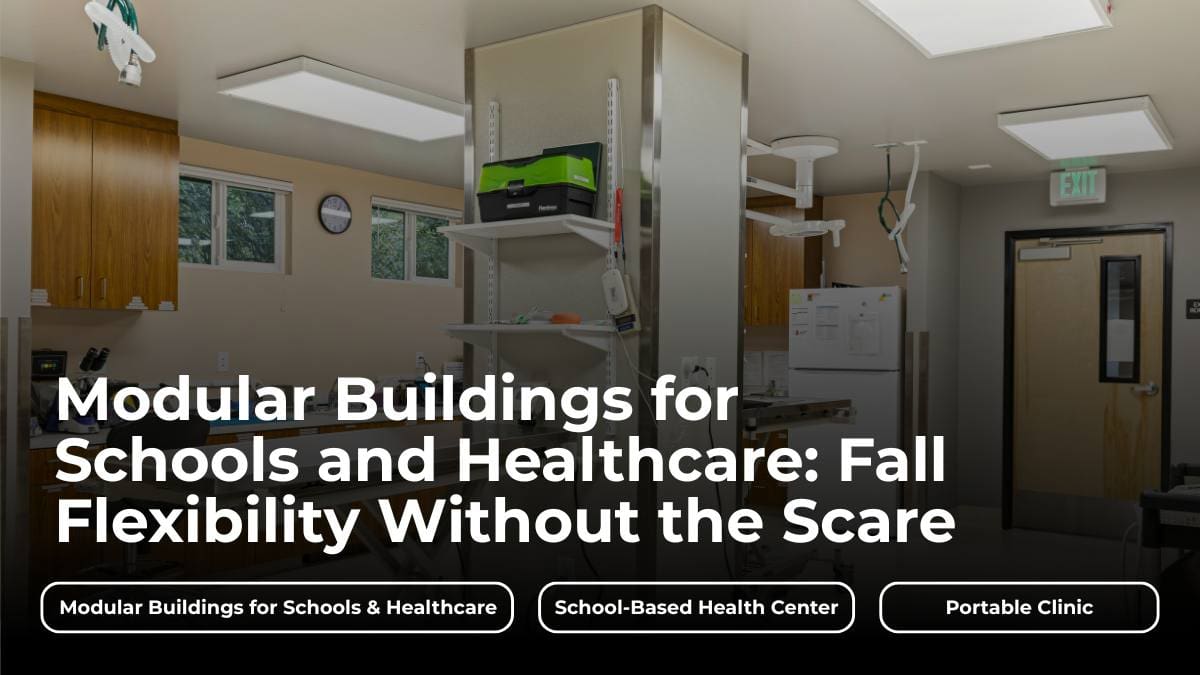
Modular buildings for schools and healthcare are regarded as flexible and fast solutions, especially in the fall when student health needs are heightened. Situations are often observed in which kindergartners skip lunch due to dizziness or college students experience flu symptoms without nearby care. High demand is faced in school-based health centers (SBHCs), and rapid expansion is not always achieved. With modular solutions, on-campus clinics can be added or upgraded without staff being placed in cramped trailers or improvements being delayed. Backed by NCES and KidsHealth data, space, design, and scalability are provided to ensure students remain healthy and able to learn.
A Parent’s Nightmare & Student Health Risks on Campus
Imagine a first grader stumbling in at recess, pale, sweating, and complaining of chest tightness. The school nurse is found to be overwhelmed, the only free room is assigned as the back hallway, and the nearest clinic is located off-site. That scenario, stressful for adults and traumatizing for children, is observed to be all too common. Escalation from minor anxiety to a full health scare can be experienced within minutes.
NCES data shows that growing mental and physical health needs have been reported by public schools: increases in students seeking mental health services have been observed in about 69% of schools since COVID 19, while only around 56% are reported as fully able to meet every need. Meanwhile, diagnostic mental health assessments are offered by 49% of schools, and treatment services by trained professionals are delivered on site by just 38%. In short, demand has increased, and capacity is being realized under strain.
Across elementary schools to college campuses, illness is often experienced by students without warning. From asthma flare-ups, sudden infections, concussions, or panic attacks, reliable and immediate care is required by parents and staff. Effective and confidential services are often found to be difficult to deliver by busy nurses or counselors working in improvised spaces.
What Modular Buildings for Schools and Healthcare Provide
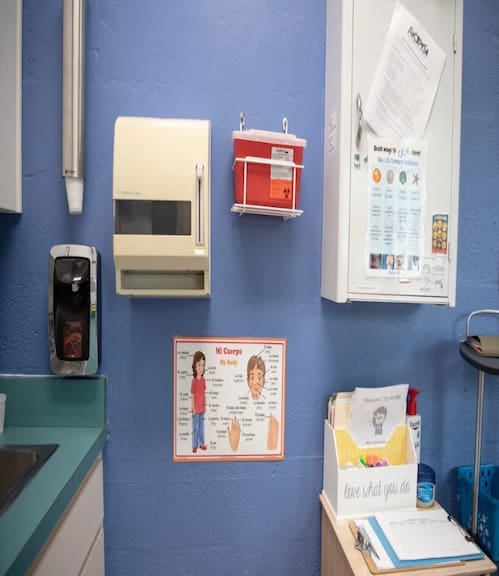
SBHCs, often called school-based health centers, are recognized as more than first‑aid posts. According to KidsHealth, checkups, lab tests, prescriptions, immunizations, vision and dental screenings, behavioral health services, and health education are all provided where students learn and socialize. As a result, absences are reduced, and same-day returns to class are made possible for students.
Since the 1980s, SBHCs have been expanded from a few dozen to 2,584 across 48 states and the District of Columbia, as recorded by the most recent National School-Based Health Care Census (2016–2017) (AAP Pediatrics). In fact, school-based mental health services are used by roughly 19% of students each year, and many districts are found to lack sufficient licensed staff or funding to meet demand.
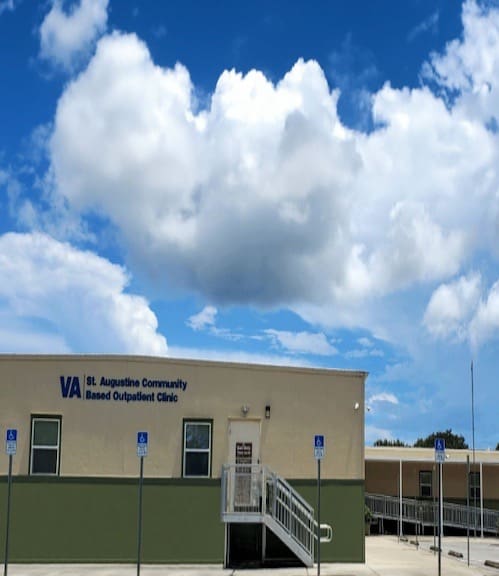
Many school health centers are currently housed in old rooms, portables, or trailers, which are not considered ideal for privacy, infection control, or growth. Furthermore, traditional brick-and-mortar builds are noted to be time-consuming and costly. Modular buildings for school-based health centers (SBHCs) are widely regarded as an efficient, scalable solution.
Why Modular Buildings Are Ideal for Growing Student Populations
When enrollment increases due to local growth or return-to-campus surges, space is often found to be limited in schools. Modular buildings are used to add clinics quickly off-site, with delivery in weeks rather than months, offering predictable costs and design flexibility. Larger waiting areas or separate behavioral health suites can be easily customized.
Built-in HVAC, exam rooms, patient privacy zones, and ADA-compliant features are included in modular health units, portable clinics, mobile healthcare units, or mobile medical centers. Clinical codes and health standards are met without the need for retrofitting, and multiple functions can be fulfilled if community needs change. For example, a mobile healthcare center can be used for students during flu season and later repurposed.
Additionally, seasonal deployment is supported by modular SBHCs. Core exam and mental health suites can be installed before fall, with additional modular classrooms or isolation rooms added as winter illness peaks. Outcomes are improved when clinics are made accessible. Fewer emergency room visits, higher immunization rates, better attendance, and stronger educational results, including lower disciplinary actions and higher graduation rates, are reported when SBHCs are integrated into school life according to the School‑Based Health Alliance.
Modular as a Strategic Tool, Not Just a Shortcut
Modular SBHCs are typically described as convenient, but they are increasingly recognized as strategic infrastructure rather than temporary fillers. District master plans can be designed so that modular units are rotated or expanded as health demand changes, or so that modular buildings are redeployed across campuses. School district equity goals are supported, and underserved communities are served efficiently.
From an environmental standpoint, modern modular construction is considered more sustainable, with waste minimized, timelines shortened, and off-site manufacturing controlled. Fewer delays are experienced, and disruptions during school hours are reduced.
Why Aries Offers the Solution
When action is taken by schools, a mobile healthcare center for students can be provided quickly and reliably by Aries. Full design, permitting guidance, and support are included with modular school clinics for growing enrollment, and units are delivered ready to be plugged in, on time and on budget.
The emotional benefits are recognized: peace of mind for parents, safety and continuity for students, and operational predictability for administrators. Financing has been arranged previously by Aries, and free modular financing consultations are offered to help schools plan and budget effectively (see their financing page) before any commitment is made.
When portable clinics or mobile healthcare centers are envisioned to meet SBHC goals, choice, flexibility, and real outcomes are delivered by Aries, ensuring fall flexibility without the scare.
Ready to expand student health services without the wait? Discover how Aries’ modular clinics deliver speed, flexibility, and peace of mind for schools facing growing health demands. Explore your options by filling out the form below.
Modular buildings for schools and healthcare are regarded as flexible and fast solutions, especially in the fall when student health needs are heightened. Situations are often observed in which kindergartners skip lunch due to dizziness or college students experience flu symptoms without nearby care. High demand is faced in school-based health centers (SBHCs), and rapid expansion is not always achieved. With modular solutions, on-campus clinics can be added or upgraded without staff being placed in cramped trailers or improvements being delayed. Backed by NCES and KidsHealth data, space, design, and scalability are provided to ensure students remain healthy and able to learn.
A Parent’s Nightmare & Student Health Risks on Campus
Imagine a first grader stumbling in at recess, pale, sweating, and complaining of chest tightness. The school nurse is found to be overwhelmed, the only free room is assigned as the back hallway, and the nearest clinic is located off-site. That scenario, stressful for adults and traumatizing for children, is observed to be all too common. Escalation from minor anxiety to a full health scare can be experienced within minutes.
NCES data shows that growing mental and physical health needs have been reported by public schools: increases in students seeking mental health services have been observed in about 69% of schools since COVID 19, while only around 56% are reported as fully able to meet every need. Meanwhile, diagnostic mental health assessments are offered by 49% of schools, and treatment services by trained professionals are delivered on site by just 38%. In short, demand has increased, and capacity is being realized under strain.
Across elementary schools to college campuses, illness is often experienced by students without warning. From asthma flare-ups, sudden infections, concussions, or panic attacks, reliable and immediate care is required by parents and staff. Effective and confidential services are often found to be difficult to deliver by busy nurses or counselors working in improvised spaces.
What Modular Buildings for Schools and Healthcare Provide
SBHCs, often called school-based health centers, are recognized as more than first‑aid posts. According to KidsHealth, checkups, lab tests, prescriptions, immunizations, vision and dental screenings, behavioral health services, and health education are all provided where students learn and socialize. As a result, absences are reduced, and same-day returns to class are made possible for students.
Since the 1980s, SBHCs have been expanded from a few dozen to 2,584 across 48 states and the District of Columbia, as recorded by the most recent National School-Based Health Care Census (2016–2017) (AAP Pediatrics). In fact, school-based mental health services are used by roughly 19% of students each year, and many districts are found to lack sufficient licensed staff or funding to meet demand.
Many school health centers are currently housed in old rooms, portables, or trailers, which are not considered ideal for privacy, infection control, or growth. Furthermore, traditional brick-and-mortar builds are noted to be time-consuming and costly. Modular buildings for school-based health centers (SBHCs) are widely regarded as an efficient, scalable solution.
Why Modular Buildings Are Ideal for Growing Student Populations
When enrollment increases due to local growth or return-to-campus surges, space is often found to be limited in schools. Modular buildings are used to add clinics quickly off-site, with delivery in weeks rather than months, offering predictable costs and design flexibility. Larger waiting areas or separate behavioral health suites can be easily customized.
Built-in HVAC, exam rooms, patient privacy zones, and ADA-compliant features are included in modular health units, portable clinics, mobile healthcare units, or mobile medical centers. Clinical codes and health standards are met without the need for retrofitting, and multiple functions can be fulfilled if community needs change. For example, a mobile healthcare center can be used for students during flu season and later repurposed.
Additionally, seasonal deployment is supported by modular SBHCs. Core exam and mental health suites can be installed before fall, with additional modular classrooms or isolation rooms added as winter illness peaks. Outcomes are improved when clinics are made accessible. Fewer emergency room visits, higher immunization rates, better attendance, and stronger educational results, including lower disciplinary actions and higher graduation rates, are reported when SBHCs are integrated into school life according to the School‑Based Health Alliance.
Modular as a Strategic Tool, Not Just a Shortcut
Modular SBHCs are typically described as convenient, but they are increasingly recognized as strategic infrastructure rather than temporary fillers. District master plans can be designed so that modular units are rotated or expanded as health demand changes, or so that modular buildings are redeployed across campuses. School district equity goals are supported, and underserved communities are served efficiently.
From an environmental standpoint, modern modular construction is considered more sustainable, with waste minimized, timelines shortened, and off-site manufacturing controlled. Fewer delays are experienced, and disruptions during school hours are reduced.
Why Aries Offers the Solution
When action is taken by schools, a mobile healthcare center for students can be provided quickly and reliably by Aries. Full design, permitting guidance, and support are included with modular school clinics for growing enrollment, and units are delivered ready to be plugged in, on time and on budget.
The emotional benefits are recognized: peace of mind for parents, safety and continuity for students, and operational predictability for administrators. Financing has been arranged previously by Aries, and free modular financing consultations are offered to help schools plan and budget effectively (see their financing page) before any commitment is made.
When portable clinics or mobile healthcare centers are envisioned to meet SBHC goals, choice, flexibility, and real outcomes are delivered by Aries, ensuring fall flexibility without the scare.
Ready to expand student health services without the wait? Discover how Aries’ modular clinics deliver speed, flexibility, and peace of mind for schools facing growing health demands. Explore your options by filling out the form below.
READ MORE
Follow Us On Social Media!