

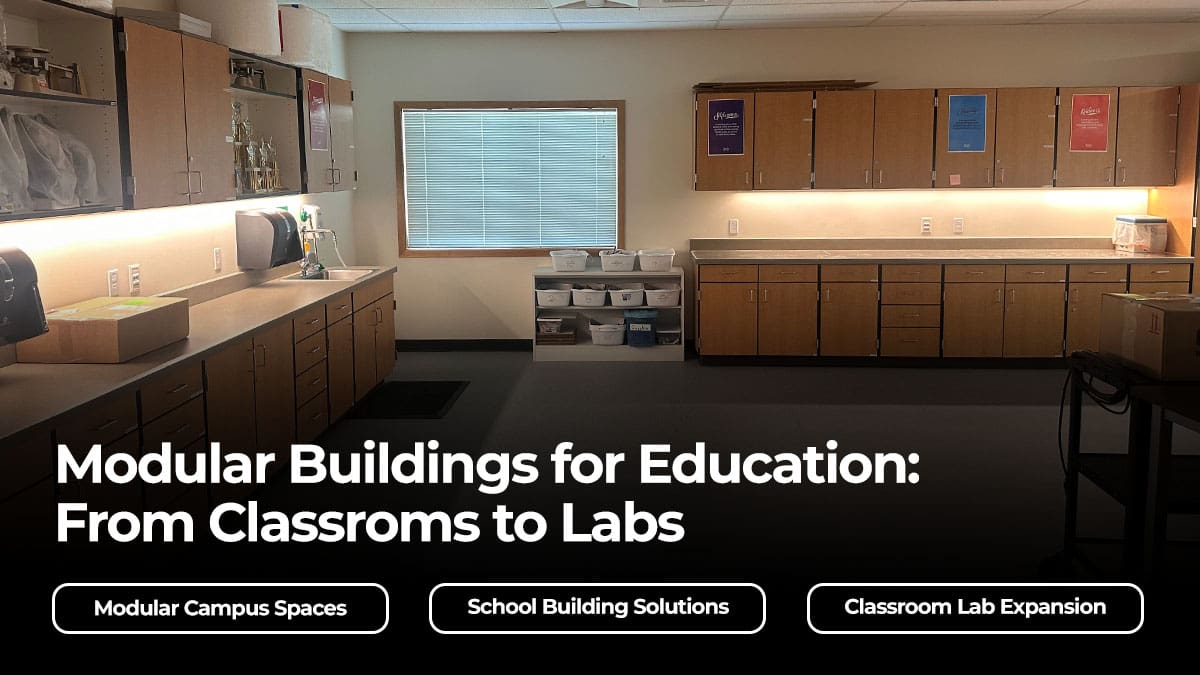
Solving School Space Challenges with Modular Buildings for Education
Some schools are under pressure to do more with less space and tighter budgets, as enrollment can increase suddenly and programs expand. Facilities then fall behind, and traditional construction often cannot keep up with such changes. It takes time, funding, and long planning cycles.
In these situations, modular buildings for education can be a practical solution. They offer fast, flexible space without sacrificing quality and functionality. From classrooms to science labs, modular buildings help schools respond to immediate needs while planning further.
For administrators and facility planners, the goal is to create safe, functional spaces for students and staff without long delays or budget strain. Modular construction supports this goal with speed, adaptability, and reliable performance.
Flexible Use Cases Across Campus
Schools require more than standard classrooms. They need a range of spaces to support learning, administration, and student services. Modular buildings for education are designed to meet these varied needs.
- Modular classrooms: The most common requirement, they help schools manage enrollment growth or provide swing space during renovations. These units can match existing layouts and support daily instruction with minimal adjustment.
- Science labs:These are another key application of modular buildings, as many schools struggle to add lab space due to cost and construction complexity. Modular labs can be designed to accommodate proper ventilation, utilities, and safety features. This allows schools to expand their STEM programs without building from the ground up.
- Administrative offices, counseling centers, and staff rooms: The need for these custom modular spaces can be addressed too. Some districts also use modular buildings for libraries, testing centers, or special education spaces. When it comes to modular solutions, each structure is designed to fit the function, not the other way around.
Benefits of Used Modular Buildings
Used modular buildings offer a different kind of value. In the new vs used modular buildings discussion, they stand out for speed and cost efficiency. Key advantages include:
- Lower upfront cost: Used buildings are often available at a reduced price compared to new construction, enabling organizations to manage with tight budgets.
- Faster delivery: Since the building already exists, it can be delivered and installed much sooner, which is ideal for urgent space needs.
- Refurbished and compliant: Reputable providers inspect and upgrade used units to meet current codes and performance standards before delivery.
- Environmentally responsible: Reusing existing structures reduces material waste and lowers the overall environmental impact of a project.
- Strong fit for short-term use: Projects with a defined timeline, such as swing space during renovations or temporary offices, often benefit from used buildings.
Used units can also have a few disadvantages, such as limited layout, size, or finishes. Since they are pre-built, customization options are more restricted, and the exact configuration you need may not be immediately available. In some cases, refurbishment is required to meet specific project standards or preferences.
Speed and Efficiency When It Matters Most
Time is often the biggest constraint in school construction or any building project, for that matter. In the education sector, projects must align with academic calendars to avoid disrupting classes and straining operations. Modular buildings for education address these challenges with a faster, more predictable timeline.
Most of the building process happens off-site in a controlled environment. At the same time, site preparation takes place on campus. This parallel workflow shortens the overall schedule.
Installation is also faster than traditional construction. Once modules arrive, they can be set and connected in a matter of days or weeks, depending on project scale. This minimizes disruption to students and staff.
Noise, dust, and site traffic are also kept to a minimum. This is especially important for schools that must remain operational and safe during construction.
Scalability and Flexibility for Changing Needs
School needs rarely stay the same; enrollment numbers change, and school programs expand or contract. Funding levels change as well. Good thing modular buildings for education are designed to adapt to these realities.
One of the key advantages is scalability, so schools can start with a small number of modular units and add more as demand grows. This phased approach helps in managing both space and budget.
Flexibility also extends to building use. A modular classroom today can serve as an administrative office or support space in the future, since units can be reconfigured, relocated, or repurposed based on changing priorities.
For districts unsure about long-term enrollment trends, this flexibility reduces risk. Instead of committing to a large permanent structure requiring substantial investment, schools can adjust their footprint over time.
This adaptability makes modular buildings for education a strong fit for both short-term needs and long-term planning strategies.
Affordability Without Sacrificing Function
Budget constraints are a constant concern in education, which is why every capital project must be justified and carefully planned. Modular buildings for education are a cost-effective way to expand facilities while maintaining quality and functionality.
Several factors contribute to cost savings when you opt for modular buildings:
- Off-site construction reduces labor hours on campus.
- Controlled manufacturing limits material waste and prevents weather-related delays.
- Shorter timelines create additional savings, as schools spend less on on-site management, equipment, and temporary accommodations.
- Faster completion allows facilities to be used sooner, which adds operational value.
These efficiencies help keep projects on budget.
Financing options can also support affordability. Many providers offer lease programs that allow schools to spread costs over time. This can align better with annual budgets compared to large capital expenditures.
For districts balancing immediate needs with limited funding, modular buildings for education provide a practical path forward without the need to cut corners on function or safety.
Quality and Compliance You Can Depend On
Concerns about quality and durability still come up in discussions about modular construction. However, modern modular buildings for education or other purposes are built to meet the same codes and standards as traditionally constructed facilities.
These buildings comply with local and state regulations, including structural requirements, fire safety, accessibility, and energy performance. Inspections occur during manufacturing and after installation, which supports consistent quality.
Comfort is also a priority. Modular classrooms and labs include proper insulation, heating and cooling systems, and lighting. These features create a stable learning environment for students and staff.
Moreover, the durability of modular units has improved significantly over the years. Many modular school buildings remain in use for decades. With proper maintenance, they perform just as well as site-built structures.
By addressing these concerns, modular buildings for education help steer the conversation from doubt to confidence. Schools can invest in modular solutions knowing they meet the same expectations as traditional builds.
Modular Solutions to Support Learning
Schools face growing pressure to expand and adapt without long delays or rising costs. Modular buildings for education provide a clear answer to these challenges, as they can be designed to work as classrooms, labs, and support spaces, quickly and efficiently. They scale with changing needs and support both short-term and long-term planning.
For administrators and facility planners, the value of modular solutions is straightforward: faster delivery, controlled costs, and reliable performance.
Aries Building Systems brings solid experience in delivering modular solutions tailored to educational environments. Schools looking to expand or improve their facilities can benefit from our team’s expert guidance at every stage.
To explore the right approach for your campus, speak with one of our modular specialists and review the options available for your next project.
Solving School Space Challenges with Modular Buildings for Education
Some schools are under pressure to do more with less space and tighter budgets, as enrollment can increase suddenly and programs expand. Facilities then fall behind, and traditional construction often cannot keep up with such changes. It takes time, funding, and long planning cycles.
In these situations, modular buildings for education can be a practical solution. They offer fast, flexible space without sacrificing quality and functionality. From classrooms to science labs, modular buildings help schools respond to immediate needs while planning further.
For administrators and facility planners, the goal is to create safe, functional spaces for students and staff without long delays or budget strain. Modular construction supports this goal with speed, adaptability, and reliable performance.
Flexible Use Cases Across Campus
Schools require more than standard classrooms. They need a range of spaces to support learning, administration, and student services. Modular buildings for education are designed to meet these varied needs.
- Modular classrooms: The most common requirement, they help schools manage enrollment growth or provide swing space during renovations. These units can match existing layouts and support daily instruction with minimal adjustment.
- Science labs:These are another key application of modular buildings, as many schools struggle to add lab space due to cost and construction complexity. Modular labs can be designed to accommodate proper ventilation, utilities, and safety features. This allows schools to expand their STEM programs without building from the ground up.
- Administrative offices, counseling centers, and staff rooms: The need for these custom modular spaces can be addressed too. Some districts also use modular buildings for libraries, testing centers, or special education spaces. When it comes to modular solutions, each structure is designed to fit the function, not the other way around.
Benefits of Used Modular Buildings
Used modular buildings offer a different kind of value. In the new vs used modular buildings discussion, they stand out for speed and cost efficiency. Key advantages include:
- Lower upfront cost: Used buildings are often available at a reduced price compared to new construction, enabling organizations to manage with tight budgets.
- Faster delivery: Since the building already exists, it can be delivered and installed much sooner, which is ideal for urgent space needs.
- Refurbished and compliant: Reputable providers inspect and upgrade used units to meet current codes and performance standards before delivery.
- Environmentally responsible: Reusing existing structures reduces material waste and lowers the overall environmental impact of a project.
- Strong fit for short-term use: Projects with a defined timeline, such as swing space during renovations or temporary offices, often benefit from used buildings.
Used units can also have a few disadvantages, such as limited layout, size, or finishes. Since they are pre-built, customization options are more restricted, and the exact configuration you need may not be immediately available. In some cases, refurbishment is required to meet specific project standards or preferences.
Speed and Efficiency When It Matters Most
Time is often the biggest constraint in school construction or any building project, for that matter. In the education sector, projects must align with academic calendars to avoid disrupting classes and straining operations. Modular buildings for education address these challenges with a faster, more predictable timeline.
Most of the building process happens off-site in a controlled environment. At the same time, site preparation takes place on campus. This parallel workflow shortens the overall schedule.
Installation is also faster than traditional construction. Once modules arrive, they can be set and connected in a matter of days or weeks, depending on project scale. This minimizes disruption to students and staff.
Noise, dust, and site traffic are also kept to a minimum. This is especially important for schools that must remain operational and safe during construction.
Scalability and Flexibility for Changing Needs
School needs rarely stay the same; enrollment numbers change, and school programs expand or contract. Funding levels change as well. Good thing modular buildings for education are designed to adapt to these realities.
One of the key advantages is scalability, so schools can start with a small number of modular units and add more as demand grows. This phased approach helps in managing both space and budget.
Flexibility also extends to building use. A modular classroom today can serve as an administrative office or support space in the future, since units can be reconfigured, relocated, or repurposed based on changing priorities.
For districts unsure about long-term enrollment trends, this flexibility reduces risk. Instead of committing to a large permanent structure requiring substantial investment, schools can adjust their footprint over time.
This adaptability makes modular buildings for education a strong fit for both short-term needs and long-term planning strategies.
Affordability Without Sacrificing Function
Budget constraints are a constant concern in education, which is why every capital project must be justified and carefully planned. Modular buildings for education are a cost-effective way to expand facilities while maintaining quality and functionality.
Several factors contribute to cost savings when you opt for modular buildings:
- Off-site construction reduces labor hours on campus.
- Controlled manufacturing limits material waste and prevents weather-related delays.
- Shorter timelines create additional savings, as schools spend less on on-site management, equipment, and temporary accommodations.
- Faster completion allows facilities to be used sooner, which adds operational value.
These efficiencies help keep projects on budget.
Financing options can also support affordability. Many providers offer lease programs that allow schools to spread costs over time. This can align better with annual budgets compared to large capital expenditures.
For districts balancing immediate needs with limited funding, modular buildings for education provide a practical path forward without the need to cut corners on function or safety.
Quality and Compliance You Can Depend On
Concerns about quality and durability still come up in discussions about modular construction. However, modern modular buildings for education or other purposes are built to meet the same codes and standards as traditionally constructed facilities.
These buildings comply with local and state regulations, including structural requirements, fire safety, accessibility, and energy performance. Inspections occur during manufacturing and after installation, which supports consistent quality.
Comfort is also a priority. Modular classrooms and labs include proper insulation, heating and cooling systems, and lighting. These features create a stable learning environment for students and staff.
Moreover, the durability of modular units has improved significantly over the years. Many modular school buildings remain in use for decades. With proper maintenance, they perform just as well as site-built structures.
By addressing these concerns, modular buildings for education help steer the conversation from doubt to confidence. Schools can invest in modular solutions knowing they meet the same expectations as traditional builds.
Modular Solutions to Support Learning
Schools face growing pressure to expand and adapt without long delays or rising costs. Modular buildings for education provide a clear answer to these challenges, as they can be designed to work as classrooms, labs, and support spaces, quickly and efficiently. They scale with changing needs and support both short-term and long-term planning.
For administrators and facility planners, the value of modular solutions is straightforward: faster delivery, controlled costs, and reliable performance.
Aries Building Systems brings solid experience in delivering modular solutions tailored to educational environments. Schools looking to expand or improve their facilities can benefit from our team’s expert guidance at every stage.
To explore the right approach for your campus, speak with one of our modular specialists and review the options available for your next project.


Follow Us On Social Media!