

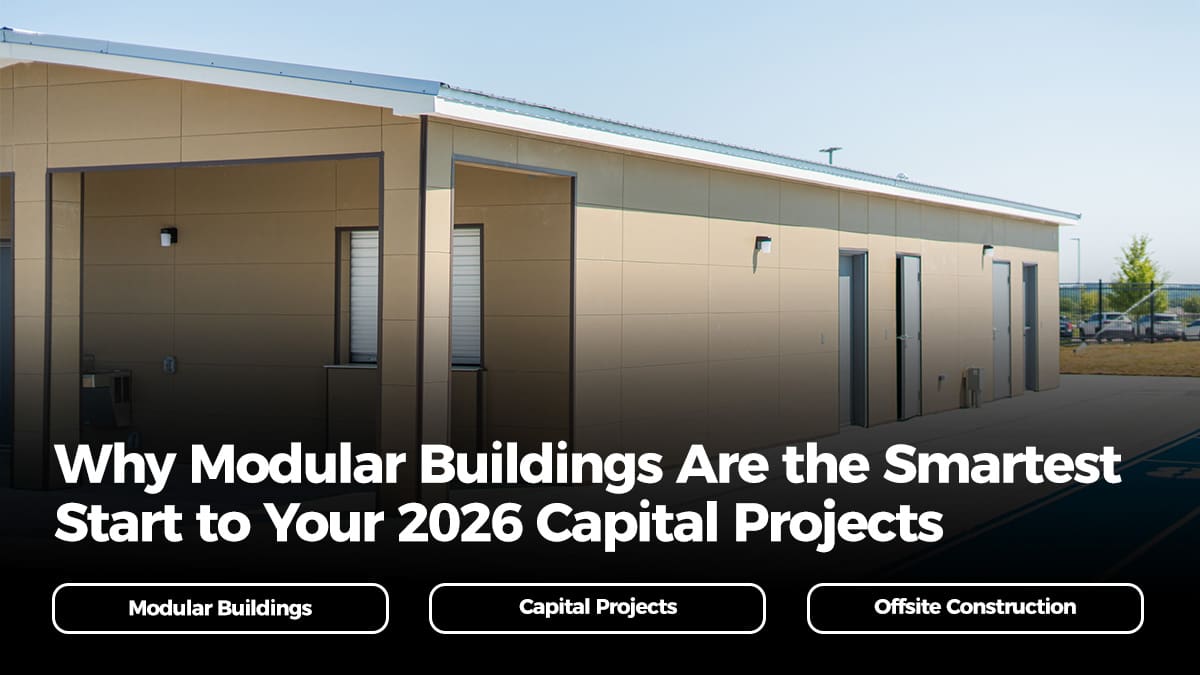
As 2026 capital budgets open, project leaders face the same pressure every year. Aside from being bound to tighter timelines, they also need to keep a tight rein on costs and ensure building flexibility. This is where modular buildings come in.
Modular buildings for capital projects are no longer a stopgap option. They’ve become a practical construction solution for education, healthcare, government, and corporate facilities. For organizations that want to move early and reduce risk, modular construction is a clear differentiator.
Start Your Project Faster and Smarter
Capital project delays often begin before construction even starts. Lengthy design phases, permitting bottlenecks, and site readiness issues can push schedules back by months. Construction with modular buildings for capital projects can change this.
Factory-built modules are produced while site preparation is underway. Foundations, utilities, and access work happen in parallel, not in a long chain of dependencies. This overlap compresses schedules and allows projects to move forward in weeks instead of quarters.
For decision makers working against fiscal year deadlines, speed matters. Earlier delivery means earlier use, earlier service capacity, and less pressure to rush decisions late in the year. It also reduces exposure to labor shortages and weather disruptions that disrupt traditional builds.
Flexible Solutions for Every Sector
Modular buildings for capital projects work because they adapt well to different operational needs. The same core approach can support very different use cases.
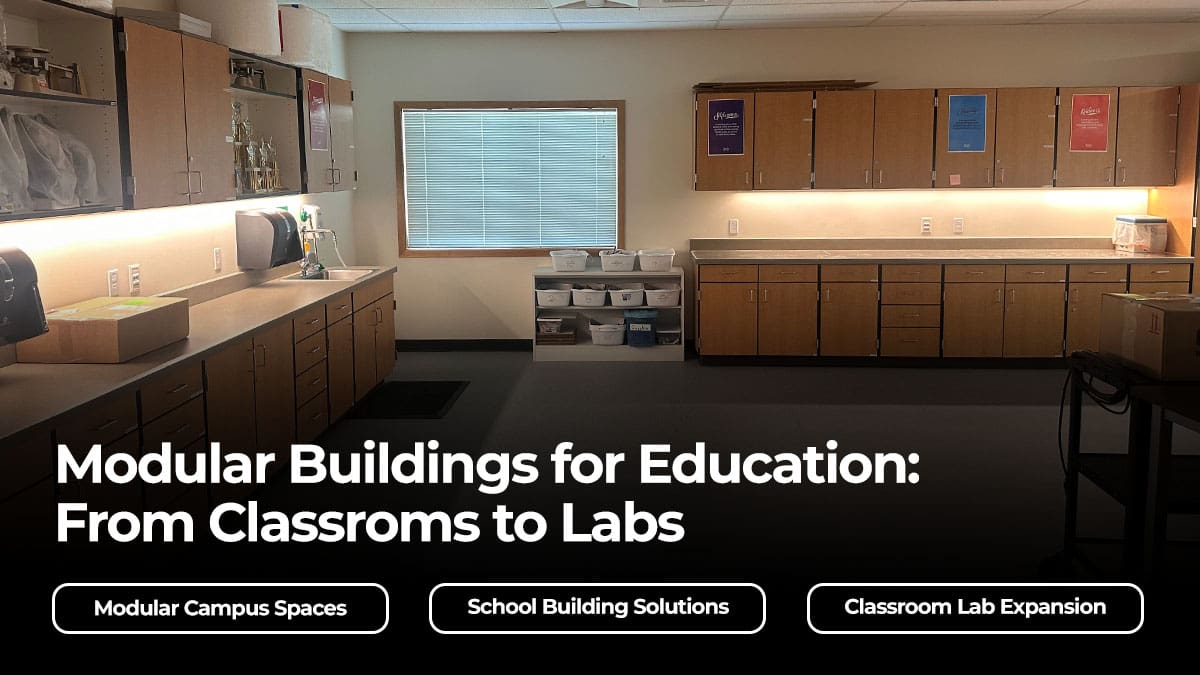
- Education: Modular classrooms help districts respond to enrollment growth without committing to permanent construction too early. STEM labs, faculty offices, and student services spaces can be added where they are needed most. Buildings can be relocated or repurposed as needed.
- Healthcare: Modular clinics and triage units allow systems to expand patient capacity without disrupting existing facilities. Imaging suites, testing centers, and specialty care spaces can be deployed quickly and configured to meet regulatory standards.
- Government and Public Safety: Modular buildings support police substations, fire stations, and municipal offices that need to be operational fast. These structures meet public procurement requirements while being flexible for relocation or expansion.
Budget Confidence Without Compromise
Cost overruns are among the biggest risks in capital projects. Modular construction reduces that risk by shifting much of the work into a controlled factory environment. This approach limits weather delays, material waste, and last-minute design changes.
Modular buildings for capital projects also come with financial options that traditional construction does not. Lease and lease-to-own structures allow organizations to preserve capital while still delivering functional space. Another advantage is asset reuse. Modular buildings can be relocated, reconfigured, or sold when needs change.
Traditional Construction vs Modular Buildings
Choosing the right delivery method sets the tone for the entire project. The differences between traditional and modular approaches are practical and measurable.
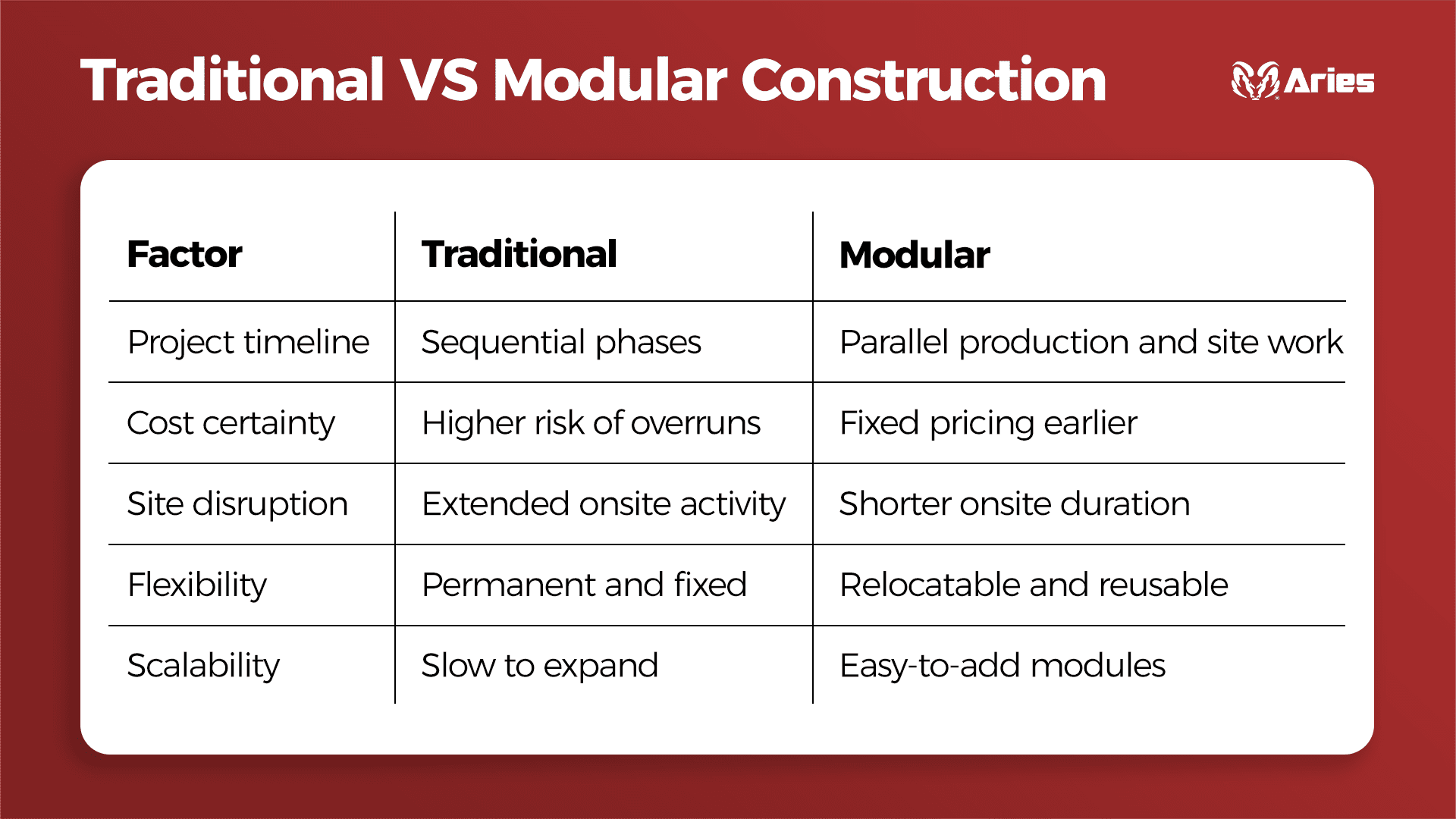
Traditional construction often locks teams into long schedules and rigid outcomes. Modular buildings allow projects to scale, adapt, and respond to real-world changes without the need to start over.
Why Choose Aries When It Comes to Modular Buildings for Capital Projects
Aries specializes in modular buildings for different sectors. Projects are designed with compliance in mind, including GSA readiness and public building project standards.
Aries has delivered complex capital deployments on tight schedules, supported by a national footprint and proven logistics. The company works with clients early in the planning process. This helps teams align scope, budget, and delivery timelines before problems arise.
Aries matches rapid project delivery with consistent quality. For decision makers, this means fewer surprises and clearer accountability.
Plan Early, Build Smarter
Early planning sets the direction for the rest of the budget cycle. Modular buildings give organizations a way to act quickly without sacrificing control or quality. They support faster starts, steadier costs, and facilities that change as needs change.
Aries offers fast, flexible modular buildings for capital projects of every size. Learn more about our modular solutions, or request a quote to see how we can help fast-track your next project.
As 2026 capital budgets open, project leaders face the same pressure every year. Aside from being bound to tighter timelines, they also need to keep a tight rein on costs and ensure building flexibility. This is where modular buildings come in.
Modular buildings for capital projects are no longer a stopgap option. They’ve become a practical construction solution for education, healthcare, government, and corporate facilities. For organizations that want to move early and reduce risk, modular construction is a clear differentiator.
Start Your Project Faster and Smarter
Capital project delays often begin before construction even starts. Lengthy design phases, permitting bottlenecks, and site readiness issues can push schedules back by months. Construction with modular buildings for capital projects can change this.
Factory-built modules are produced while site preparation is underway. Foundations, utilities, and access work happen in parallel, not in a long chain of dependencies. This overlap compresses schedules and allows projects to move forward in weeks instead of quarters.
For decision makers working against fiscal year deadlines, speed matters. Earlier delivery means earlier use, earlier service capacity, and less pressure to rush decisions late in the year. It also reduces exposure to labor shortages and weather disruptions that disrupt traditional builds.
Flexible Solutions for Every Sector
Modular buildings for capital projects work because they adapt well to different operational needs. The same core approach can support very different use cases.
- Education: Modular classrooms help districts respond to enrollment growth without committing to permanent construction too early. STEM labs, faculty offices, and student services spaces can be added where they are needed most. Buildings can be relocated or repurposed as needed.
- Healthcare: Modular clinics and triage units allow systems to expand patient capacity without disrupting existing facilities. Imaging suites, testing centers, and specialty care spaces can be deployed quickly and configured to meet regulatory standards.
- Government and Public Safety: Modular buildings support police substations, fire stations, and municipal offices that need to be operational fast. These structures meet public procurement requirements while being flexible for relocation or expansion.
Budget Confidence Without Compromise
Cost overruns are among the biggest risks in capital projects. Modular construction reduces that risk by shifting much of the work into a controlled factory environment. This approach limits weather delays, material waste, and last-minute design changes.
Modular buildings for capital projects also come with financial options that traditional construction does not. Lease and lease-to-own structures allow organizations to preserve capital while still delivering functional space. Another advantage is asset reuse. Modular buildings can be relocated, reconfigured, or sold when needs change.
Traditional Construction vs Modular Buildings
Choosing the right delivery method sets the tone for the entire project. The differences between traditional and modular approaches are practical and measurable.
Traditional construction often locks teams into long schedules and rigid outcomes. Modular buildings allow projects to scale, adapt, and respond to real-world changes without the need to start over.
Why Choose Aries When It Comes to Modular Buildings for Capital Projects
Aries specializes in modular buildings for different sectors. Projects are designed with compliance in mind, including GSA readiness and public building project standards.
Aries has delivered complex capital deployments on tight schedules, supported by a national footprint and proven logistics. The company works with clients early in the planning process. This helps teams align scope, budget, and delivery timelines before problems arise.
Aries matches rapid project delivery with consistent quality. For decision makers, this means fewer surprises and clearer accountability.
Plan Early, Build Smarter
Early planning sets the direction for the rest of the budget cycle. Modular buildings give organizations a way to act quickly without sacrificing control or quality. They support faster starts, steadier costs, and facilities that change as needs change.
Aries offers fast, flexible modular buildings for capital projects of every size. Learn more about our modular solutions, or request a quote to see how we can help fast-track your next project.
Follow Us On Social Media!