

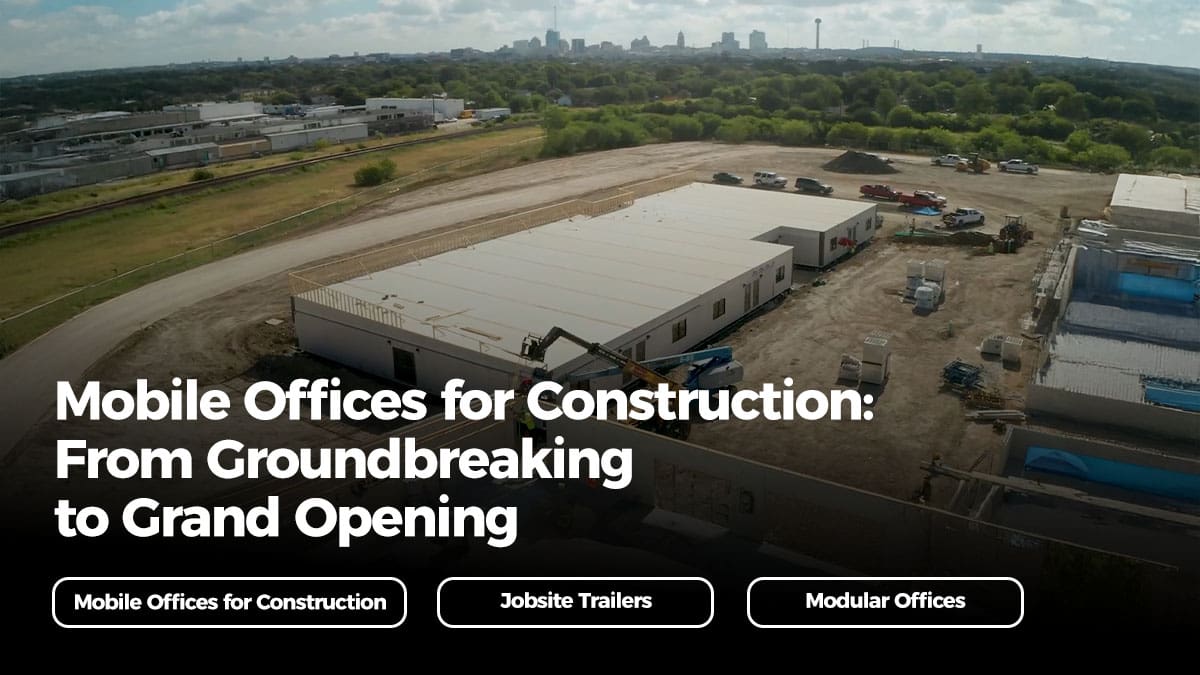
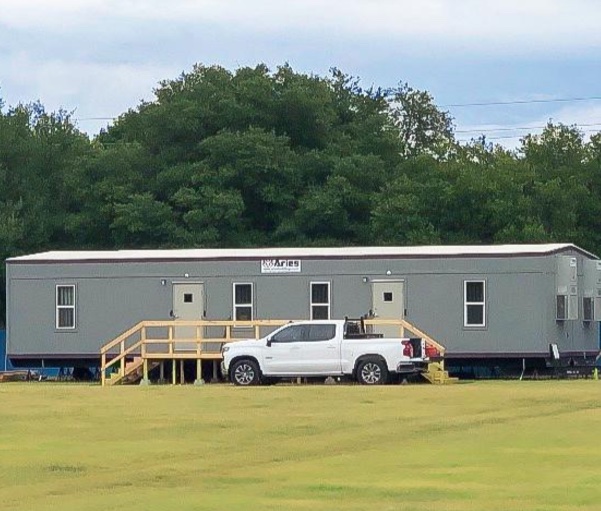
Mobile offices for construction are recognized as the central nervous system of a job site, bringing order from day one until the final walkthrough. Precision is required at every phase, from coordinating trades to passing inspections, and these temporary but essential structures provide the needed control. Also known as jobsite trailers, on-site project management offices, or temporary office buildings for contractors, they are used to support project management, improve coordination, enhance safety compliance, and streamline storage of documents and equipment. Moreover, whether a portable office is rented or a modular construction office is invested in, the right setup is seen as essential for modern builds. With the rise of modular construction, high-tech job sites, and remote collaboration needs, these offices are no longer considered optional but necessary.
Why Every Construction Phase Needs a Mobile Office
Construction is carried out in tightly scheduled phases, and without a dedicated on-site space, confusion and delays are often created. Improvised meetings on tailgates or in open areas frequently result in miscommunication, missed deadlines, and failed inspections.
Instead, a mobile office for construction is established as a functional base camp from the start. During pre-construction, it is used as the hub for surveyors, architects, and planners. As the build progresses, it is transformed into a jobsite office solution that houses supervisors, hosts subcontractor briefings, and centralizes document storage, safety planning, and inspections.
Furthermore, according to RIB Software, centralized coordination and clear communication are considered critical from pre-construction through commissioning. For this reason, mobile offices for construction are regarded as essential for keeping projects on track. A temporary office building for contractors bridges the gap between fieldwork and administration, allowing permits, RFIs, scheduling, and change orders to be managed directly on-site rather than offsite.
For example, in a recent urban multi-family housing build, a modular construction office was set up with private workspaces, high-speed internet, and a dedicated inspection room. As a result, client communication was improved, focus was maintained, and two weeks were removed from the timeline.
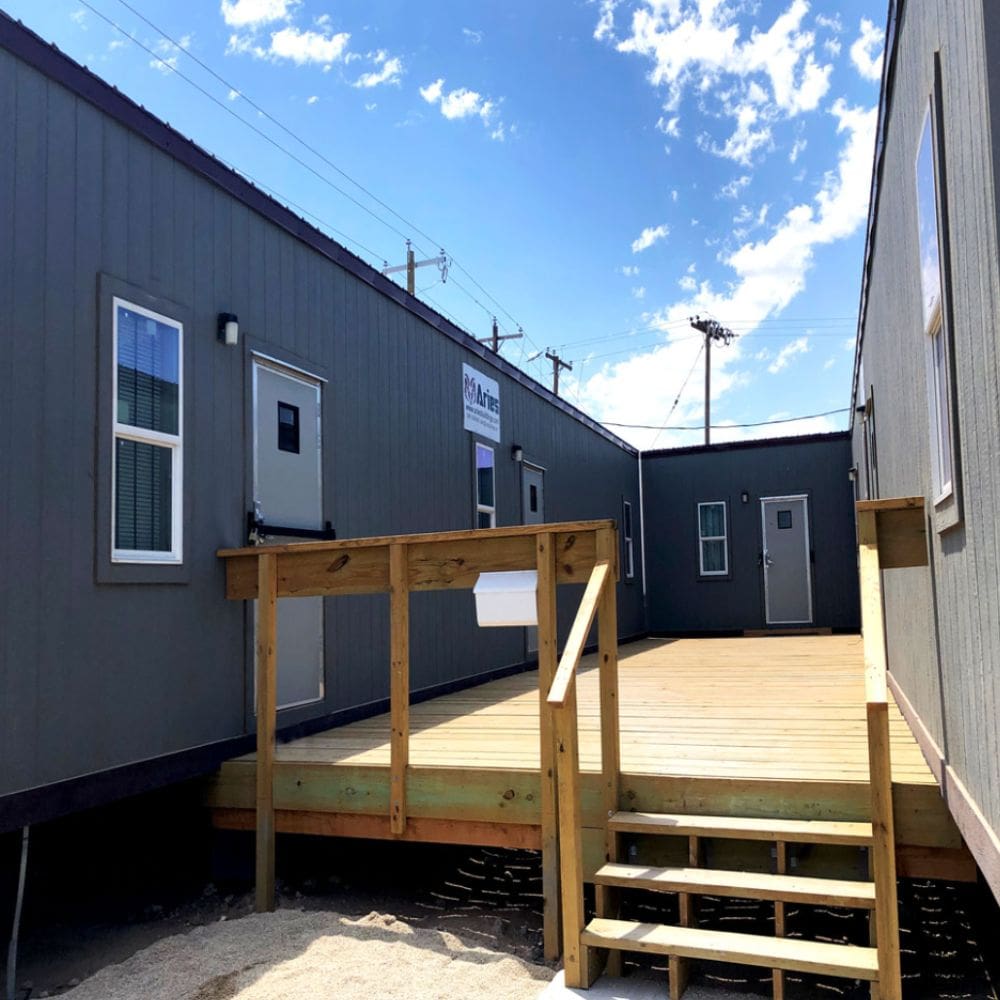
Additionally, site security is strengthened through construction offices. Sensitive documents and equipment are stored inside jobsite trailers, which can be outfitted with lockable storage, HVAC, and tech-ready infrastructure to support modern tools such as drones, tablets, and digital blueprints.
A Ground Game for Project Management and Safety Compliance
Much of what happens on a construction site does not involve swinging hammers. Budgets are managed, safety training is conducted, and inspections are coordinated, which all require space, structure, and uninterrupted focus. This is where the on-site project management office is relied upon.
Project coordination is directed from the job site office as trades arrive at different times, materials are delivered early or late, and inspectors appear without warning. Chaos is turned into order as foremen align crews, PMs review blueprints, and OSHA auditors access all required documentation in one place.
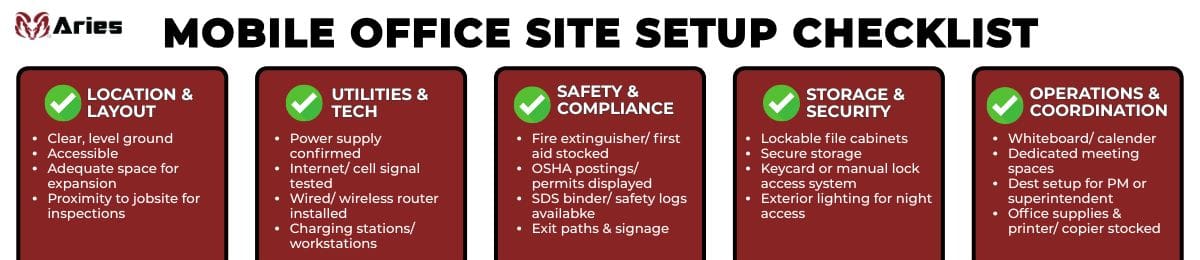
According to BigRentz, project timelines are determined by documentation and compliance. With a mobile setup, critical paperwork such as SDS sheets, permits, safety logs, and daily reports is always kept on hand. Time is no longer wasted driving across town or searching for misplaced files, as everything is secured, accessible, and ready for inspection.
Compliance is also enforced externally. OSHA’s construction standards require hazard communication and safety documentation to be properly maintained. Mobile offices provide controlled space for records, ensuring both compliance and informed workers (OSHA Hazard Communication Standard).
The human factor is supported as well. Safety meetings are held more effectively inside shaded, climate-controlled offices than outdoors in harsh conditions. With remote work increasingly integrated into construction administration, mobile offices are now equipped as virtual HQs with video conferencing, secure networks, and real-time collaboration tools.
In colder months, warmth is provided, while in summer, air conditioning keeps teams sharp. With high-tech features such as solar panels and energy-efficient insulation, mobile office solutions are also built to meet sustainability standards that are increasingly demanded by clients.
When you’re ready, Aries Buildings is ready to roll. Whether you need one unit or a fleet, we’ll deliver, set up, and support you until the ribbon is cut.
Mobile offices for construction are recognized as the central nervous system of a job site, bringing order from day one until the final walkthrough. Precision is required at every phase, from coordinating trades to passing inspections, and these temporary but essential structures provide the needed control. Also known as jobsite trailers, on-site project management offices, or temporary office buildings for contractors, they are used to support project management, improve coordination, enhance safety compliance, and streamline storage of documents and equipment. Moreover, whether a portable office is rented or a modular construction office is invested in, the right setup is seen as essential for modern builds. With the rise of modular construction, high-tech job sites, and remote collaboration needs, these offices are no longer considered optional but necessary.
Why Every Construction Phase Needs a Mobile Office
Construction is carried out in tightly scheduled phases, and without a dedicated on-site space, confusion and delays are often created. Improvised meetings on tailgates or in open areas frequently result in miscommunication, missed deadlines, and failed inspections.
Instead, a mobile office for construction is established as a functional base camp from the start. During pre-construction, it is used as the hub for surveyors, architects, and planners. As the build progresses, it is transformed into a jobsite office solution that houses supervisors, hosts subcontractor briefings, and centralizes document storage, safety planning, and inspections.
Furthermore, according to RIB Software, centralized coordination and clear communication are considered critical from pre-construction through commissioning. For this reason, mobile offices for construction are regarded as essential for keeping projects on track. A temporary office building for contractors bridges the gap between fieldwork and administration, allowing permits, RFIs, scheduling, and change orders to be managed directly on-site rather than offsite.
For example, in a recent urban multi-family housing build, a modular construction office was set up with private workspaces, high-speed internet, and a dedicated inspection room. As a result, client communication was improved, focus was maintained, and two weeks were removed from the timeline.
Additionally, site security is strengthened through construction offices. Sensitive documents and equipment are stored inside jobsite trailers, which can be outfitted with lockable storage, HVAC, and tech-ready infrastructure to support modern tools such as drones, tablets, and digital blueprints.
A Ground Game for Project Management and Safety Compliance
Much of what happens on a construction site does not involve swinging hammers. Budgets are managed, safety training is conducted, and inspections are coordinated, which all require space, structure, and uninterrupted focus. This is where the on-site project management office is relied upon.
Project coordination is directed from the job site office as trades arrive at different times, materials are delivered early or late, and inspectors appear without warning. Chaos is turned into order as foremen align crews, PMs review blueprints, and OSHA auditors access all required documentation in one place.
According to BigRentz, project timelines are determined by documentation and compliance. With a mobile setup, critical paperwork such as SDS sheets, permits, safety logs, and daily reports is always kept on hand. Time is no longer wasted driving across town or searching for misplaced files, as everything is secured, accessible, and ready for inspection.
Compliance is also enforced externally. OSHA’s construction standards require hazard communication and safety documentation to be properly maintained. Mobile offices provide controlled space for records, ensuring both compliance and informed workers (OSHA Hazard Communication Standard).
The human factor is supported as well. Safety meetings are held more effectively inside shaded, climate-controlled offices than outdoors in harsh conditions. With remote work increasingly integrated into construction administration, mobile offices are now equipped as virtual HQs with video conferencing, secure networks, and real-time collaboration tools.
In colder months, warmth is provided, while in summer, air conditioning keeps teams sharp. With high-tech features such as solar panels and energy-efficient insulation, mobile office solutions are also built to meet sustainability standards that are increasingly demanded by clients.
When you’re ready, Aries Buildings is ready to roll. Whether you need one unit or a fleet, we’ll deliver, set up, and support you until the ribbon is cut.



Follow Us On Social Media!