


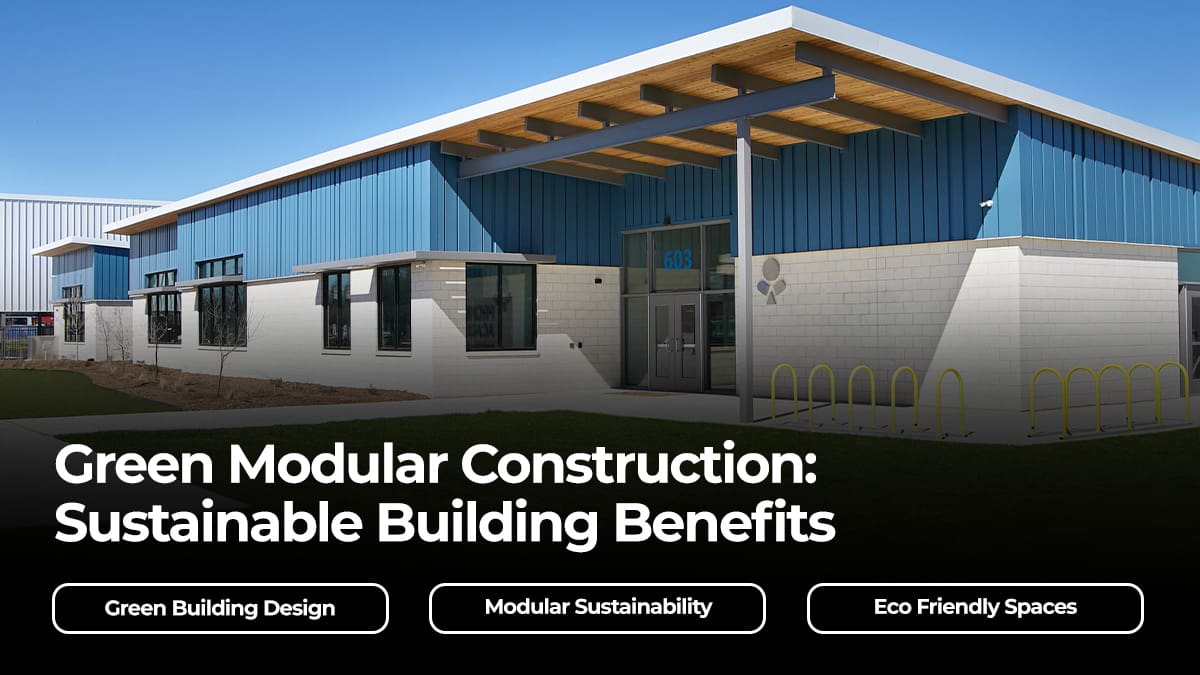
Construction was inherently sustainable during the prehistoric and preindustrial times. But when industrialization set in, traditional eco-friendly building practices were eventually lost or discarded.
Today, however, sustainability is again a critical goal in construction. Developers, public agencies, and education leaders now face pressure to meet ESG targets. They need to reduce carbon output and align with certification systems such as the Leadership in Energy and Environmental Design, or LEED. Procurement teams are also being asked to show measurable environmental performance.
This move toward sustainability has changed how buildings are planned and delivered. Traditional methods can struggle to meet both speed and sustainability goals at the same time. This is where green modular construction stands out. It offers a faster, more controlled way to build while reducing waste and energy use. For organizations balancing timelines with environmental responsibility, going modular is a clear and practical path forward.
What Is Green Modular Construction?
At its core, green modular construction combines off-site manufacturing with sustainable building practices. Instead of building everything on location, structures are produced in a controlled factory setting and then installed on-site.
This sustainable prefabrication approach differs from traditional green building in one key way: much of the efficiency comes from the manufacturing process itself. Materials are measured and cut with precision. Waste is minimized, and environmental conditions are controlled.
The result is a building process that uses fewer resources and produces less waste. At the same time, it supports energy-efficient design, better insulation, and improved building performance. In simple terms, green modular construction is about building smarter from the start.
Key Environmental Benefits of Green Modular Construction
Sustainability in construction must deliver measurable results. Green modular construction supports this through waste reduction, energy efficiency, and lower overall environmental impact.
Reduced Construction Waste
Traditional construction sites generate large amounts of waste, including excess materials, packaging, and damaged goods, which often end up in landfills. Green modular construction reduces this problem at the source.
Because components are manufactured in a factory, materials are used more efficiently. According to industry data from the Modular Building Institute, modular construction can reduce jobsite waste by up to 90%. Leftover materials are often recycled or reused on-site.
Fewer materials are exposed to the weather, which also reduces damage and disposal. This makes green modular construction a more responsible option for projects aiming to limit environmental impact.
Energy Efficiency
Energy performance is a major focus in sustainable building. Modular green building helps achieve this goal with tight building envelopes and efficient systems.
Modules are built with strong insulation and precise sealing. This reduces air leakage and improves temperature control. Many projects also include high-efficiency HVAC systems, LED lighting, and smart controls that reduce energy use over time.
Design options can include low-VOC materials, solar readiness, and advanced ventilation systems. These features improve both energy performance and indoor air quality. For facility managers, this means lower operating costs and healthier environments.
Lower Carbon Footprint
Transportation and site activity contribute heavily to construction-related emissions. Green modular construction helps reduce this impact.
Fewer deliveries are required because large sections, whether for mobile offices, classrooms, or other structures, are delivered in completed form. This low-carbon construction approach cuts down on fuel use and site traffic. Shorter project timelines also reduce the duration of energy use on-site.
Less time on-site means less equipment operation, less noise, and fewer emissions overall. When viewed across the full project lifecycle, modular construction often results in a smaller carbon footprint compared to traditional builds.
Supporting Sustainability Goals Through Design Flexibility
Sustainability is not only about how a building is constructed. It also depends on how long it remains useful. Green modular construction supports long-term value through flexibility.
Modular buildings can be expanded, reconfigured, or relocated as needs change, reducing the need for demolition and new construction in the future. Instead of starting from scratch, organizations can adapt existing structures.
This approach extends the lifecycle of the building and reduces material waste over time. It also supports changing operational needs without major disruption.
For organizations working toward ESG targets, flexibility matters. It allows investments to remain useful for longer periods.
Certifications and Standards: How Green Modular Construction Measures Up
Meeting sustainability standards requires more than good intentions. Projects must align with recognized frameworks such as LEED, WELL, and broader ESG reporting requirements. Green modular construction is well-positioned to support these benchmarks.
Modular buildings can be designed to meet the same certification criteria as traditional structures. Energy efficiency, indoor air quality, water use, and material selection can all be specified during the design phase.
The controlled manufacturing process also improves consistency. Each module is built to the same standard, which helps maintain performance across the entire structure.
Aries Building Systems works with clients to align modular projects with sustainability goals and compliance requirements. From energy-efficient systems to durable materials, each component is selected to support long-term performance. So if you’re aiming for certified LEED modular buildings, Aries Building Systems can definitely help.
Real-World Applications: Green Modular Construction in Action
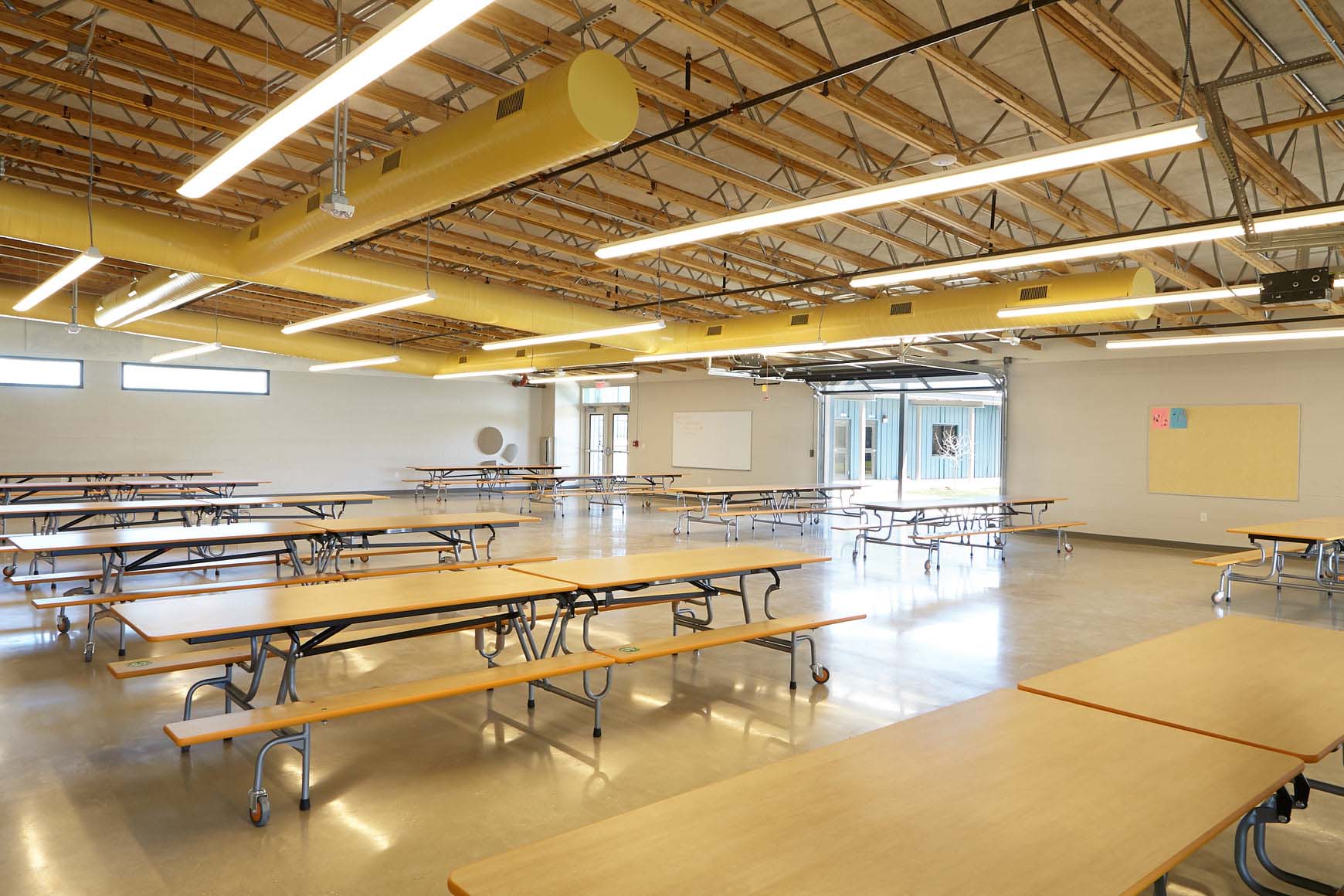
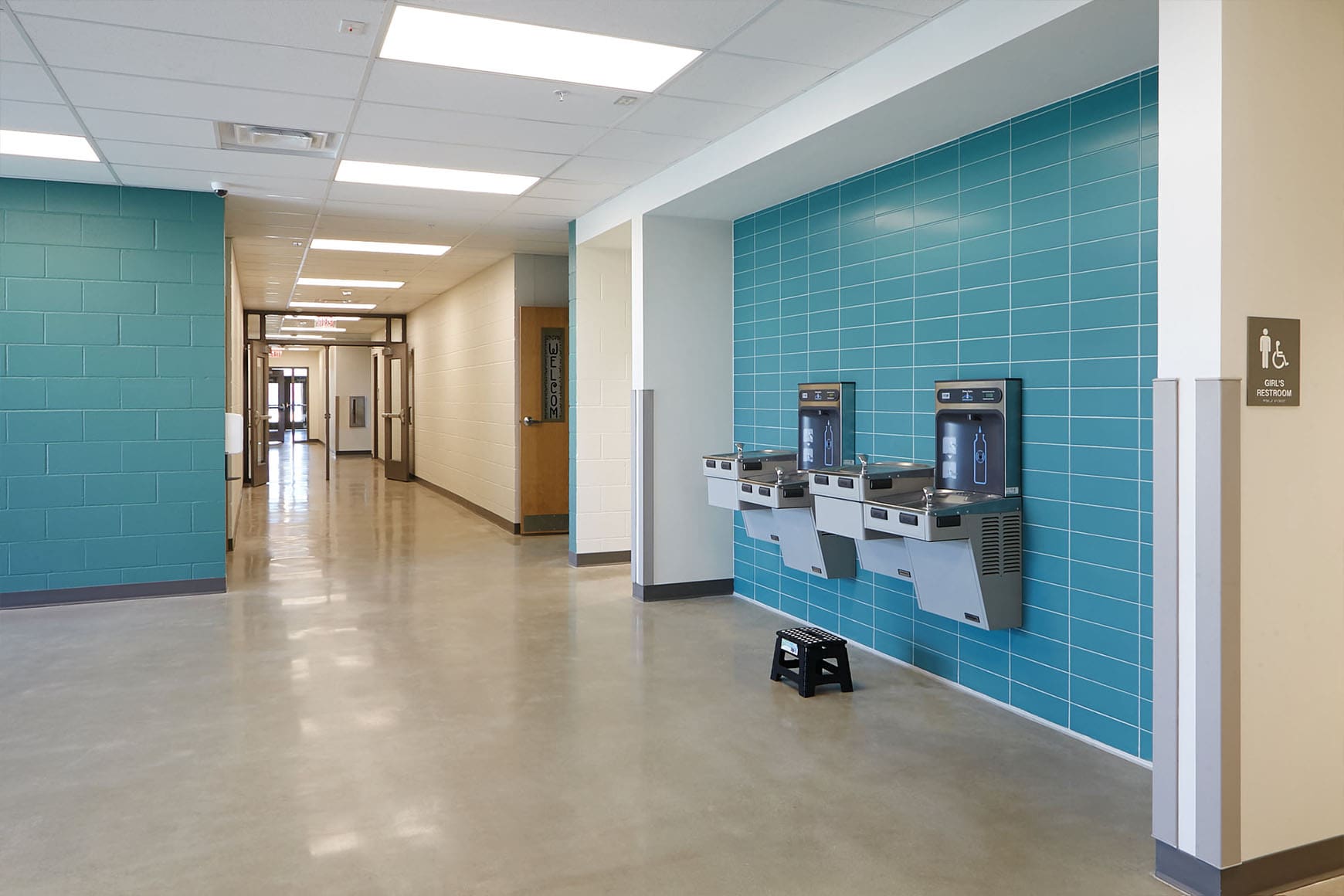
The value of green modular construction becomes clear when applied in real projects. One great example is an Aries Building Systems school project in San Antonio, Texas.
The building was designed with a strong focus on energy performance and durability:
- High-performance insulation was used throughout, including R-30 flooring, R-19 walls, and R-49 roofing. This has created a tight thermal envelope that reduces heating and cooling demands.
- Lighting systems included over 200 LED fixtures paired with occupancy sensors. This ensures that energy is only used when needed.
- High-efficiency HVAC units and programmable thermostats help maintain indoor comfort while limiting energy waste.
- Energy recovery ventilators further improve air quality.
- Low-flow plumbing fixtures and bottle filler stationssupport water efficiency and reduce plastic waste.
- A reflective roofing system helps reduce heat gain, which is especially important in warmer climates.
- Vinyl composite tile and full building wrap systems extend the building’s lifespan and reduce the need for repairs and replacement over time.
This example shows how green modular construction can deliver real performance benefits in an education setting without extending project timelines.
Making a Smart, Sustainable Investment
Sustainability and performance no longer compete. With green modular construction, they work together. Reduced waste, lower energy use, and flexible design all contribute to long-term value.
For facility managers and procurement leaders, the benefits are both environmental and financial. Lower operating costs and extended building life support better returns over time. At the same time, projects align with ESG goals and regulatory expectations.
Aries Building Systems helps organizations turn these goals into practical solutions. To learn more about sustainable modular options, talk to one of our modular specialists to explore green building solutions designed to meet today’s performance standards.
Construction was inherently sustainable during the prehistoric and preindustrial times. But when industrialization set in, traditional eco-friendly building practices were eventually lost or discarded.
Today, however, sustainability is again a critical goal in construction. Developers, public agencies, and education leaders now face pressure to meet ESG targets. They need to reduce carbon output and align with certification systems such as the Leadership in Energy and Environmental Design, or LEED. Procurement teams are also being asked to show measurable environmental performance.
This move toward sustainability has changed how buildings are planned and delivered. Traditional methods can struggle to meet both speed and sustainability goals at the same time. This is where green modular construction stands out. It offers a faster, more controlled way to build while reducing waste and energy use. For organizations balancing timelines with environmental responsibility, going modular is a clear and practical path forward.
What Is Green Modular Construction?
At its core, green modular construction combines off-site manufacturing with sustainable building practices. Instead of building everything on location, structures are produced in a controlled factory setting and then installed on-site.
This sustainable prefabrication approach differs from traditional green building in one key way: much of the efficiency comes from the manufacturing process itself. Materials are measured and cut with precision. Waste is minimized, and environmental conditions are controlled.
The result is a building process that uses fewer resources and produces less waste. At the same time, it supports energy-efficient design, better insulation, and improved building performance. In simple terms, green modular construction is about building smarter from the start.
Key Environmental Benefits of Green Modular Construction
Sustainability in construction must deliver measurable results. Green modular construction supports this through waste reduction, energy efficiency, and lower overall environmental impact.
Reduced Construction Waste
Traditional construction sites generate large amounts of waste, including excess materials, packaging, and damaged goods, which often end up in landfills. Green modular construction reduces this problem at the source.
Because components are manufactured in a factory, materials are used more efficiently. According to industry data from the Modular Building Institute, modular construction can reduce jobsite waste by up to 90%. Leftover materials are often recycled or reused on-site.
Fewer materials are exposed to the weather, which also reduces damage and disposal. This makes green modular construction a more responsible option for projects aiming to limit environmental impact.
Energy Efficiency
Energy performance is a major focus in sustainable building. Modular green building helps achieve this goal with tight building envelopes and efficient systems.
Modules are built with strong insulation and precise sealing. This reduces air leakage and improves temperature control. Many projects also include high-efficiency HVAC systems, LED lighting, and smart controls that reduce energy use over time.
Design options can include low-VOC materials, solar readiness, and advanced ventilation systems. These features improve both energy performance and indoor air quality. For facility managers, this means lower operating costs and healthier environments.
Lower Carbon Footprint
Transportation and site activity contribute heavily to construction-related emissions. Green modular construction helps reduce this impact.
Fewer deliveries are required because large sections, whether for mobile offices, classrooms, or other structures, are delivered in completed form. This low-carbon construction approach cuts down on fuel use and site traffic. Shorter project timelines also reduce the duration of energy use on-site.
Less time on-site means less equipment operation, less noise, and fewer emissions overall. When viewed across the full project lifecycle, modular construction often results in a smaller carbon footprint compared to traditional builds.
Supporting Sustainability Goals Through Design Flexibility
Sustainability is not only about how a building is constructed. It also depends on how long it remains useful. Green modular construction supports long-term value through flexibility.
Modular buildings can be expanded, reconfigured, or relocated as needs change, reducing the need for demolition and new construction in the future. Instead of starting from scratch, organizations can adapt existing structures.
This approach extends the lifecycle of the building and reduces material waste over time. It also supports changing operational needs without major disruption.
For organizations working toward ESG targets, flexibility matters. It allows investments to remain useful for longer periods.
Certifications and Standards: How Green Modular Construction Measures Up
Meeting sustainability standards requires more than good intentions. Projects must align with recognized frameworks such as LEED, WELL, and broader ESG reporting requirements. Green modular construction is well-positioned to support these benchmarks.
Modular buildings can be designed to meet the same certification criteria as traditional structures. Energy efficiency, indoor air quality, water use, and material selection can all be specified during the design phase.
The controlled manufacturing process also improves consistency. Each module is built to the same standard, which helps maintain performance across the entire structure.
Aries Building Systems works with clients to align modular projects with sustainability goals and compliance requirements. From energy-efficient systems to durable materials, each component is selected to support long-term performance. So if you’re aiming for certified LEED modular buildings, Aries Building Systems can definitely help.
Real-World Applications: Green Modular Construction in Action
The value of green modular construction becomes clear when applied in real projects. One great example is an Aries Building Systems school project in San Antonio, Texas.
The building was designed with a strong focus on energy performance and durability:
- High-performance insulation was used throughout, including R-30 flooring, R-19 walls, and R-49 roofing. This has created a tight thermal envelope that reduces heating and cooling demands.
- Lighting systems included over 200 LED fixtures paired with occupancy sensors. This ensures that energy is only used when needed.
- High-efficiency HVAC units and programmable thermostats help maintain indoor comfort while limiting energy waste.
- Energy recovery ventilators further improve air quality.
- Low-flow plumbing fixtures and bottle filler stationssupport water efficiency and reduce plastic waste.
- A reflective roofing system helps reduce heat gain, which is especially important in warmer climates.
- Vinyl composite tile and full building wrap systems extend the building’s lifespan and reduce the need for repairs and replacement over time.
This example shows how green modular construction can deliver real performance benefits in an education setting without extending project timelines.
Making a Smart, Sustainable Investment
Sustainability and performance no longer compete. With green modular construction, they work together. Reduced waste, lower energy use, and flexible design all contribute to long-term value.
For facility managers and procurement leaders, the benefits are both environmental and financial. Lower operating costs and extended building life support better returns over time. At the same time, projects align with ESG goals and regulatory expectations.
Aries Building Systems helps organizations turn these goals into practical solutions. To learn more about sustainable modular options, talk to one of our modular specialists to explore green building solutions designed to meet today’s performance standards.
Follow Us On Social Media!