


Designing Modular Buildings That Fit Purpose, Brand, and Aesthetic
For a long time, modular buildings carried a reputation for being simple, box-like, and purely functional. That perception still lingers in some people. Yet modern approaches to designing modular buildings have changed what these structures can look like and how they perform.
Today, architects and planners have the ability to shape form, finishes, and layout with the same intent applied to traditional construction. Whether it’s schools, healthcare facilities, or other structures, modular buildings can reflect brand identity, match existing architecture, and deliver a polished, permanent appearance. The question is no longer whether modular can look good, but how far design can go.
Modular Design Has Come a Long Way
The story of designing modular buildings begins with understanding how far the industry has changed. Early modular structures were built for speed and utility. Design flexibility was limited, and aesthetics often took a back seat.
That is no longer the case.
- Advances in materials (such as modular masonry), engineering, and manufacturing processes have opened new possibilities.
- Modern modular buildings are designed with the same attention to detail as site-built projects.
- Modular architecture allows architects to plan rooflines, window placement, exterior finishes, and other features from the start instead of adapting after the fact.
- Controlled factory environments improve consistency, so each component is built to precise specifications.
Because of these improvements, you get a building that feels intentional and meets your requirements, whether functional, brand-related, or aesthetic.
For organizations still guided by older assumptions, designing modular buildings today requires a fresh perspective. The tools and capabilities have changed, and so have the results.
Beyond the Box: How Design Drives First Impressions
First impressions matter, especially for public-facing buildings. Schools, clinics, and government facilities must present a professional and welcoming image. Designing modular buildings with curb appeal and community aesthetics in mind helps achieve that goal.
Exterior elements play a major role. Below are some examples:
- Parapet walls create a clean, modern profile.
- Pitched roofs add depth and align with traditional architectural styles.
- Mixed-material exteriors, such as metal panels combined with brick or fiber cement, create visual interest and help buildings blend into their surroundings.
- Window placement and entry design also influence perception, illumination, a person’s sense of “arriving” (for doors and entryways), and their overall interior experience.
These features are part of the design process from the beginning. With the right approach, designing modular buildings becomes an opportunity to enhance a structure’s visual appeal.
Customization Without Compromise
Although modular structures can be customized, some people remain skeptical. Some assume that modular design limits creativity or increases cost. In reality, designing modular buildings allows for a high level of customization without sacrificing efficiency.
Aries Building Systems works with clients to develop custom floor plans that match specific operational needs. This includes everything from open layouts to specialized rooms such as labs, treatment areas, or training spaces.
Exterior finishes can be selected to match existing buildings or reflect a specific brand identity. Interior options include flooring, lighting, cabinetry, and wall treatments that align with the intended use of the space.
More importantly, these design choices are integrated into the manufacturing process. This reduces rework and helps keep projects on schedule. It also allows teams to balance design goals with budget considerations.
Through this approach, designing modular buildings becomes a practical way to achieve both function and form.
Building for Brand, Culture, and Context
Every building communicates something about the organization it serves. A school should feel welcoming and supportive. A healthcare facility should feel calm, clean, and efficient. A government building should reflect trust and stability. Designing modular buildings with these goals in mind ensures that the space supports both function and identity.
In education, design can influence how students and staff interact with the space. Natural light, open common areas, and thoughtful layouts create a better learning environment. In healthcare, layout and finishes can improve patient comfort and staff workflow.
Public sector projects often require buildings to align with existing campus or community standards. This includes matching materials, colors, and architectural details. Modular construction can meet these expectations through careful planning and customization.
Design That Fits Anywhere
One of the strengths of modular construction is its ability to integrate with existing environments. Many projects are not built on empty sites. They are additions, expansions, or phased developments.
Designing modular buildings to fit within these contexts is essential.
- Modular structures can be designed to match adjacent buildings in both scale and style. Rooflines can align, and exterior materials can be selected to create continuity. This helps new spaces feel like part of the original campus and not an afterthought.
- Modular also works well as part of a phased strategy. Organizations can add space in stages without disrupting operations, with each phase designed to connect seamlessly with the next.
This flexibility in design makes modular buildings a strong option for campuses and facilities that expect to grow or change over time.
Real Examples of Good Design in Modular
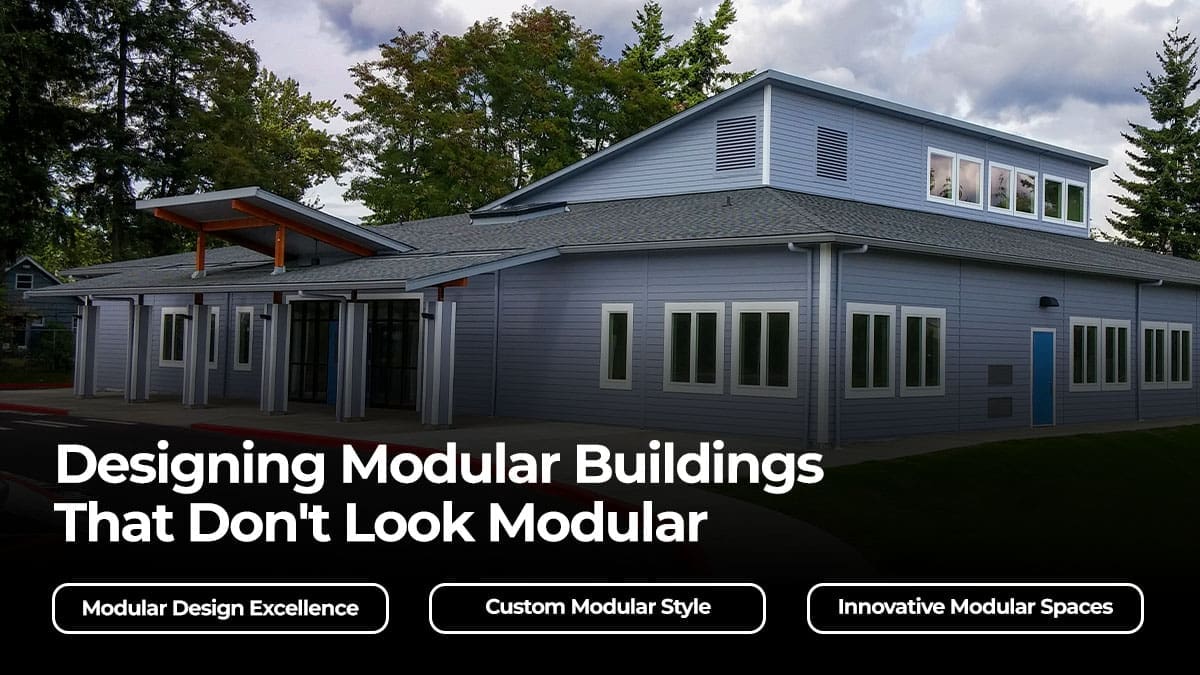
The impact of thoughtful design is best seen in real projects. A recent example comes from a modular school facility in Kent, Washington. This project demonstrates what is possible when designing modular buildings that consider both function and aesthetics.
The facility spans a total of 12,600 square feet and was created using 38 modules. It includes classrooms, a staff lounge/workroom, office spaces, and a large multipurpose area. One classroom was designed as a therapy space, showing how specialized needs can be integrated into the overall layout.
The design focused on openness and natural light. A wide-span common area features vaulted ceilings and clearstory windows. This creates a bright, welcoming space that supports multiple functions. The use of roof sections to achieve this effect shows how modular design can move beyond flat, standard forms.
Interior finishes were completed on-site to ensure quality and consistency. Acoustical panels improve sound control, which is important in educational settings. Roofing systems include durable materials designed for long-term performance.
The project also benefited from faster construction. Off-site manufacturing and site preparation happened at the same time, reducing the overall timeline. At the same time, the design allows for future growth as the program expands.
This example highlights a key point: When done correctly, designing modular buildings results in spaces that are both functional and visually engaging.
Function, Form, and the Future of Modular Design
The idea that modular buildings must look basic no longer holds up. Modern approaches to designing modular buildings combine speed, flexibility, and strong visual design. The result is a building that performs well, reflects your brand, and fits aesthetic standards.
For organizations planning their next project, modular offers more options than ever. To see how design can align with your goals, speak with an Aries modular specialist and explore what’s possible.
Designing Modular Buildings That Fit Purpose, Brand, and Aesthetic
For a long time, modular buildings carried a reputation for being simple, box-like, and purely functional. That perception still lingers in some people. Yet modern approaches to designing modular buildings have changed what these structures can look like and how they perform.
Today, architects and planners have the ability to shape form, finishes, and layout with the same intent applied to traditional construction. Whether it’s schools, healthcare facilities, or other structures, modular buildings can reflect brand identity, match existing architecture, and deliver a polished, permanent appearance. The question is no longer whether modular can look good, but how far design can go.
Modular Design Has Come a Long Way
The story of designing modular buildings begins with understanding how far the industry has changed. Early modular structures were built for speed and utility. Design flexibility was limited, and aesthetics often took a back seat.
That is no longer the case.
- Advances in materials (such as modular masonry), engineering, and manufacturing processes have opened new possibilities.
- Modern modular buildings are designed with the same attention to detail as site-built projects.
- Modular architecture allows architects to plan rooflines, window placement, exterior finishes, and other features from the start instead of adapting after the fact.
- Controlled factory environments improve consistency, so each component is built to precise specifications.
Because of these improvements, you get a building that feels intentional and meets your requirements, whether functional, brand-related, or aesthetic.
For organizations still guided by older assumptions, designing modular buildings today requires a fresh perspective. The tools and capabilities have changed, and so have the results.
Beyond the Box: How Design Drives First Impressions
First impressions matter, especially for public-facing buildings. Schools, clinics, and government facilities must present a professional and welcoming image. Designing modular buildings with curb appeal and community aesthetics in mind helps achieve that goal.
Exterior elements play a major role. Below are some examples:
- Parapet walls create a clean, modern profile.
- Pitched roofs add depth and align with traditional architectural styles.
- Mixed-material exteriors, such as metal panels combined with brick or fiber cement, create visual interest and help buildings blend into their surroundings.
- Window placement and entry design also influence perception, illumination, a person’s sense of “arriving” (for doors and entryways), and their overall interior experience.
These features are part of the design process from the beginning. With the right approach, designing modular buildings becomes an opportunity to enhance a structure’s visual appeal.
Customization Without Compromise
Although modular structures can be customized, some people remain skeptical. Some assume that modular design limits creativity or increases cost. In reality, designing modular buildings allows for a high level of customization without sacrificing efficiency.
Aries Building Systems works with clients to develop custom floor plans that match specific operational needs. This includes everything from open layouts to specialized rooms such as labs, treatment areas, or training spaces.
Exterior finishes can be selected to match existing buildings or reflect a specific brand identity. Interior options include flooring, lighting, cabinetry, and wall treatments that align with the intended use of the space.
More importantly, these design choices are integrated into the manufacturing process. This reduces rework and helps keep projects on schedule. It also allows teams to balance design goals with budget considerations.
Through this approach, designing modular buildings becomes a practical way to achieve both function and form.
Building for Brand, Culture, and Context
Every building communicates something about the organization it serves. A school should feel welcoming and supportive. A healthcare facility should feel calm, clean, and efficient. A government building should reflect trust and stability. Designing modular buildings with these goals in mind ensures that the space supports both function and identity.
In education, design can influence how students and staff interact with the space. Natural light, open common areas, and thoughtful layouts create a better learning environment. In healthcare, layout and finishes can improve patient comfort and staff workflow.
Public sector projects often require buildings to align with existing campus or community standards. This includes matching materials, colors, and architectural details. Modular construction can meet these expectations through careful planning and customization.
Design That Fits Anywhere
One of the strengths of modular construction is its ability to integrate with existing environments. Many projects are not built on empty sites. They are additions, expansions, or phased developments.
Designing modular buildings to fit within these contexts is essential.
- Modular structures can be designed to match adjacent buildings in both scale and style. Rooflines can align, and exterior materials can be selected to create continuity. This helps new spaces feel like part of the original campus and not an afterthought.
- Modular also works well as part of a phased strategy. Organizations can add space in stages without disrupting operations, with each phase designed to connect seamlessly with the next.
This flexibility in design makes modular buildings a strong option for campuses and facilities that expect to grow or change over time.
Real Examples of Good Design in Modular
The impact of thoughtful design is best seen in real projects. A recent example comes from a modular school facility in Kent, Washington. This project demonstrates what is possible when designing modular buildings that consider both function and aesthetics.
The facility spans a total of 12,600 square feet and was created using 38 modules. It includes classrooms, a staff lounge/workroom, office spaces, and a large multipurpose area. One classroom was designed as a therapy space, showing how specialized needs can be integrated into the overall layout.
The design focused on openness and natural light. A wide-span common area features vaulted ceilings and clearstory windows. This creates a bright, welcoming space that supports multiple functions. The use of roof sections to achieve this effect shows how modular design can move beyond flat, standard forms.
Interior finishes were completed on-site to ensure quality and consistency. Acoustical panels improve sound control, which is important in educational settings. Roofing systems include durable materials designed for long-term performance.
The project also benefited from faster construction. Off-site manufacturing and site preparation happened at the same time, reducing the overall timeline. At the same time, the design allows for future growth as the program expands.
This example highlights a key point: When done correctly, designing modular buildings results in spaces that are both functional and visually engaging.
Function, Form, and the Future of Modular Design
The idea that modular buildings must look basic no longer holds up. Modern approaches to designing modular buildings combine speed, flexibility, and strong visual design. The result is a building that performs well, reflects your brand, and fits aesthetic standards.
For organizations planning their next project, modular offers more options than ever. To see how design can align with your goals, speak with an Aries modular specialist and explore what’s possible.

Follow Us On Social Media!