

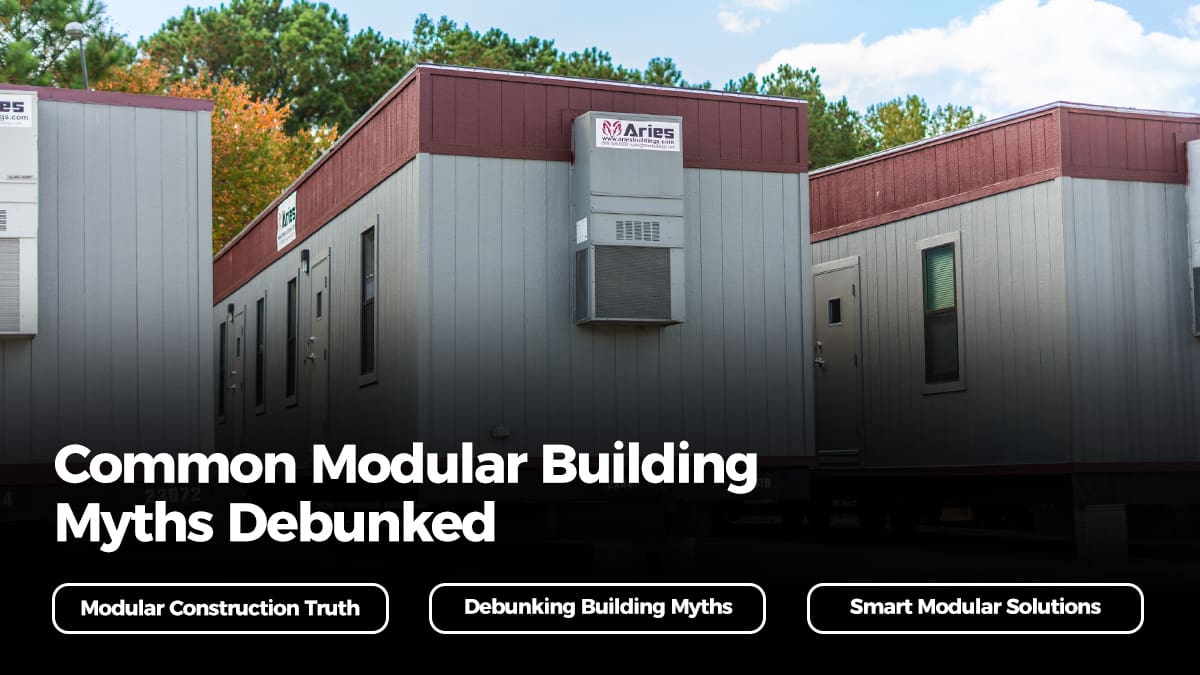
Misconceptions about modular construction can sometimes influence early project discussions. Decision-makers in construction, education, and government projects often approach the topic with caution. Some assume the term “modular” means temporary. Others question the quality or long-term value of modular builds. These concerns are understandable, but most are based on outdated information.
In this guide, we address the most common modular building myths with clear, practical facts. Our goal is to help project teams make informed decisions without relying on assumptions. With a better understanding of how modular buildings are designed, built, and used today, many will find that modular is a practical, modern solution with several benefits.
Myth #1: Modular buildings are low-quality
One of the most persistent modular building myths is that such structures are built to a lower standard than traditional buildings. This belief often comes from older prefabricated models that lacked the durability and finish of modern construction.
Today’s modular buildings follow the same building codes and standards as site-built structures. Materials are comparable, and in many cases, quality control for modular buildings is tighter. Construction takes place in a controlled facility. This limits exposure to moisture, temperature swings, and material damage.
Each module goes through inspections during production, not just at the end of the build. This layered quality process reduces the chance of defects and ensures they are durable. For example, wall assemblies, electrical systems, and plumbing are tested before modules leave the factory.
Myth #2: They’re only for temporary use
Another common belief is that modular buildings are short-term solutions. This is one of the more limiting modular building myths, especially for public sector planners.
While modular buildings can be used for temporary needs, they are also designed for long-term or permanent use. Many schools, offices, and healthcare facilities have used modular buildings for decades. These can sit on permanent foundations and integrate with existing structures.
The distinction lies in how the building is specified. A leased modular classroom for a five-year need will differ from a permanently installed facility. Both use the same construction methods, but the design intent changes.
In practice, modular gives organizations options. A school district can start with a temporary solution, such as portable classrooms, and later convert to a permanent installation. This flexibility challenges the idea that modular equals temporary. Among all modular building myths, this one often leads to missed opportunities for long-term planning.
Myth #3: Modular buildings all look the same
Some decision-makers picture modular buildings as plain boxes with limited design appeal. This assumption is another outdated entry in this list of modular building myths.
Modern modular construction allows for a wide range of layouts and finishes. Exterior cladding can include brick, metal panels, glass, or composite materials. Rooflines, entrances, and architectural details can be customized to match existing buildings.
Interior spaces offer the same flexibility. Open mobile offices, classrooms, medical suites, and multiuse spaces can all be configured to meet specific needs. Ceiling heights, lighting, flooring, and fixtures can be selected based on project requirements.
A helpful comparison is commercial construction. Just as two office buildings can look completely different despite using similar materials, modular buildings can be customized to reflect brand, function, and environment.
Myth #4: Modular isn’t cost-effective or doesn’t deliver ROI
Cost concerns often drive project decisions, so it’s no surprise that modular building myths include doubts about financial value. Some assume modular buildings are more expensive or offer limited return.
In reality, modular construction often improves cost control. Factory production reduces material waste and limits delays caused by weather. At the same time, site work and building fabrication happen in parallel, so the overall project timeline is shortened.
A shorter schedule reduces labor costs, equipment rentals, and site management expenses. Earlier occupancy also creates value. Schools can open classrooms sooner. Healthcare providers can begin serving patients faster.
Long-term value also plays a role. Modular buildings are durable and can be relocated or repurposed. This extends their useful life and spreads the initial investment across multiple uses.
Myth #5: You can’t use modular for large or complex projects
There’s a belief that modular construction is limited to small or simple structures. This is another example of modular building myths that no longer reflect current capabilities.
Modular buildings can be scaled to support large and complex projects. Multistory office buildings, schools, and healthcare facilities have all been delivered using modular methods. Modules can be combined to create larger footprints and more intricate layouts.
Complex systems such as HVAC, electrical distribution, and specialized medical equipment can be integrated during the manufacturing process, which often improves coordination and reduces on-site installation challenges.
For example, a multibuilding school campus can include classrooms, administrative offices, and common areas built through modular construction. Each component is designed to work as part of a unified system.
Myth #6: Modular doesn’t meet the same codes as traditional builds
The misconception that modular buildings don’t need to comply with the same standards and regulations as conventional construction is related to Myth #1. And by this time, you already know that compliance is a top priority for any project.
Modular buildings must meet the same local, state, and national codes and standards as traditional construction. This includes structural standards, fire safety requirements, accessibility guidelines, and energy-efficiency regulations.
In many cases, modular construction involves more inspections than site-built projects. Modules are reviewed during manufacturing and again after installation. This dual inspection process helps ensure compliance at every stage.
For public sector projects, this is especially important. Schools and government facilities must meet strict requirements, and modular buildings are designed to do exactly that.
Modular Buildings: A Practical Solution to Today’s Needs
Many of the concerns surrounding modular construction come from outdated assumptions. These modular building myths don’t reflect how modern modular buildings are designed, built, and used today.
Modular buildings offer durability, flexibility, and strong long-term value. They can support both temporary and permanent needs. They can be customized to match existing facilities and scaled to handle complex projects. Most importantly, they meet the same standards expected of traditional construction.
For decision-makers, the availability of modular buildings expands their options for delivering space efficiently and responsibly. Aries Building Systems works with project teams to evaluate these options with clarity and confidence. For those ready to move past the myths and focus on real outcomes, the next step is simple.
Talk to one of our modular specialists or get a free quote by filling out the form below.
Misconceptions about modular construction can sometimes influence early project discussions. Decision-makers in construction, education, and government projects often approach the topic with caution. Some assume the term “modular” means temporary. Others question the quality or long-term value of modular builds. These concerns are understandable, but most are based on outdated information.
In this guide, we address the most common modular building myths with clear, practical facts. Our goal is to help project teams make informed decisions without relying on assumptions. With a better understanding of how modular buildings are designed, built, and used today, many will find that modular is a practical, modern solution with several benefits.
Myth #1: Modular buildings are low-quality
One of the most persistent modular building myths is that such structures are built to a lower standard than traditional buildings. This belief often comes from older prefabricated models that lacked the durability and finish of modern construction.
Today’s modular buildings follow the same building codes and standards as site-built structures. Materials are comparable, and in many cases, quality control for modular buildings is tighter. Construction takes place in a controlled facility. This limits exposure to moisture, temperature swings, and material damage.
Each module goes through inspections during production, not just at the end of the build. This layered quality process reduces the chance of defects and ensures they are durable. For example, wall assemblies, electrical systems, and plumbing are tested before modules leave the factory.
Myth #2: They’re only for temporary use
Another common belief is that modular buildings are short-term solutions. This is one of the more limiting modular building myths, especially for public sector planners.
While modular buildings can be used for temporary needs, they are also designed for long-term or permanent use. Many schools, offices, and healthcare facilities have used modular buildings for decades. These can sit on permanent foundations and integrate with existing structures.
The distinction lies in how the building is specified. A leased modular classroom for a five-year need will differ from a permanently installed facility. Both use the same construction methods, but the design intent changes.
In practice, modular gives organizations options. A school district can start with a temporary solution, such as portable classrooms, and later convert to a permanent installation. This flexibility challenges the idea that modular equals temporary. Among all modular building myths, this one often leads to missed opportunities for long-term planning.
Myth #3: Modular buildings all look the same
Some decision-makers picture modular buildings as plain boxes with limited design appeal. This assumption is another outdated entry in this list of modular building myths.
Modern modular construction allows for a wide range of layouts and finishes. Exterior cladding can include brick, metal panels, glass, or composite materials. Rooflines, entrances, and architectural details can be customized to match existing buildings.
Interior spaces offer the same flexibility. Open mobile offices, classrooms, medical suites, and multiuse spaces can all be configured to meet specific needs. Ceiling heights, lighting, flooring, and fixtures can be selected based on project requirements.
A helpful comparison is commercial construction. Just as two office buildings can look completely different despite using similar materials, modular buildings can be customized to reflect brand, function, and environment.
Myth #4: Modular isn’t cost-effective or doesn’t deliver ROI
Cost concerns often drive project decisions, so it’s no surprise that modular building myths include doubts about financial value. Some assume modular buildings are more expensive or offer limited return.
In reality, modular construction often improves cost control. Factory production reduces material waste and limits delays caused by weather. At the same time, site work and building fabrication happen in parallel, so the overall project timeline is shortened.
A shorter schedule reduces labor costs, equipment rentals, and site management expenses. Earlier occupancy also creates value. Schools can open classrooms sooner. Healthcare providers can begin serving patients faster.
Long-term value also plays a role. Modular buildings are durable and can be relocated or repurposed. This extends their useful life and spreads the initial investment across multiple uses.
Myth #5: You can’t use modular for large or complex projects
There’s a belief that modular construction is limited to small or simple structures. This is another example of modular building myths that no longer reflect current capabilities.
Modular buildings can be scaled to support large and complex projects. Multistory office buildings, schools, and healthcare facilities have all been delivered using modular methods. Modules can be combined to create larger footprints and more intricate layouts.
Complex systems such as HVAC, electrical distribution, and specialized medical equipment can be integrated during the manufacturing process, which often improves coordination and reduces on-site installation challenges.
For example, a multibuilding school campus can include classrooms, administrative offices, and common areas built through modular construction. Each component is designed to work as part of a unified system.
Myth #6: Modular doesn’t meet the same codes as traditional builds
The misconception that modular buildings don’t need to comply with the same standards and regulations as conventional construction is related to Myth #1. And by this time, you already know that compliance is a top priority for any project.
Modular buildings must meet the same local, state, and national codes and standards as traditional construction. This includes structural standards, fire safety requirements, accessibility guidelines, and energy-efficiency regulations.
In many cases, modular construction involves more inspections than site-built projects. Modules are reviewed during manufacturing and again after installation. This dual inspection process helps ensure compliance at every stage.
For public sector projects, this is especially important. Schools and government facilities must meet strict requirements, and modular buildings are designed to do exactly that.
Modular Buildings: A Practical Solution to Today’s Needs
Many of the concerns surrounding modular construction come from outdated assumptions. These modular building myths don’t reflect how modern modular buildings are designed, built, and used today.
Modular buildings offer durability, flexibility, and strong long-term value. They can support both temporary and permanent needs. They can be customized to match existing facilities and scaled to handle complex projects. Most importantly, they meet the same standards expected of traditional construction.
For decision-makers, the availability of modular buildings expands their options for delivering space efficiently and responsibly. Aries Building Systems works with project teams to evaluate these options with clarity and confidence. For those ready to move past the myths and focus on real outcomes, the next step is simple.
Talk to one of our modular specialists or get a free quote by filling out the form below.


Follow Us On Social Media!